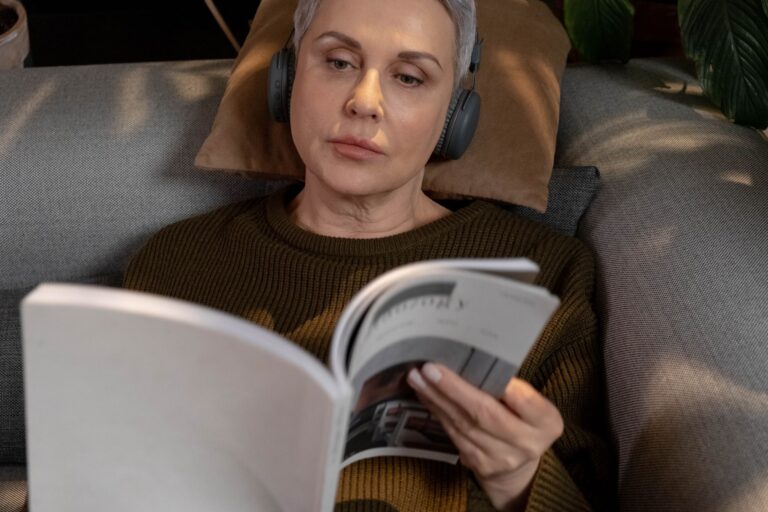
Audiobooks can support engagement in dementia care by offering a familiar, low-pressure activity that may prompt attention, comfort, and conversation. They work best when chosen for the individual and shared with a caregiver, rather than played automatically as background sound. Here, engagement means taking part in a meaningful activity or connecting with another person. Audiobooks may help create those moments, but evidence does not show that they treat dementia or reliably reduce distress for everyone.
Medical information disclaimer: This article is for general educational purposes only and does not provide medical advice, diagnosis, or treatment. Always consult a physician or other qualified health professional about symptoms, medications, tests, or treatment decisions.
Table of Contents
- What does the evidence show?
- Choosing audio that invites engagement
- Turning listening into a shared activity
- How to try audiobooks safely
What does the evidence show?
A 2021 randomized trial studied 55 care-home residents with Alzheimer's disease or related dementias. Personalized audiobooks delivered through headphones reduced agitation on three of four measured subscales, according to the trial record published through PubMed. The finding suggests that a carefully selected audiobook may provide short-term support for some residents. However, the trial was small and conducted in long-term-care facilities. It does not establish that audiobooks have the same effect at home or across all stages of dementia.
A larger study produced more cautious results. The international HOMESIDE trial assigned 432 people with dementia and their caregivers to music, reading, or usual care. Its reading programme combined audiobook listening with reading aloud, word games, and discussion. At 90 days, reading did not meaningfully improve behavioral symptoms, quality of life, depression, or cognition compared with usual care, according to the HOMESIDE report in eClinicalMedicine. A later symptom difference was statistically significant but not clinically meaningful. Because the programme combined several activities, it cannot show that audiobooks alone produced any effect.
Choosing audio that invites engagement
Personal relevance matters more than choosing material considered generally suitable for dementia. Start with the person's established tastes, interests, language, and preferred style of voice. Possible choices include: Alzheimer's Society includes audiobooks among accessible reading options, alongside large-print, Easy Read, and picture books.
Its Activities Handbook supports matching the format and subject to the person's interests and changing abilities. Avoid assuming that a once-favorite book will still be welcome. A complicated plot, unfamiliar narrator, frightening scene, or long chapter may be tiring or confusing. Treat the first selection as a trial and adjust it from the person's response.
- A familiar novel or childhood story
- Poetry with a clear rhythm
- Humorous essays or short anecdotes
- Stories about a former job, hobby, place, or period of interest
- Spiritual or reflective writing the person already values
Turning listening into a shared activity
An audiobook can provide a starting point for interaction. Sit nearby, listen together, and pause when the person reacts to a character, phrase, or memory. The aim is not to test comprehension or complete a chapter. Useful prompts include: Comments do not need to follow the plot.
A story about a seaside town might lead to a conversation about holidays, weather, food, or family. That connection may be more valuable than remembering names or events from the book. When sustained attention becomes difficult, Alzheimer's Society recommends shorter material, shared reading, or reading aloud. It also notes that discussion prompted by a story may matter as much as the material itself in its guidance on continuing to read with dementia.
- "Do you like this voice?"
- "Does this place sound familiar?"
- "Would you like to hear more?"
- "Should we pause or choose something else?"
How to try audiobooks safely
Choose a calm time and begin with a brief listening period. Keep the volume comfortable, reduce competing noise, and use speakers if headphones feel unfamiliar or isolating. Stay close enough to notice changes in expression, movement, or speech. Watch for signs that the experience is welcome, such as relaxed attention, smiling, comments, or asking to continue. Also watch for tension, repeated attempts to remove headphones, increased movement, fearful reactions, or requests to stop.
The 2021 trial did not find uniformly calming effects. Physical agitation not directed at staff generally increased in the audiobook group. If distress rises, stop the recording, lower the volume, change the material, or try again at another time. Record simple observations if several relatives or care workers support the person: Patterns may reveal that the person enjoys ten minutes of poetry in the morning but becomes restless during longer evening stories. That practical response is more useful than expecting every audiobook session to produce the same result.
- Title, narrator, and topic
- Listening time and setting
- Whether headphones or speakers were used
- Signs of interest, comfort, fatigue, or distress
- Whether conversation followed