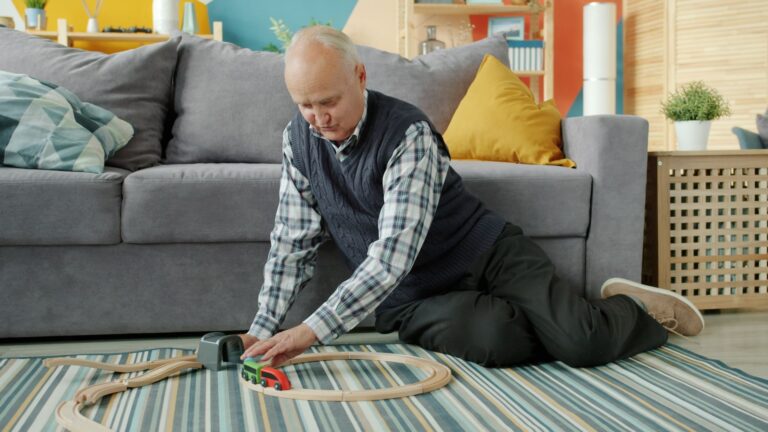
Doll therapy can support engagement by giving a person with dementia something meaningful to hold, explore, comfort, or care for. It involves offering a lifelike doll as a voluntary activity, without insisting what the doll represents. Research suggests it may increase pleasure, purposeful activity, and caregiving behavior while easing some distressing symptoms. Benefits vary, however, and the approach can raise concerns about dignity, personal history, and family reactions.
Medical information disclaimer: This article is for general educational purposes only and does not provide medical advice, diagnosis, or treatment. Always consult a physician or other qualified health professional about symptoms, medications, tests, or treatment decisions.
Table of Contents
- What engagement can look like
- What the clinical studies found
- What doll therapy may not change
- How to introduce a doll respectfully
- Balancing benefit, dignity, and family concerns
What engagement can look like
Engagement is not limited to conversation or organized group activities. with a doll, a person might make eye contact, adjust its clothing, cradle it, speak to it, or simply hold it calmly. These actions can offer a sense of purpose when other activities have become difficult.
In a 35-resident pilot trial, participants using lifelike dolls showed greater observed pleasure after three weeks. Staff also described comfort, calm, and purposeful activity, according to the Griffith University-led study in Aging & Mental Health. The response does not need to resemble parenting to be worthwhile. Exploring the doll's features, carrying it to another room, or choosing when to put it down can also reflect attention and decision-making.
What the clinical studies found
A randomized trial involving 134 women with moderate-to-severe dementia compared 30 daily doll sessions with sessions using a sensory cube. The doll group showed more interest in the object, more caregiving and exploratory behavior, and greater acceptance when the nurse left. That group also had larger reductions in total neuropsychiatric symptoms and professional-caregiver distress.
Improvements were greater for agitation, anxiety, apathy, wandering, and irritability, although physiological stress biomarkers did not differ between groups, according to the 2022 Journal of Clinical Medicine trial. Smaller randomized studies also reported reductions in agitation or broader behavioral symptoms. These findings suggest that doll therapy may create a useful point of connection while making care interactions less distressing.
What doll therapy may not change
doll therapy is not a reliable treatment for every symptom or care difficulty. An eight-week randomized study found lower agitation and behavioral-problem scores but no statistically significant change in cognitive scores. It may not improve practical functions unrelated to engagement.
In a randomized study of 29 residents with severe Alzheimer's or vascular dementia, only the doll group had reduced behavioral symptoms and related caregiver distress, but eating behavior did not improve, as reported by the University of Padova-led study. Results also differ among participants. The 35-resident pilot that found greater pleasure did not find significant reductions in anxiety, agitation, or aggression compared with usual care. A positive response should therefore be observed rather than assumed.
How to introduce a doll respectfully
Start with the person, not the activity. Consider their preferences, caregiving experiences, personal history, and any trauma that could make a lifelike doll upsetting.
A careful introduction can follow a few simple principles: In the 2022 trial, staff considered personal and traumatic histories, validated each participant's interpretation, and allowed refusal or separation from the doll at any time. This preserves choice while giving the activity room to become meaningful.
- Place the doll within view or offer it without forcing contact.
- Let the person decide whether to hold, ignore, or leave it.
- Follow the person's language instead of correcting what the doll means to them.
- Avoid testing, teasing, or demanding a particular reaction.
- Remove the doll calmly if it causes fear, grief, anger, or visible distress.
Balancing benefit, dignity, and family concerns
Some people may view giving a doll to an adult as childish or deceptive. Others may focus on the comfort, choice, and purposeful behavior it can support. Neither concern should eclipse the response of the person with dementia.
Ethical analysis identifies a tension between possible benefits to well-being and autonomy and possible harm to dignity or family relationships. The authors recommend keeping the rights and perspective of the person with dementia central to the decision, according to the Queen's University Belfast review in Nursing Ethics. Care teams and families can judge the activity through observable responses: Does the person approach the doll willingly? Do they appear interested, settled, or purposeful? Continued use makes sense only while the person remains comfortable and free to disengage.