
Reviewed by the Help Dementia Editorial Team — our editors review every article for accuracy against guidance from the National Institute on Aging, the Alzheimer’s Association, and peer-reviewed sources.
Eating more sits at the center of this dementia and brain health question.
According to a landmark 20-year study from RUSH University, eating strawberries more than once a week can reduce your risk of developing Alzheimer’s disease by 32 percent. This significant finding comes from the RUSH Memory and Aging Project, which tracked nearly 250 participants who developed Alzheimer’s dementia over a 6.7-year follow-up period, examining their dietary habits over the course of nearly two decades. The research demonstrates that something as simple as a bowl of fresh strawberries could offer meaningful protection against one of the most feared forms of dementia. The science behind this protective effect points to specific compounds in strawberries that directly impact brain health.
When researchers examined the brains of study participants, they discovered that those who consumed strawberries regularly had fewer neurofibrillary tau tangles—the toxic protein buildup associated with Alzheimer’s pathology. This isn’t just correlation; it’s a mechanism. A bioactive compound called pelargonidin, found abundantly in strawberries, appears to be actively working against the biological processes that damage memory and cognitive function. For someone worried about dementia risk—whether because of family history, aging, or early memory concerns—this research offers evidence that dietary choices matter in brain protection.
Table of Contents
- What Does the 20-Year Strawberry Study Actually Show?
- The Compound Behind the Protection—Pelargonidin and Anthocyanins
- What the UC Cincinnati Research Adds to the Evidence
- Building Strawberries Into Your Brain-Health Diet
- Important Limitations—What This Research Doesn’t Prove
- Beyond Strawberries—The Broader Berry and Plant Food Connection
- The Continuing Research Ahead
- Conclusion
What Does the 20-Year Strawberry Study Actually Show?
The RUSH Memory and Aging Project is one of the most rigorous long-term dietary studies ever conducted on brain health. researchers didn’t just ask participants what they ate once and call it done; they assessed diet over nearly 20 years of follow-up, creating a comprehensive picture of eating patterns and their connection to dementia risk. The study focused specifically on how strawberry consumption related to the physical changes in the brain associated with Alzheimer’s—particularly the accumulation of tau tangles, which are misfolded proteins that kill nerve cells. Among the nearly 250 participants who developed Alzheimer’s dementia during the study period, those who never ate strawberries faced significantly higher risk than those who consumed them regularly. What makes this study particularly valuable is its scope and specificity.
Unlike short-term studies that last a few weeks, the RUSH project followed real people over decades, documenting actual dementia diagnoses rather than just memory complaints. The 32 percent risk reduction for people who ate strawberries more than once a week represents a meaningful difference in a disease where no cure yet exists. To put this in perspective, that level of risk reduction rivals or exceeds what some early-stage pharmaceutical interventions have shown, yet strawberries are food you can find in any grocery store for a few dollars. The research also moves beyond simple observation into biological mechanism. Researchers examined brain tissue and found that strawberry consumers had lower tau accumulation, suggesting that eating strawberries doesn’t just correlate with dementia risk—something in the strawberries appears to be actively protecting brain cells from the damage that leads to Alzheimer’s. This is a critical distinction that separates genuine preventive potential from mere statistical association.
The Compound Behind the Protection—Pelargonidin and Anthocyanins
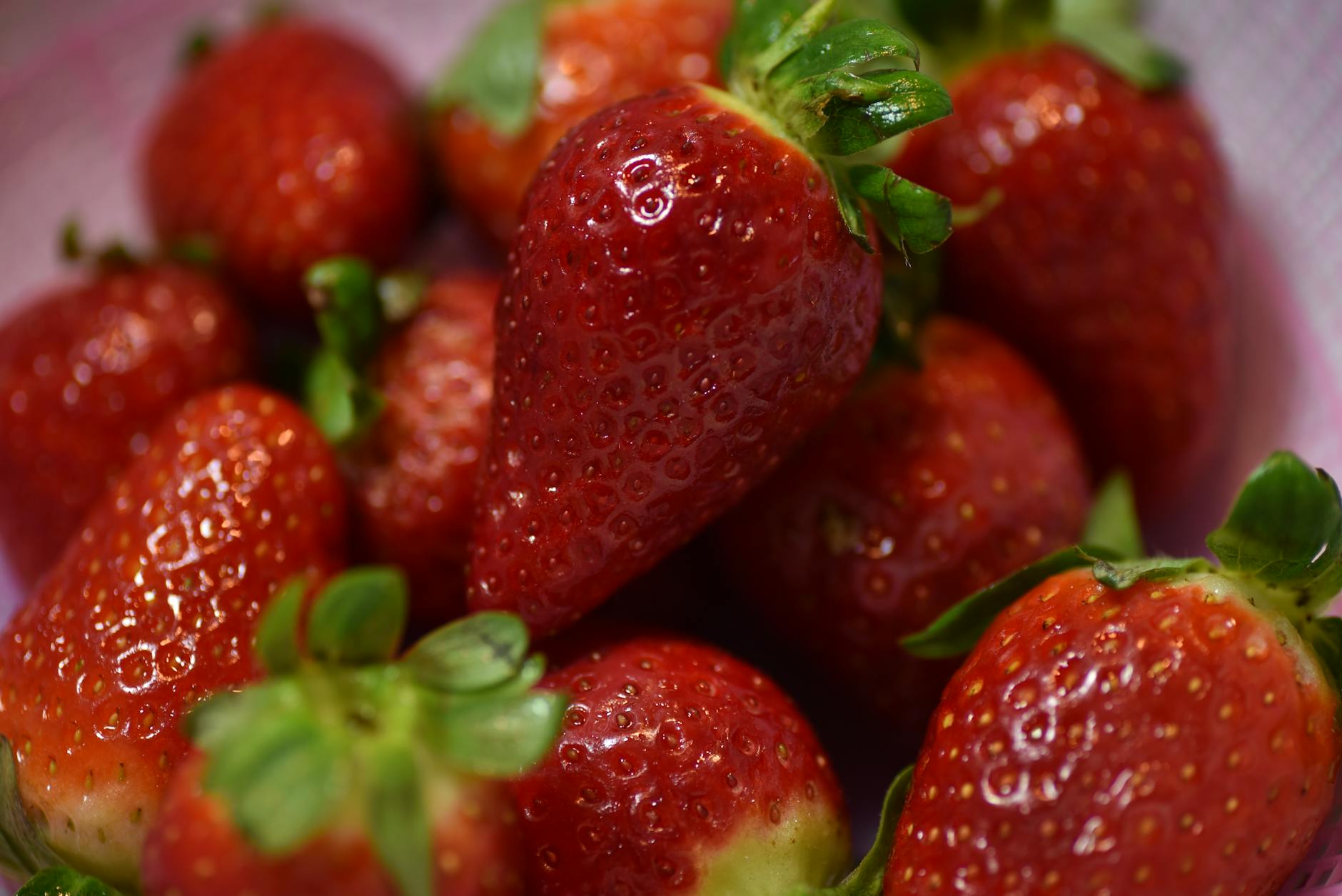
The protective power of strawberries comes largely from a class of compounds called anthocyanins, natural antioxidants that give strawberries their red color. Within this group, pelargonidin stands out as particularly important for brain protection. When researchers analyzed the brains of regular strawberry consumers, those with higher pelargonidin exposure showed fewer of the tau tangles that characterize Alzheimer’s disease. This compound appears to work by reducing oxidative stress and inflammation in the brain—two processes that accelerate cognitive decline. One important limitation to understand: you can’t get the benefits from strawberry-flavored candy, jam with added sugars, or highly processed strawberry products. The anthocyanins degrade when strawberries are heated, processed, or stored for long periods.
Fresh strawberries contain the highest concentration of these protective compounds, and they’re best consumed relatively soon after purchase. Frozen strawberries, picked and frozen at peak ripeness, retain most of their anthocyanins and offer nearly the same benefit as fresh—making them a practical option for people outside strawberry season or those on a budget. But a strawberry-flavored yogurt with minimal actual fruit and high added sugar won’t provide the neuroprotection the research documents. Anthocyanins also trigger metabolic improvements that support brain health indirectly. These compounds enhance the body’s ability to regulate blood sugar and reduce inflammation throughout the body, including in the brain. High inflammation is now recognized as a key driver of cognitive decline, so strawberries may protect through multiple pathways simultaneously—directly through their antioxidant action and indirectly through systemic health improvements.
What the UC Cincinnati Research Adds to the Evidence
In November 2023, researchers at the University of Cincinnati published findings that extended the strawberry-and-brain-health story into middle-aged populations. Their study found that consuming the equivalent of about one cup of strawberries daily improved executive function—the cognitive abilities that control planning, decision-making, and impulse control—while also reducing depressive symptoms. This matters because executive function decline is often an early warning sign of cognitive problems to come, and depression is itself both a risk factor for dementia and a common symptom in people with early-stage Alzheimer’s disease. The UC Cincinnati findings suggest that strawberry benefits aren’t limited to preventing Alzheimer’s in older adults; they may help protect and enhance cognitive performance in middle age, potentially preventing or slowing decline before it ever becomes noticeable.
The study specifically looked at a dose of about one cup daily, which is achievable for most people who have access to fresh or frozen strawberries. This practical quantity makes the research actionable—it’s not about consuming extreme amounts of fruit, just a reasonable daily portion. One example of how this works in real life: a 55-year-old noticing occasional memory lapses or difficulty concentrating at work might include a cup of strawberries in their breakfast routine. Based on this research, they’re not just enjoying fruit—they’re potentially supporting executive function and cognitive resilience at an age when lifestyle choices can meaningfully influence long-term brain health outcomes.

Building Strawberries Into Your Brain-Health Diet
Integrating strawberries into your eating patterns doesn’t require complicated recipes or expensive supplements. The simplest approach is to make them a routine part of breakfast: a cup of fresh or frozen strawberries added to oatmeal, yogurt, or eaten plain requires minimal preparation. One cup of strawberries contains roughly 50 calories, significant fiber, and substantial vitamin C alongside the protective anthocyanins—making them nutrient-dense without excess calories. For people following the Mediterranean diet, which research consistently links to dementia risk reduction, strawberries fit naturally alongside other brain-protective foods like olive oil, fish, nuts, and leafy greens. Seasonal availability presents both a challenge and an opportunity. Fresh strawberries peak in spring and early summer in much of North America, making it easy to consume them regularly during those months. During winter, frozen strawberries provide essentially equivalent nutritional benefit at lower cost and with no spoilage concerns.
Some people worry that frozen fruit is less healthy than fresh, but freezing actually locks in nutrients at peak ripeness. The trade-off is that frozen strawberries are softer when thawed—fine for smoothies, oatmeal, or cooking, though less pleasant eaten plain if you prefer firm fruit texture. Cost can be a barrier for some households. At peak season, a pound of strawberries might cost $3-4 and provide multiple cups. During off-season, prices climb to $8-10 per pound. Buying frozen strawberries year-round typically costs 30-40 percent less than fresh out-of-season berries, making it a more affordable way to maintain consistent consumption. For someone on a tight budget, frozen strawberries deliver the same neuroprotective compounds at a fraction of the price.
Important Limitations—What This Research Doesn’t Prove
While the RUSH study is rigorous and the findings impressive, it’s important to understand what the research does and doesn’t establish. The study shows that strawberry consumption correlates with lower Alzheimer’s risk, but it doesn’t prove that strawberries alone prevent dementia. The people who ate strawberries regularly in this study likely made other health-conscious choices too—they probably exercised more, ate better overall, maintained social connections, and engaged mentally. Isolating strawberries as the sole protective factor would be incorrect. Rather, strawberries appear to be one meaningful piece of a larger cognitive protection strategy that includes exercise, cognitive engagement, social connection, and overall dietary quality. Additionally, the study involved mostly older adults with access to medical care and the ability to participate in long-term research projects. Results may not apply identically to younger people, different ethnic or socioeconomic populations, or those with genetic predispositions to early-onset dementia.
The 32 percent risk reduction sounds dramatic, but it’s important to note that dementia is influenced by dozens of genetic and environmental factors. Eating strawberries cannot overcome a strong genetic risk, severe head injury history, or chronic untreated cardiovascular disease. Someone whose parent developed Alzheimer’s at age 60 should not expect strawberries alone to prevent their own cognitive decline. A final important warning: strawberries should never replace established dementia prevention strategies. If you have cardiovascular disease, you need medication and medical management, not just berries. If you have depression or sleep problems, these require professional treatment. If you’re experiencing actual memory loss or cognitive decline, that demands medical evaluation, not dietary experimentation. Strawberries appear to offer meaningful preventive benefit when combined with other healthy choices, not as a substitute for medical care.

Beyond Strawberries—The Broader Berry and Plant Food Connection
The strawberry findings fit into a larger pattern: Harvard Health researchers found that high intake of berries generally, along with apples and tea, correlates with significantly lower dementia risk. This suggests the mechanism isn’t unique to strawberries—multiple plant foods containing anthocyanins and other polyphenols appear to protect against cognitive decline. Blueberries, blackberries, raspberries, and purple grapes contain similar protective compounds, though strawberries have been most thoroughly studied in relation to Alzheimer’s specifically. Someone who dislikes strawberries isn’t without options; they could achieve similar neuroprotection through regular consumption of other berries or by including apple skins (where most polyphenols concentrate) and green or black tea in their daily routine.
The combination approach may actually be more effective than any single food. A diet rich in multiple antioxidant sources—berries, tea, leafy greens, nuts, fish—likely provides better brain protection than high consumption of one food alone. This aligns with how Mediterranean and MIND diets (Mediterranean-DASH Intervention for Neurodegenerative Delay) have been shown to reduce dementia risk by 30-35 percent in large studies. Strawberries excel within this broader context, not as a standalone solution.
The Continuing Research Ahead
As dementia becomes increasingly prevalent—the Alzheimer’s Association estimates that 6.9 million Americans currently live with Alzheimer’s dementia, a number expected to nearly double by 2050—the search for preventive strategies intensifies. The strawberry research represents encouraging progress: it shows that simple, accessible dietary choices can meaningfully influence brain health outcomes. Researchers are now investigating whether combining multiple berry types might provide additive protection, and whether different varieties of strawberries (some naturally higher in anthocyanins than others) vary in their protective effect.
What we know now is sufficient to act: the evidence supporting regular strawberry consumption for brain health is substantial enough that the recommendation makes sense as part of a broader healthy lifestyle. You don’t need to wait for perfect science to enjoy strawberries, exercise regularly, maintain social connections, and pursue mentally engaging activities. These are all evidence-supported brain protection strategies that overlap substantially with other health benefits like cardiovascular protection and cancer risk reduction. The future may reveal even more about how specific foods protect our brains, but the foundation for preventive action already exists.
Conclusion
The 20-year RUSH University study provides compelling evidence that eating strawberries more than once a week can reduce Alzheimer’s dementia risk by 32 percent, with the protective mechanism appearing to involve pelargonidin and other anthocyanins that reduce toxic protein accumulation in the brain. This finding gains additional support from recent UC Cincinnati research showing that daily strawberry consumption improves executive function and reduces depression in middle-aged adults. The research moves beyond simple correlation to identify biological mechanisms, making strawberries a food with genuine neuroprotective potential rather than merely a statistical association.
If you’re concerned about dementia risk—whether because of family history, age, or early memory concerns—adding strawberries to your regular diet is a practical, affordable, evidence-supported step you can take today. One cup of fresh or frozen strawberries most days, combined with other protective strategies like regular physical activity, cognitive engagement, quality sleep, and a generally healthy diet, creates a foundation for cognitive resilience. Strawberries alone don’t guarantee dementia prevention, but emerging research suggests they represent one of the simplest, most accessible tools available for protecting the brain health that makes independence and quality of life possible.
You Might Also Like
- Eating More wild blueberries Cuts Dementia Risk According to 10 Year Study
- Eating More walnuts Cuts Dementia Risk According to 5 Year Study
- Eating More turmeric Cuts Dementia Risk According to 7 Year Study
For more, see Alzheimer’s Association — clinical trials.





