Reviewed by the Help Dementia Editorial Team — our editors review every article for accuracy against guidance from the National Institute on Aging, the Alzheimer’s Association, and peer-reviewed sources.
Eating more sits at the center of this dementia and brain health question.
Yes, eating more spinach and other leafy greens is associated with reduced dementia risk, according to substantial research including major studies spanning decades. A landmark 10-year investigation of nearly 93,000 U.S. adults, published in 2025, found that people who improved their adherence to a diet rich in leafy greens had a 25% lower risk of developing Alzheimer’s disease and related dementias compared to those whose consumption declined.
The evidence is compelling enough that leading research institutions now identify leafy green vegetables as “the most significant dietary component” in slowing cognitive decline. However, it’s important to understand what this research actually shows and what it doesn’t. These are observational studies demonstrating association rather than direct causation—meaning they show that people who eat more leafy greens tend to have better cognitive outcomes, but they don’t definitively prove that spinach alone prevents dementia. Nevertheless, the consistency of these findings across multiple large-scale studies, combined with clear biological mechanisms explaining how specific nutrients in spinach protect brain cells, makes a compelling case for including these vegetables in your regular diet.
Table of Contents
- What Do Large-Scale Studies Really Show About Leafy Greens and Brain Health?
- The Three Nutrients in Spinach That Protect Your Brain
- How Much Spinach Do You Need to Actually Protect Your Brain?
- Building a Brain-Healthy Diet That Goes Beyond Spinach Alone
- Why Observational Studies Can’t Prove Causation—And Why That Still Matters
- Spinach vs. Other Leafy Greens—Is One Better Than Another?
- Starting Now—Making Dietary Changes Stick for Long-Term Brain Protection
- Conclusion
What Do Large-Scale Studies Really Show About Leafy Greens and Brain Health?
The most convincing evidence comes from a Rush University study that tracked cognitive changes in participants over five years. Researchers discovered that people consuming at least one serving of leafy greens daily showed cognitive abilities equivalent to someone 11 years younger than those who never ate them. This wasn’t a small group followed for a year—it represents sustained, measurable differences in brain function over time. Similarly, the 2025 MIND diet study analyzed data from more than 93,000 U.S. adults over 10 years, during which over 21,000 participants developed Alzheimer’s disease or related dementias.
Among those who maintained or improved their leafy green intake, the reduction in dementia risk was a statistically significant 25%. What makes these studies particularly valuable is their scale and duration. Unlike short-term experiments on animals or small volunteer groups, these represent real-world data from diverse populations over decades. A 65-year-old who currently eats spinach occasionally but increases to daily servings isn’t guaranteed to avoid dementia, but they’re participating in the same lifestyle pattern that, in large groups, has shown protective effects. The research also isn’t limited to spinach—other leafy greens like kale, collards, and Swiss chard show similar benefits.

The Three Nutrients in Spinach That Protect Your Brain
The protective effect isn’t magical or mysterious. Scientists have identified three specific nutrients abundant in spinach and leafy greens that directly affect brain aging: phylloquinone (vitamin K), lutein, and folate. Each works through different mechanisms. Phylloquinone activates proteins involved in brain calcium regulation and myelin formation—the protective coating around nerve fibers. Lutein and zeaxanthin accumulate in brain tissue and act as antioxidants, reducing inflammation and oxidative stress that damage neurons.
Folate supports DNA synthesis and methylation processes critical for brain cell function. A critical limitation worth noting: getting these nutrients from food sources is more effective than supplementation alone. Spinach contains these compounds in natural combinations with hundreds of other phytochemicals that research hasn’t fully cataloged. A spinach salad provides not just the three identified protective nutrients but also polyphenols, carotenoids, and fiber that collectively support brain health. Someone taking a vitamin K supplement but eating no vegetables won’t get the same benefit as someone eating spinach regularly. The bioavailability of nutrients varies—your body absorbs lutein more efficiently when paired with healthy fats, which is why pairing spinach with olive oil or nuts makes nutritional sense.
How Much Spinach Do You Need to Actually Protect Your Brain?
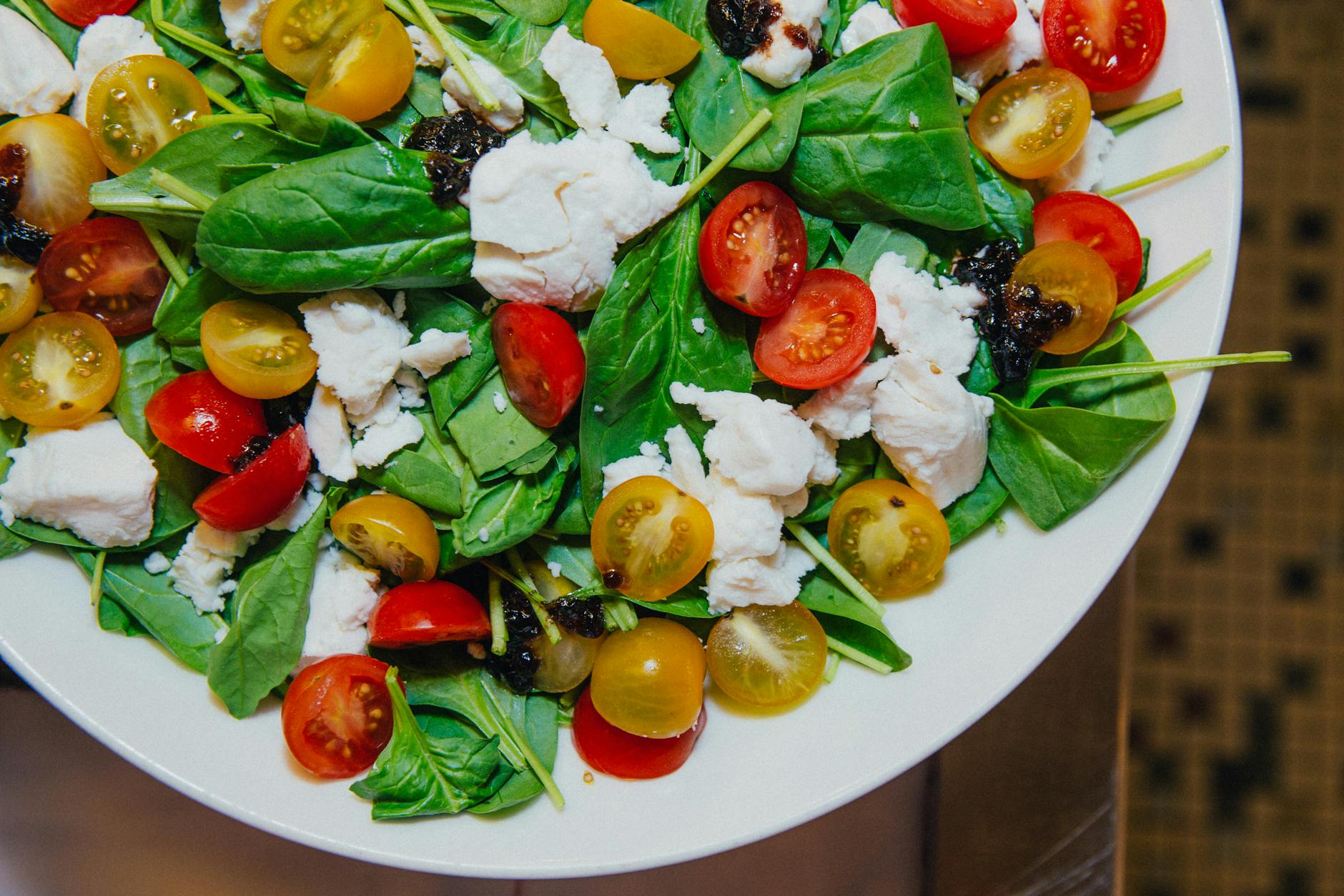
The Rush University research specifically highlighted one serving daily as a meaningful threshold. In practical terms, one serving equals about one cup of raw spinach or half a cup cooked. This isn’t an enormous amount—a typical spinach salad covers it, as does a handful added to pasta, soup, or smoothies. The 2025 study measured benefit in participants who maintained or improved their consumption over the full 10-year period, suggesting that consistency matters more than perfection. Someone who eats spinach four times weekly might see protection; someone who goes months without leafy greens and then eats large amounts for a week won’t see the same benefit.
Age appears relevant too. The cognitive protection observed in the Rush study applied across ages, but the benefit may be most pronounced when started earlier and maintained consistently. A 55-year-old establishing the spinach habit might prevent or delay cognitive decline starting in their 70s. A 75-year-old beginning this dietary pattern also shows cognitive benefits, but the timeline is shorter. Starting now, regardless of age, aligns with the evidence better than waiting for a dementia diagnosis.
Building a Brain-Healthy Diet That Goes Beyond Spinach Alone
While spinach gets headlines, the research on dementia prevention doesn’t pivot on spinach alone—it centers on the broader MIND diet, which emphasizes multiple food categories. The MIND diet combines elements of Mediterranean and DASH dietary approaches, specifically targeting foods with proven cognitive benefits. Leafy greens form the foundation, but the protective effect strengthens when paired with other brain-healthy foods: berries (particularly blueberries and strawberries), nuts, whole grains, fish, legumes, olive oil, and moderate red wine. Importantly, the diet also emphasizes limiting red meat, butter, cheese, and ultra-processed foods.
The 25% reduction in dementia risk observed in the 2025 study reflects people who improved overall dietary patterns, not those who added spinach while maintaining otherwise poor eating habits. This is both sobering and encouraging. Sobering because there’s no single food that prevents dementia. Encouraging because it means you have flexibility—someone who hates raw spinach but loves cooked kale gets the same benefits, and someone who substitutes nuts and fish for less healthy foods may see cognitive improvement even without dramatic dietary overhauls.
Why Observational Studies Can’t Prove Causation—And Why That Still Matters
All the research cited here is observational: researchers measured what people ate and tracked who developed dementia, then found associations. This study design has inherent limitations. It’s theoretically possible that people who eat more spinach also exercise more, sleep better, manage stress more effectively, or have higher education levels—all factors that independently protect against dementia. The studies attempt to control for these variables statistically, but they can’t prove that spinach alone caused the protection.
This is not a reason to dismiss the evidence. No large, long-term study has ever proven that any single food prevents dementia in humans—that would require randomly assigning thousands of people to eat spinach daily or not, then following them for 10 years, a study that’s ethically problematic and logistically impossible. What we have instead is consistent, dose-responsive evidence from multiple independent research teams. When many different studies using different populations find the same relationship, when biological mechanisms explain why that relationship exists, and when the association gets stronger with larger sample sizes, the evidence becomes compelling even without a randomized controlled trial. The evidence here meets that threshold.

Spinach vs. Other Leafy Greens—Is One Better Than Another?
The good news is you’re not locked into spinach. The Rush University research emphasized “leafy greens” broadly, and subsequent analysis shows that kale, collards, Swiss chard, romaine, and even iceberg lettuce (though lower in certain nutrients) all contain the protective compounds. Some contain even more lutein than spinach—kale has about double the lutein per serving. The specific mix of nutrients varies slightly. Kale has more vitamin K, while spinach has more folate. Swiss chard offers good levels of all three key nutrients. Most people achieve better long-term dietary adherence when they eat varied foods they actually enjoy rather than forcing themselves to eat a single vegetable.
Practical factors matter. Raw spinach wilts dramatically, making it seem like you’re eating much more than you are. Cooked spinach concentrates nutrients—a cup of cooked spinach provides roughly the equivalent of five cups of raw. Kale tastes better to some people and can be prepared as crispy chips. Romaine is easier to incorporate into salads. The optimal leafy green is the one you’ll actually eat consistently. Someone who forces down spinach four times weekly but feels resentful about it may abandon the habit entirely, whereas someone who enjoys a kale salad or cooked Swiss chard twice weekly and sticks with it for years accrues genuine protection.
Starting Now—Making Dietary Changes Stick for Long-Term Brain Protection
The research framing dementia prevention as a 10-year endeavor might sound discouraging, but it’s actually the timeline for most of us. Brain changes associated with Alzheimer’s disease start decades before symptoms appear. The cognitive decline measured in the Rush study represented changes occurring over five years. This isn’t a crash-diet scenario where you dramatically overhaul everything overnight and expect immediate results. Instead, it’s about sustainable changes you can maintain for the rest of your life.
Starting with one simple addition—perhaps adding spinach to your breakfast smoothie, ordering a salad with lunch twice weekly, or sautéing greens alongside dinner—creates a foundation. From there, gradual increases feel manageable rather than overwhelming. The participants in the 2025 study who saw the greatest benefit improved their adherence over 10 years, meaning they weren’t perfect from day one. They started somewhere and got progressively better. What matters most is consistency over years, not perfection this week.
Conclusion
The evidence that eating spinach and other leafy greens reduces dementia risk is substantial. Multiple large-scale studies spanning decades consistently show that regular leafy green consumption is associated with better cognitive outcomes, with people eating these vegetables daily showing measurable brain-age advantages over those who rarely eat them. The mechanism is clear: specific nutrients in spinach—vitamin K, lutein, and folate—directly protect brain cells through multiple biological pathways. A 25% reduction in dementia risk for people maintaining or improving leafy green intake over 10 years represents a meaningful protective effect.
The practical takeaway is straightforward: make leafy greens, especially spinach and other nutrient-dense varieties, a regular part of your diet starting now, whatever your age. One serving daily aligns with the research evidence and is entirely achievable through simple additions to meals you already eat. You don’t need perfection, exotic supplements, or extreme dietary overhauls—just consistent inclusion of foods that your brain actually needs to stay healthy as you age. Given the burden of dementia and the absence of pharmaceutical cures, dietary choices remain one of the most powerful preventive tools available.
You Might Also Like
- Eating More wild blueberries Cuts Dementia Risk According to 10 Year Study
- Eating More walnuts Cuts Dementia Risk According to 5 Year Study
- Eating More turmeric Cuts Dementia Risk According to 7 Year Study
For more, see Alzheimer’s Association — medical tests.