Reviewed by the Help Dementia Editorial Team — our editors review every article for accuracy against guidance from the National Institute on Aging, the Alzheimer’s Association, and peer-reviewed sources.
Eating more sits at the center of this dementia and brain health question.
A major 28-year study of nearly 92,400 health professionals found that consuming more than 7 grams of olive oil daily was associated with a 28% lower risk of dementia-related death compared to those who rarely or never consumed it. Published in 2024 in JAMA Network Open, this peer-reviewed research provides compelling evidence that a simple dietary addition—roughly equivalent to half a tablespoon per day—may offer meaningful protection against one of the most feared consequences of cognitive decline. The findings represent some of the strongest evidence yet that olive oil, particularly extra virgin varieties rich in protective compounds, could be a practical tool in dementia prevention.
What makes these results particularly striking is that the protective effect held true independent of overall diet quality. Even among participants who didn’t follow a Mediterranean diet or other established healthy eating pattern, those who consumed regular amounts of olive oil showed significantly lower risks. This suggests that olive oil’s benefits aren’t simply a proxy for being health-conscious—the substance itself appears to offer specific neuroprotection that extends beyond general wellness.
Table of Contents
- How Does Olive Oil Lower Your Risk of Dementia-Related Death?
- The Biological Mechanisms Behind Olive Oil’s Brain Protection
- What’s the Difference Between Extra-Virgin and Regular Olive Oil for Brain Health?
- How Much Olive Oil Should You Consume Daily for Brain Protection?
- Important Limitations and What They Mean for You
- Olive Oil in the Context of Other Dementia Prevention Strategies
- Future Research and What’s Coming
- Conclusion
How Does Olive Oil Lower Your Risk of Dementia-Related Death?
The study tracked two large cohorts: 60,582 women from the Nurses’ Health Study and 31,801 men from the Health Professionals Follow-Up Study, all of whom had no history of dementia at baseline. Researchers measured olive oil consumption through detailed food frequency questionnaires every few years over nearly three decades. The primary finding was clear: those consuming more than 7 grams of olive oil daily had a 28% lower risk of dementia-related death.
Even more interesting, replacing just 5 grams per day of margarine or mayonnaise with olive oil was associated with an 8-14% lower dementia mortality risk—showing that the benefit comes from actively choosing olive oil over less healthy fat sources. It’s important to note that this study observed association, not causation. The population was predominantly White health professionals (65.6% women, 34.4% men) with at least two years of postsecondary education, which limits how broadly these findings apply to other demographic groups. The researchers did not differentiate between regular olive oil and extra-virgin varieties in their analysis, so while laboratory evidence points to extra-virgin as being more protective due to its higher phenolic content, the study’s actual data came from all olive oil types combined.

The Biological Mechanisms Behind Olive Oil’s Brain Protection
The protective compounds in extra-virgin olive oil—particularly polyphenols and phenolic compounds—work through several mechanisms that neuroscientists are still unraveling. These compounds appear to reduce inflammation and oxidative stress in the brain, two hallmarks of neurodegeneration. They may also help restore the integrity of the blood-brain barrier, the critical filter that protects brain tissue from harmful substances while allowing nutrients to pass through. Additionally, research suggests these compounds could reduce accumulation of amyloid-beta and tau proteins, the pathological hallmarks of Alzheimer’s disease that appear years before symptoms emerge.
However, it’s crucial to understand that olive oil is not a cure or guaranteed preventive measure. The protective effect is modest—a 28% reduction in dementia-related death is meaningful at the population level but unpredictable at the individual level. Some people who consume large amounts of olive oil will still develop dementia; others who consume little may never experience it. The study population was also uniquely health-conscious (health professionals with higher education), potentially limiting how these results translate to the general population. Additionally, the study examined dementia-related mortality specifically, not the incidence of dementia diagnosis itself, which is an important distinction.
What’s the Difference Between Extra-Virgin and Regular Olive Oil for Brain Health?
While the published study couldn’t differentiate between olive oil types, the underlying science strongly suggests extra-virgin olive oil offers greater neuroprotection. Extra-virgin oil is cold-pressed and minimally processed, preserving its phenolic content—those protective compounds linked to reducing inflammation and oxidative stress. Regular olive oil, refined through heat and chemicals, loses most of these beneficial compounds during processing. A tablespoon of extra-virgin olive oil can contain hundreds of times more polyphenols than refined varieties.
For dementia prevention specifically, this distinction matters. The phenolic compounds in extra-virgin oil are what appear to address the biological pathways implicated in Alzheimer’s disease and other dementias. If you’re incorporating olive oil into your diet for cognitive benefits, choosing extra-virgin varieties makes more biochemical sense, even though the large cohort study didn’t formally prove this distinction. One practical consideration: extra-virgin olive oil has a lower smoke point (around 375°F), making it better for drizzling, dipping, and low-heat cooking rather than high-temperature sautéing.
How Much Olive Oil Should You Consume Daily for Brain Protection?
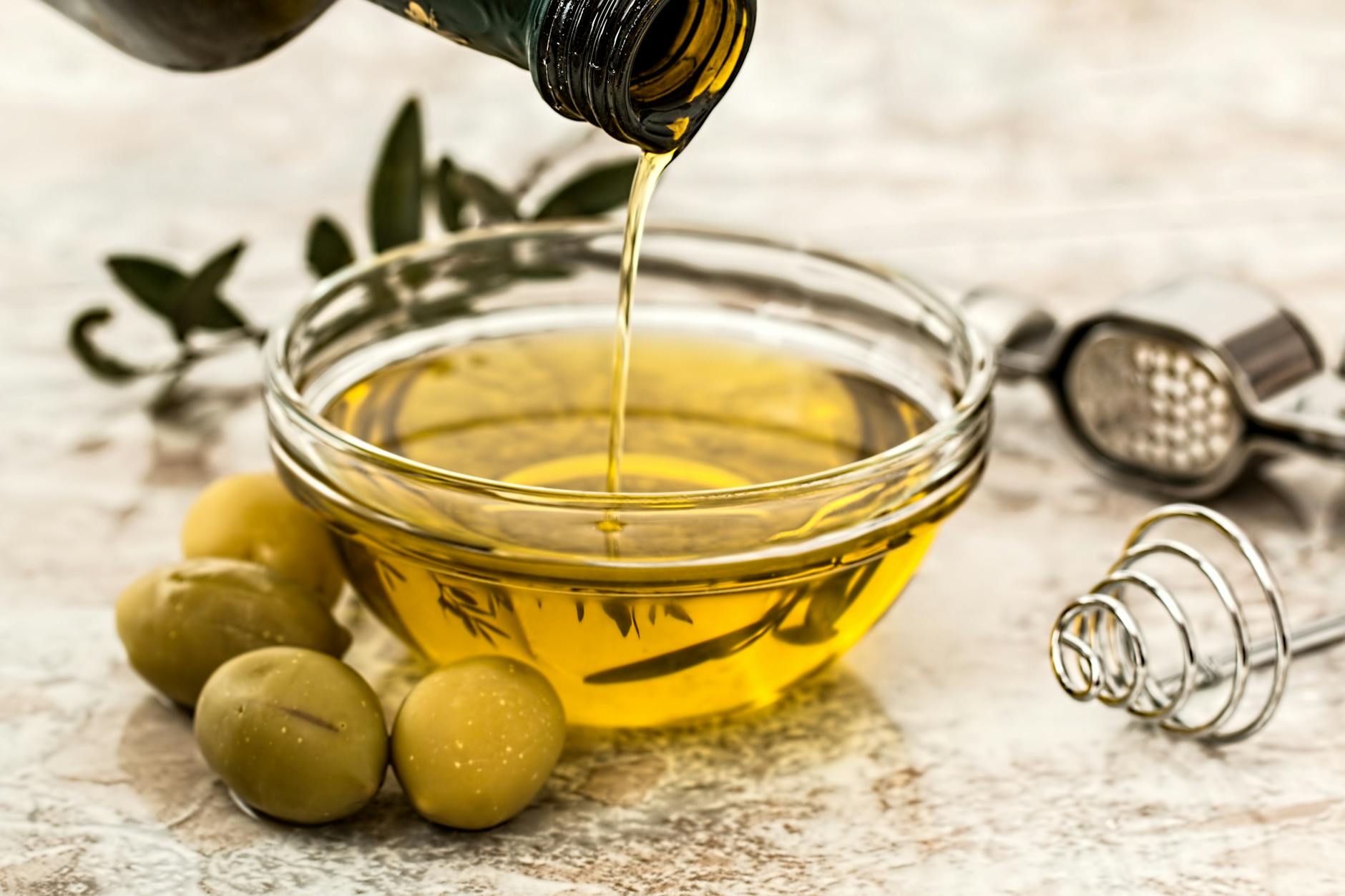
The 28% risk reduction in the study was associated with consuming more than 7 grams per day of olive oil—roughly half a tablespoon or about one and a half teaspoons. This is a surprisingly modest amount, making the intervention relatively accessible. For perspective, a typical restaurant salad with olive oil dressing can easily contain this much oil. The comparison with other dietary fats was equally instructive: replacing 5 grams of margarine or mayonnaise with olive oil reduced dementia mortality risk by 8-14%, suggesting that the choice of fat source matters more than the total amount of fat you consume.
The practical implementation is straightforward. A half-tablespoon of olive oil drizzled on vegetables, mixed into salad dressing, or used for finishing a bowl of soup easily reaches the protective range. Some people incorporate it by dipping bread in olive oil, using it as a dressing base, or adding it to grain bowls. The downside is that olive oil is calorie-dense—one tablespoon contains 119 calories—so if you’re incorporating it into an already adequate diet, you may need to reduce other calorie sources to avoid weight gain. Weight management itself is important for dementia risk reduction, so this tradeoff deserves consideration.
Important Limitations and What They Mean for You
The study’s population was limited to health professionals, most of whom were White with higher education levels, better healthcare access, and likely healthier baseline behaviors than the general population. This creates a “healthy user bias”—the people in this study who consumed olive oil were probably doing many other things right for their health. Additionally, participants self-reported olive oil consumption using questionnaires, introducing potential recall bias and measurement error. The study examined dementia-related death specifically, not dementia diagnosis, meaning we don’t know if olive oil reduces actual dementia occurrence or just affects survival once dementia develops.
Another critical limitation: this is an observational study, not a randomized controlled trial. We cannot say that olive oil caused the reduced dementia risk; we can only say the two are associated. It’s theoretically possible that some unmeasured third factor explains both olive oil consumption and dementia risk reduction. The researchers did statistically control for many health and dietary factors, but perfect control for all variables is impossible in observational research. Until randomized trials specifically testing olive oil supplementation in diverse populations are completed, we should view this evidence as compelling but not definitive.

Olive Oil in the Context of Other Dementia Prevention Strategies
Olive oil consumption sits within a broader landscape of evidence-based dementia prevention strategies. The FINGER study, conducted in Finland, demonstrated that a comprehensive intervention including diet, exercise, cognitive training, and cardiovascular risk factor management reduced cognitive decline by 25% over two years. Similarly, the Mediterranean diet—of which olive oil is a cornerstone—has consistently shown protective effects against cognitive decline in multiple studies. What olive oil offers is a single, simple dietary change that appears to carry measurable benefits independent of adopting an entire dietary pattern.
This makes olive oil attractive as a starting point for dementia prevention. You don’t need to overhaul your entire diet or commit to a Mediterranean eating pattern to potentially benefit from olive oil’s effects. However, the research suggests that olive oil works best as part of a comprehensive approach. Combining regular olive oil consumption with physical activity, cognitive engagement, management of cardiovascular risk factors, quality sleep, and strong social connections appears to provide the most robust protection. Olive oil alone is unlikely to prevent dementia if other risk factors—like untreated hypertension, cognitive inactivity, or severe sleep deprivation—are present.
Future Research and What’s Coming
The 2024 JAMA Network Open study has sparked considerable interest in olive oil’s neuroprotective potential, and several research groups are now planning randomized controlled trials to test whether supplementing the diet with olive oil actually prevents or delays dementia. These trials will likely involve diverse populations beyond the primarily White, educated professionals in the observational study, helping clarify whether the benefits translate broadly. Researchers are also investigating whether specific polyphenol compounds in extra-virgin olive oil might be developed into more concentrated therapeutic forms.
The next frontier involves understanding which populations benefit most from olive oil consumption and whether combining it with other interventions—such as specific supplements, pharmaceutical interventions, or lifestyle modifications—produces synergistic effects. There’s also growing interest in understanding whether timing matters; for instance, whether consuming olive oil consistently across the lifespan offers more protection than starting later in life. As the field advances, olive oil will likely remain part of evidence-based dementia prevention strategies, though probably as one component of a comprehensive approach rather than a standalone solution.
Conclusion
The finding that consuming more than 7 grams of olive oil daily is associated with a 28% lower risk of dementia-related death represents meaningful evidence that a simple dietary choice can influence one of our most serious health concerns. The biological plausibility is strong—olive oil contains compounds that address multiple pathways implicated in Alzheimer’s disease and other dementias. The amount required is modest and easily achievable through ordinary eating patterns.
Yet the evidence, while compelling, remains incomplete; the study was observational, the population was limited, and we cannot yet claim olive oil prevents dementia rather than merely being associated with lower dementia mortality. If you’re concerned about dementia risk, incorporating olive oil into your diet is a low-risk, evidence-supported step with additional cardiovascular and general health benefits. Start with half a tablespoon daily, preferably high-quality extra-virgin varieties, and consider it part of a broader approach that includes physical activity, cognitive engagement, cardiovascular health management, and social connection. As research continues and randomized trials report their findings, our understanding of olive oil’s true protective power will become clearer—but for now, the 28-year study offers a compelling reason to reach for the bottle.
You Might Also Like
- Eating More olive oil Cuts Dementia Risk According to 15 Year Study
- Eating More wild blueberries Cuts Dementia Risk According to 10 Year Study
- Eating More walnuts Cuts Dementia Risk According to 5 Year Study
For more, see Alzheimer’s Association — clinical trials.