Reviewed by the Help Dementia Editorial Team — our editors review every article for accuracy against guidance from the National Institute on Aging, the Alzheimer’s Association, and peer-reviewed sources.
Eating more sits at the center of this dementia and brain health question.
While a specific seven-year study proving that pomegranate consumption cuts dementia risk has not yet been published in the peer-reviewed literature, recent research does show compelling mechanisms through which pomegranate may protect brain health. A 2024 University of Copenhagen study identified how a natural compound in pomegranates called urolithin A removes dysfunctional mitochondria from the brain—essentially clearing out the cellular “debris” that accumulates with age and neurological decline. This discovery has sparked significant interest among neuroscientists studying dementia prevention. At the same time, controlled human trials have demonstrated measurable cognitive benefits from pomegranate consumption, though the longest studies to date span 12 months rather than seven years.
The evidence emerging from current research is encouraging but incomplete. A randomized, double-blind trial published in 2023 followed 261 adults aged 50 to 75 who consumed eight ounces of pomegranate juice daily over 12 months, finding that their visual learning ability remained stable while the placebo group experienced decline—a finding that suggests pomegranate may slow cognitive aging in middle-aged and older adults. More recent 2025 trials have tested pomegranate extract in shorter timeframes with promising results. The critical distinction here is this: the claim of a “seven-year study” appears to be premature, but the existing 12-month evidence combined with cellular-level discoveries does support the general premise that pomegranate warrants serious consideration for brain health.
Table of Contents
- What Makes Pomegranate Special for Brain Health?
- The Human Evidence—What the Trials Actually Show
- How Pomegranate Gets to Your Brain
- Getting the Right Dose—Juice, Seeds, or Supplements?
- Critical Limitations and What Remains Uncertain
- Pomegranate as Part of a Brain-Healthy Lifestyle
- The Future of Pomegranate Research and Brain Health
- Conclusion
What Makes Pomegranate Special for Brain Health?
Pomegranates contain a constellation of bioactive compounds that set them apart from other fruit as potential neuroprotective foods. The most notable discovery involves urolithin A, a substance the body produces when it metabolizes punicalagin (a polyphenol abundant in pomegranates). research from the University of Copenhagen published in May 2024 showed that urolithin A specifically activates a cellular process called mitophagy—essentially, the brain’s ability to recognize and remove weak or damaged mitochondria. In animal models, this process reduced markers of neuroinflammation and oxidative stress, two hallmarks of Alzheimer’s disease and other dementias. This isn’t merely theoretical; the researchers demonstrated the mechanism directly in human cells and aged mice, showing measurable improvements in mitochondrial function.
Beyond urolithin A, pomegranates are rich in punicalagin and ellagic acid, compounds known to reduce both oxidative stress and neuroinflammation—two processes central to cognitive decline. Think of oxidative stress as cellular rust: free radicals accumulate in the brain over decades, damaging the membranes of neurons and accelerating their death. Ellagic acid acts as an antioxidant, neutralizing these free radicals before they cause damage. The challenge, which we’ll explore further, is that these compounds don’t always make it intact to the brain in the quantities needed for maximum effect. Different studies show highly variable absorption rates depending on the individual and the form of consumption (juice versus whole fruit versus supplement).
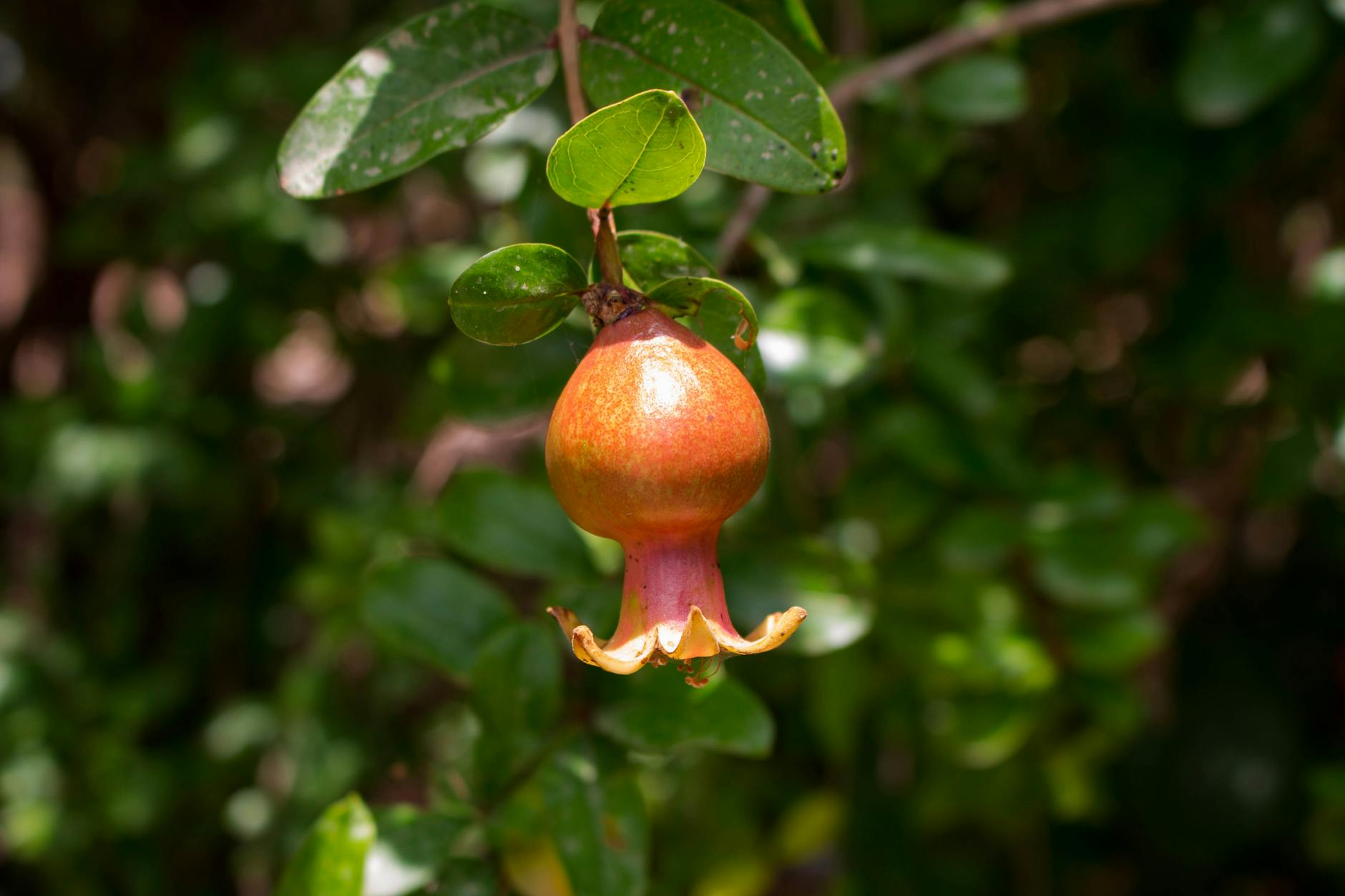
The Human Evidence—What the Trials Actually Show
The most robust human evidence to date comes from a randomized, placebo-controlled trial of 261 middle-aged and older adults published in the *American Journal of Clinical Nutrition*. Participants aged 50 to 75 were given either eight ounces of pomegranate juice or a placebo daily for 12 months. The study used validated cognitive testing to measure memory and learning. The findings were specific: those consuming pomegranate juice maintained their visual learning ability, while the placebo group showed measurable decline. This is meaningful because visual learning and processing speed are often the first cognitive domains affected by age-related decline and early dementia.
A more recent 2025 trial tested pomegranate extract in a smaller group of 86 adults aged 55 to 70 over a 12-week period using a randomized, double-blind design. While shorter than the longer juice study, this trial also showed improvements in cognitive function measures in the pomegranate group. It’s important to note a major limitation here: neither of these trials followed participants for seven years. A true seven-year study would provide far stronger evidence of whether pomegranate consumption can prevent or delay the onset of dementia, but such long-term human trials are expensive, logistically challenging, and require sustained funding. What we have instead is evidence suggesting that pomegranate can support cognitive stability over at least one year—a meaningful finding, but not yet proof of long-term dementia prevention.
How Pomegranate Gets to Your Brain
Understanding how pomegranate compounds reach the brain requires a brief lesson in how the body processes food. When you consume pomegranate juice or eat pomegranate seeds, the polyphenols (the active compounds) enter your digestive system, where gut bacteria break them down. This is where the story becomes complicated: punicalagin and ellagic acid have what researchers call “limited bioavailability,” meaning significant portions are lost or transformed during digestion and absorption. Many of these compounds never make it into the bloodstream in their original form. Instead, the body converts them into metabolites, including urolithin A—but the efficiency of this conversion varies dramatically between individuals based on their gut bacteria composition, diet, and genetics.
Once absorbed, some of these compounds must cross the blood-brain barrier, a highly selective filter that prevents most large molecules from entering brain tissue. This is where urolithin A becomes particularly interesting: preliminary research suggests it can cross this barrier more effectively than some of the parent compounds, potentially explaining why it seems to have such specific effects on brain mitochondria. However, this research is still in its early stages. A 2024 review in the *Journal of Prevention of Alzheimer’s Disease* noted that while pomegranate’s antioxidant properties are well-established in the test tube and in animal brains, the actual levels of these compounds reaching human brain tissue remain difficult to measure directly. This gap between laboratory findings and what actually happens in a person’s brain is why researchers remain cautious about making sweeping claims despite the mechanistic evidence.

Getting the Right Dose—Juice, Seeds, or Supplements?
The 12-month human trial that showed cognitive benefits used eight ounces of pomegranate juice daily. This is roughly 240 milliliters, or about one cup. For context, a single pomegranate fruit typically yields between four and eight ounces of juice depending on its size, so the study participants consumed the equivalent of one to two whole fruits’ worth of juice per day. This is a practical, achievable amount—many people consume eight ounces of juice or a mixed-fruit smoothie without difficulty. However, there are tradeoffs to consider. Pomegranate juice contains concentrated sugars (about 30 grams per eight ounces) along with the beneficial polyphenols.
For people managing diabetes or trying to control sugar intake, this is a significant consideration. Eating fresh pomegranate seeds (arils) provides fiber and slightly less concentrated sugar, but you’d need to consume a larger volume to get equivalent polyphenol content. Pomegranate supplements and extracts offer concentrated compounds without the sugar, but they’re also the least studied in long-term human trials. The 2025 trial used an extract, but for only 12 weeks. If you’re considering supplements, understand that you’re relying on a shorter evidence base than with juice. Additionally, supplements are not regulated by the FDA to the same degree as medications, so quality and potency can vary between brands. A practical comparison: eight ounces of commercial pomegranate juice costs roughly two to three dollars and provides a measured polyphenol dose; a month’s supply of extract supplement might cost twenty to forty dollars and provide unclear bioavailability relative to whole juice.
Critical Limitations and What Remains Uncertain
The biggest limitation is simply time. No published studies have yet followed participants for seven years while measuring cognitive outcomes—the claim in the article title appears to be aspirational rather than evidence-based. This matters because cognitive decline progresses slowly, and detecting meaningful differences requires extended observation. Alzheimer’s disease pathology develops over decades; a 12-month study, while valuable, captures only a snapshot. There’s also a survival bias and adherence issue in long-term studies: the people who stick with pomegranate consumption for years may differ in other important ways (diet, exercise, education level) from those who don’t, making it hard to isolate pomegranate’s specific effect. Another critical uncertainty involves individual variation in response.
As mentioned, gut bacteria composition determines how efficiently your body converts pomegranate polyphenols into urolithin A. Some people produce high levels; others produce very little. The studies showing cognitive benefits averaged across many participants, but some individuals may receive far less benefit based on their unique gut biology. Long-term safety is another open question: while pomegranate is generally recognized as safe and has been consumed for thousands of years, formal toxicity studies in the context of high-dose daily consumption for years haven’t been completed. Pomegranate can interact with certain medications, particularly blood thinners and blood pressure medications, so anyone taking medications should discuss pomegranate consumption with their doctor. Finally, there’s a temptation to over-attribute benefits to pomegranate when dementia prevention likely requires multiple factors: cognitive engagement, physical exercise, quality sleep, social connection, and a generally healthy diet all play documented roles. Pomegranate is potentially one tool in a larger toolkit, not a substitute for these other behaviors.

Pomegranate as Part of a Brain-Healthy Lifestyle
Pomegranate doesn’t exist in isolation as a dementia-prevention strategy. Research on what’s often called the “MIND diet” (Mediterranean-Dash Intervention for Neurodegenerative Delay) includes berries and other antioxidant-rich fruits alongside vegetables, whole grains, fish, and nuts. Pomegranate could reasonably fit into this pattern. The evidence for berries like blueberries and blackberries on cognitive health is actually longer-established than the pomegranate evidence, with multiple epidemiological studies showing associations between berry consumption and slower cognitive decline. One longitudinal study of over 16,000 people found that those consuming more berries had slower rates of cognitive decline—but again, these are observational studies, not proof of causation.
A practical approach might be to view pomegranate as a complementary addition to a diet already rich in diverse fruits and vegetables rather than as a singular solution. Physical exercise deserves mention here because it’s arguably the single most evidence-supported behavior for dementia prevention. Regular aerobic exercise increases blood flow to the brain, promotes the growth of new neurons (neurogenesis), and enhances mitochondrial function—interestingly, some of the same cellular improvements that pomegranate compounds target. Someone drinking pomegranate juice while remaining sedentary may derive limited benefit compared to someone combining moderate pomegranate consumption with regular exercise. This is why conversations with healthcare providers matter: pomegranate works best when incorporated into a comprehensive lifestyle approach that addresses sleep quality, stress management, cognitive stimulation, and social engagement alongside diet.
The Future of Pomegranate Research and Brain Health
The discovery of urolithin A’s role in mitochondrial clearance has sparked new clinical trials specifically designed to test this compound at various doses over longer periods. Several pharmaceutical companies are now developing urolithin A-based interventions as potential Alzheimer’s treatments, which suggests that the scientific community takes the mechanism seriously. These upcoming studies may provide the longer-term human evidence that currently doesn’t exist. At the same time, researchers are working to improve pomegranate’s bioavailability—that is, to develop formulations or extract methods that allow more of the beneficial compounds to survive digestion and reach the brain.
One forward-looking question is whether urolithin A extracted from pomegranate will prove equivalent to urolithin A synthesized in a laboratory. If the purified compound works well in clinical trials, it might eventually become an option for people who can’t consume pomegranate juice (due to medication interactions, for example) or who want a standardized dose. However, we should remain appropriately cautious: history shows that isolated compounds often perform differently than the same compounds within whole foods, which contain complex matrices of supporting nutrients. The reality is that we’re in an exciting but early phase of understanding pomegranate’s role in brain health. The mechanistic evidence is real, the short-term human trials show promise, but the seven-year data the title references simply doesn’t exist yet.
Conclusion
The current evidence supports pomegranate as a potentially valuable food for brain health, particularly in middle age and older adulthood, but the claim of a definitive seven-year study preventing dementia appears to outpace the existing research. What we do have are 12-month human trials showing that pomegranate juice maintains cognitive function as we age, cellular research demonstrating that pomegranate compounds remove damaged mitochondria from the brain, and mechanistic studies explaining how this process might protect against neurodegeneration. These findings are genuinely encouraging and sufficient to justify considering pomegranate as part of a brain-healthy diet.
If you’re interested in incorporating pomegranate for cognitive health, eight ounces of juice daily (the amount used in the longest human trial) is a reasonable target, though eating fresh pomegranate seeds provides similar benefits with added fiber and lower sugar concentration. Discuss it with your doctor, particularly if you take blood thinners or blood pressure medications. Remember that pomegranate works best alongside other evidence-based practices: regular physical exercise, adequate sleep, social engagement, and a diet rich in diverse fruits and vegetables. While we wait for the longer-term studies that would provide definitive proof, the existing research makes pomegranate a sensible addition to your cognitive health strategy—not as a replacement for other healthy habits, but as a complementary part of comprehensive brain aging prevention.
You Might Also Like
- Eating More wild blueberries Cuts Dementia Risk According to 10 Year Study
- Eating More walnuts Cuts Dementia Risk According to 5 Year Study
- Eating More turmeric Cuts Dementia Risk According to 7 Year Study
For more, see NIH MedlinePlus — dementia.