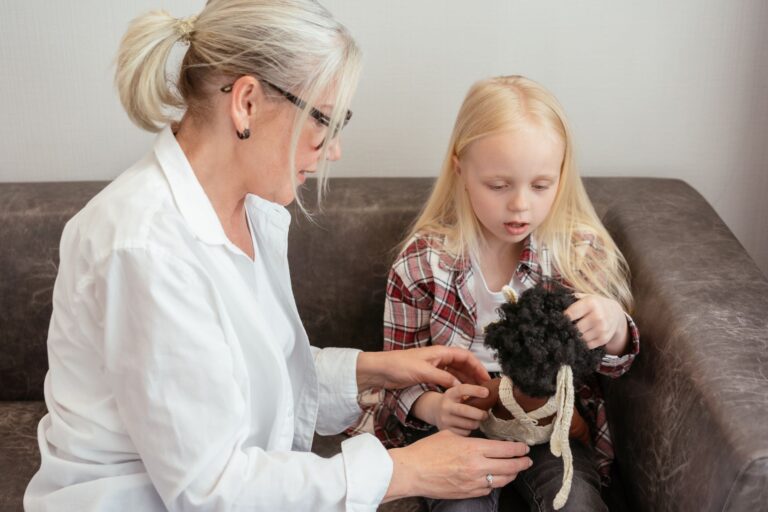
Doll therapy is a person-centred activity in which a person with dementia receives comfort, purpose, or connection from a lifelike doll or soft toy. It may help some people at home, but it is not suitable for everyone. The strongest evidence comes from care-home studies, not private home care. Results suggest possible improvements in behavior, communication, and emotional state, but doll therapy has not been shown to improve cognition.
Medical information disclaimer: This article is for general educational purposes only and does not provide medical advice, diagnosis, or treatment. Always consult a physician or other qualified health professional about symptoms, medications, tests, or treatment decisions.
Table of Contents
- Who Might Benefit?
- What Supplies Are Needed?
- How Should You Introduce It?
- What Safety Problems Should You Watch For?
- What Does the Evidence Actually Show?
- Frequently Asked Questions
Who Might Benefit?
Doll therapy may suit someone with advanced dementia, limited verbal communication, anxiety, loneliness, or a strong nurturing instinct. The person may enjoy holding, rocking, dressing, or talking to the doll. It should remain voluntary.
A person who ignores the doll, pushes it away, becomes upset, or seems confused about it may not be a good candidate. A 2024 meta-analysis in *Geriatric Nursing* reviewed ten studies of older nursing-home residents. It found improvements in behavioral and psychological symptoms but no significant cognitive improvement the 2024 meta-analysis.
What Supplies Are Needed?
Start with an ordinary doll or cuddly toy. Dementia UK says caregivers do not need costly realistic or animated products. Choose a soft, washable item with secure parts and a manageable size.
Avoid toys that make crying, barking, or other sudden sounds, since these may distress the person or people nearby. offer a choice when possible: A duplicate can reduce distress if the original is lost or unavailable. Tell home-care staff that the item matters to the person.
- A doll or soft animal
- A quiet toy or one with no electronic parts
- One item for daily use and a duplicate for cleaning or replacement
How Should You Introduce It?
Begin without pressure. Dementia UK recommends leaving the doll on a chair, observing the person's response, and allowing voluntary discovery Dementia UK's guidance. If the person shows interest, offer the doll calmly.
You might place it nearby, comment that it is there, or ask whether they would like to hold it. Do not insist on conversation or caregiving tasks. Treat the activity as meaningful therapy, not childish play. If the person calls the doll a "baby," avoid correcting them, because correction may increase distress or confusion.
What Safety Problems Should You Watch For?
Observe whether the doll calms the person or creates new problems. Stop or move it away if the person refuses it, becomes distressed, grows agitated, or cannot settle without it. Watch for over-attachment or possessiveness. Conflict may arise if visitors, children, or caregivers move the doll.
Keep it in a known place and explain its importance to anyone providing care. Doll use should not displace meals, sleep, hygiene, medication routines, or meaningful activities. Try using it earlier in the day, placing it elsewhere at mealtimes, or arranging "babysitting" if self-care is being neglected. A 2026 clinical-trial protocol monitors distress, agitation, possessiveness, worsening confusion, and over-attachment. It stops exposure when refusal or distress occurs and uses individual, non-shared dolls cleaned under infection-control procedures the clinical-trial protocol.
What Does the Evidence Actually Show?
A 2022 systematic review of seven studies involving 295 participants, with a mean age of 85, found reduced disruptive behavior and improvements in communication and emotional state. It also called for larger, more rigorous randomized studies with follow-up the 2022 systematic review.
These findings support trying doll therapy carefully for an interested individual. They do not prove that it works for every person with dementia, or that results from nursing homes will transfer directly to home care. The practical test is the person's response over time: comfort, engagement, and calmer behavior may support continued use; distress, neglect of basic needs, or conflict are reasons to stop or change the routine.
Frequently Asked Questions
Should I buy an expensive therapeutic doll?
No. An ordinary doll or cuddly toy may be enough; costly realistic or animated products are unnecessary.
What if the person rejects the doll?
Do not force interaction. Remove it and consider offering a soft animal later only if the person shows interest.
Can children play with the doll?
Keep the doll away from children or visitors if the person becomes possessive or distressed when others handle it.