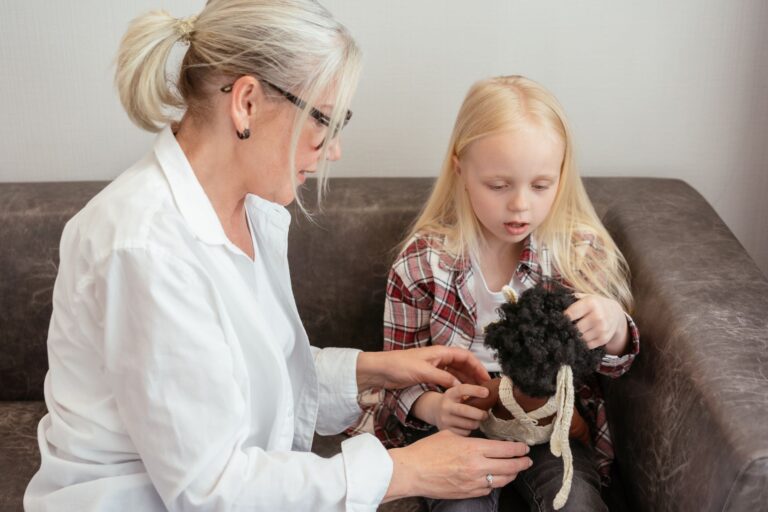
Doll therapy may help some people with dementia engage in a calming, purposeful activity, but it can also cause distress. In home care, signs of benefit include voluntary caring behavior and calmer mood; signs of harm include refusal, agitation, aggression, possessiveness, or disrupted daily care.
The strongest controlled evidence comes from nursing homes, not private homes. A 2025 home-care report described one person and noted that home use remains underreported, so effectiveness and safety at home are not established, according to Clinical Case Reports. Clinical Case Reports, 2025.
Medical information disclaimer: This article is for general educational purposes only and does not provide medical advice, diagnosis, or treatment. Always consult a physician or other qualified health professional about symptoms, medications, tests, or treatment decisions.
Table of Contents
- What doll therapy means in dementia care
- What positive engagement looks like
- Which responses mean stop or reassess?
- How to try it safely at home
- What the evidence can—and cannot—tell families
What doll therapy means in dementia care
doll therapy involves offering a doll as an activity or comfort object. The person may hold it, talk to it, care for it, wash its clothes, or include it in familiar routines. The aim is not to make the person pretend that the doll is a real baby.
It is to observe whether the object supports interest, connection, purpose, or calm. Responses vary widely, and accepting a doll does not prove that it provides lasting benefit. Doll therapy should supplement human attention, not replace conversation, reassurance, meaningful activity, or hands-on care.
What positive engagement looks like
Positive engagement usually appears voluntary and sustained rather than forced. Possible signs include: The Alzheimer's Society describes voluntary holding and caring behaviors as possible positive responses, while emphasizing that activities should reflect the individual's interests and abilities.
Alzheimer's Society, Activities Handbook, 2023 In a 30-day randomized nursing-home trial of 134 women with moderate-to-severe dementia, participants offered dolls showed more interest, caregiving, and exploratory behavior than those offered a cube. They also more readily accepted brief separation from a nurse, according to the Journal of Clinical Medicine. Journal of Clinical Medicine, 2022.
- Reaching for or choosing the doll
- Holding, cuddling, cleaning, or dressing it
- Washing or caring for its clothes
- Showing interest in its features
- Appearing calmer, more connected, or more purposeful
Which responses mean stop or reassess?
Refusal is enough reason to stop offering the doll at that moment. Ignoring it may simply mean the activity is not meaningful to that person, while agitation or aggression suggests that it may be causing distress.
Watch for changes after the doll is introduced, especially: A 2026 feasibility trial treated refusal, distress, possessiveness, conflict, and interference with essential routines as reasons for individualized review and possible discontinuation. It recorded six mild-to-moderate events possibly or probably related to doll therapy, with no serious related event. Frontiers in Public Health, 2026.
- Pushing it away, hiding it, or repeatedly saying no
- Anxiety, anger, crying, or aggression
- Possessiveness that creates conflict with other people
- Distress when someone moves or removes the doll
- Interference with eating, sleep, hygiene, medication, or clinical care
How to try it safely at home
Offer the doll without pressure. Let the person decide whether to touch or keep it, and allow them to choose features such as its clothing or appearance when possible. Begin during a calm period, stay nearby, and observe both words and body language.
Compare the person's response with how they were before the activity rather than assuming that any interaction is helpful. If distress appears, remove the doll calmly and promptly. Do not argue about whether it is real, insist that the person care for it, or use it to distract from urgent care. Try another activity later only if the person shows interest.
What the evidence can—and cannot—tell families
Doll therapy may reduce distress or support engagement for some people, but the research base remains small. Controlled outcome studies have mainly involved nursing-home residents, so results cannot be assumed to apply to a person living at home. The response may also change from day to day.
A person who enjoys holding the doll once may ignore it later, while another person may become distressed if the doll is moved, shared, or introduced during a difficult care task. The practical decision is individual: continue only while the person appears willing, comfortable, and safely engaged. Stop when the activity produces distress or interferes with essential care.