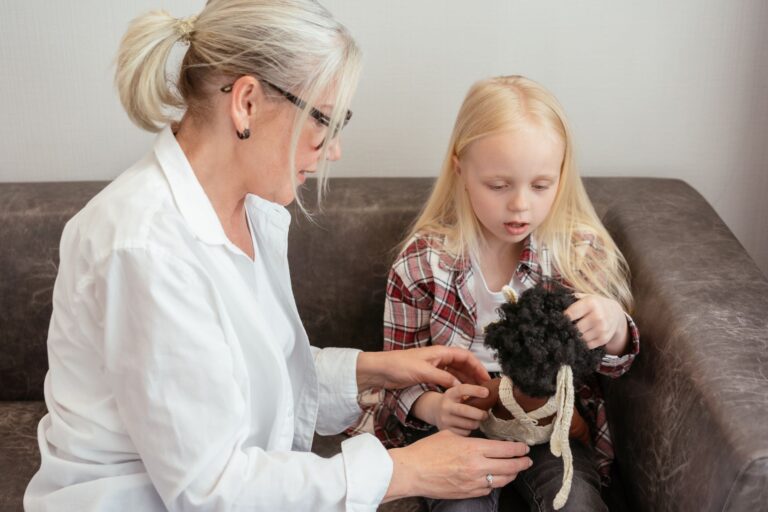
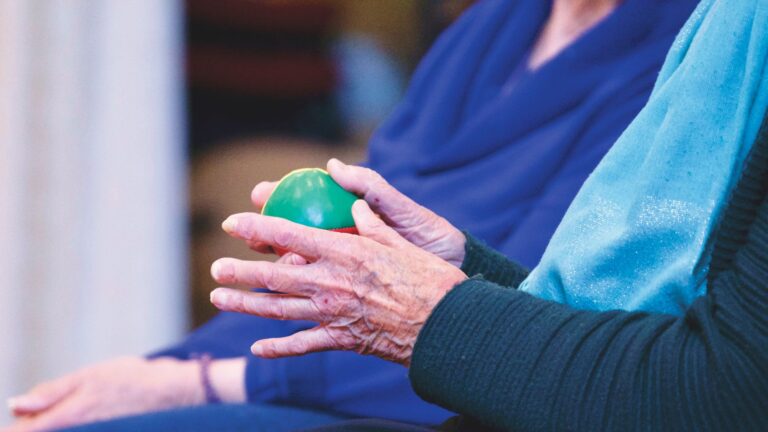
Yes, a person with late-stage dementia may benefit from doll therapy, but no standard step-by-step regimen has been established for this stage. Doll therapy means offering a lifelike doll or soft toy animal for comfort, connection, or communication—not treating the person like a child. The best approach is a voluntary, closely observed trial. The 2022 *Healthcare* systematic review found only seven eligible studies involving 295 participants, 79% of them women, and called for larger, more rigorous trials (systematic review).
Medical information disclaimer: This article is for general educational purposes only and does not provide medical advice, diagnosis, or treatment. Always consult a physician or other qualified health professional about symptoms, medications, tests, or treatment decisions.
Table of Contents
- Who might benefit from doll therapy?
- How should a caregiver introduce the doll?
- How can the toy support communication?
- What problems should caregivers watch for?
- What does the research actually show?
Who might benefit from doll therapy?
doll therapy may be worth considering when a person with dementia seems withdrawn, anxious, restless, distressed, or less engaged. The purpose is to support comfort, wellbeing, and communication, not to infantilize the person, according to Dementia UK (Dementia UK guidance, updated June 2025).
Some people will dislike dolls or find them unacceptable. When possible, let the person choose between a doll and a soft toy animal. The colour, texture, size, and facial features may affect their response, and some people in later-stage dementia enjoy holding or caring for the toy (Alzheimer's Society activity handbook).
How should a caregiver introduce the doll?
Begin by offering the doll quietly. Place it within reach or hand it over gently, then allow the person to decide whether to hold it.
Do not insist, place it in their arms without consent, or repeatedly encourage them after they turn away. Use these steps: A person may respond better to a toy they select themselves. If the person accepts it, let them hold it or care for it in their own way rather than directing every action.
- Offer one lifelike doll or soft toy animal.
- Watch for interest, comfort, eye contact, touch, or engagement.
- Stop if the person resists, becomes upset, or shows no interest.
- Try again another day only if the person seems receptive.
- Record what the person prefers and tell other caregivers.
How can the toy support communication?
Use the doll or toy as a gentle conversation prompt. Ask simple questions such as, "Would you like to hold the baby?" or make neutral observations such as, "The baby is resting." Dementia UK describes this approach for people who have difficulty communicating verbally (Dementia UK doll-therapy guidance). Keep the interaction flexible. The person may want to hold the toy silently, stroke it, carry it, or ignore it after several minutes.
Comfort does not require conversation. If the person treats the doll as real, do not argue or try to correct the belief. Respond respectfully and focus on whether the interaction is calming and safe. Keep a duplicate available if losing or cleaning the doll would cause major distress.
What problems should caregivers watch for?
Monitor whether the toy supports comfort or creates new distress. A person may become upset if another resident touches it, or may focus on caring for it while neglecting meals or sleep. Keep it out of sight during meals, avoid leaving it in communal areas, and tell care staff that it matters to the person. Stop the activity and reassess if the person becomes frightened, angry, more agitated, or unable to sleep.
Also check for practical causes of distress before assuming the person needs a doll. The National Institute on Aging advises looking for pain, constipation, sleep loss, medication effects, environmental changes, noise, and loneliness, with clinical assessment when needed (National Institute on Aging guidance). Doll therapy should not replace attention to physical needs, medical concerns, or personal preferences. The person's response matters more than whether the activity seems appropriate to someone else.
What does the research actually show?
Evidence suggests possible benefits for behavioral symptoms and caregiver distress, but results do not prove that doll therapy works for everyone. In a 30-day randomized trial of 134 women with moderate-to-severe dementia in nursing homes, doll therapy reduced neuropsychiatric-symptom and caregiver-distress scores compared with a cube control, but it did not change stress biomarkers (30-day randomized trial). A smaller randomized study of 29 nursing-home residents aged 76 to 96 with severe Alzheimer's or vascular dementia found reduced behavioral symptoms and formal-caregiver distress only in the doll group, not the sensory hand-warmer control.
Eating behavior did not improve (study indexed by PubMed). These findings support trying the activity carefully when the person appears receptive. They do not establish a fixed schedule, guarantee improvement, or show that doll therapy changes the underlying dementia.