Reviewed by the Help Dementia Editorial Team — our editors review every article for accuracy against guidance from the National Institute on Aging, the Alzheimer’s Association, and peer-reviewed sources.
Dementia care sits at the center of this dementia and brain health question.
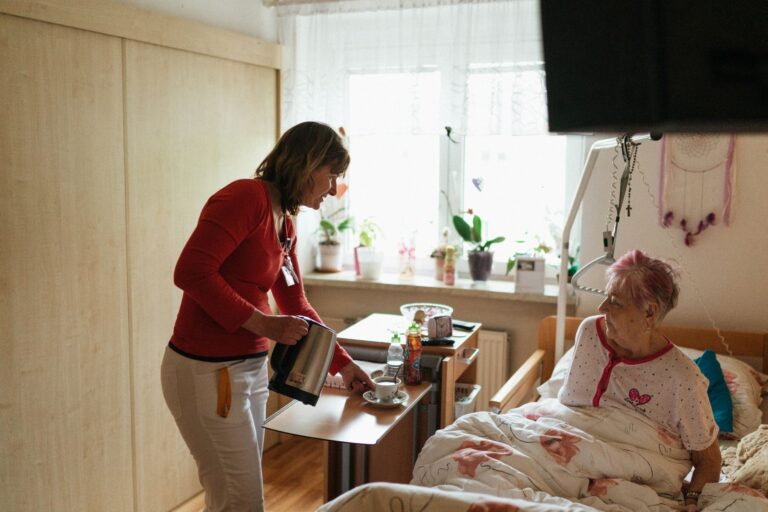
Home care for someone with dementia can work well in early stages, but there comes a point when the demands of around-the-clock supervision, complex medical needs, and behavioral management exceed what a home environment can safely provide. The decision to transition to a care facility isn’t a failure—it’s a recognition that professional care settings offer specialized training, 24/7 staffing, secure environments, and medical oversight that home care simply cannot replicate. Consider the case of Margaret, whose family managed her early-stage Alzheimer’s at home with hired caregivers for three years. By year four, as her confusion deepened and she began wandering at night, the family realized that no amount of monitoring equipment or part-time staff could prevent dangerous situations.
What tipped the decision wasn’t a single crisis but the accumulation of near-misses: finding her trying to leave the house at 2 a.m., discovering she’d forgotten how to use the bathroom safely, and watching her adult daughter’s own health deteriorate from stress. For millions of American families, this moment comes as both a relief and a profound loss. The transition from home care to a facility is deeply personal, often clouded by guilt and ambivalence. Yet the reality is practical: dementia is progressive, and at certain stages, the risks of remaining at home—falls, medication errors, wandering, untreated infections—outweigh the emotional comfort of familiar surroundings. Understanding the signs that home care is becoming insufficient, weighing the available options, and planning the transition thoughtfully can transform what feels like an impossible decision into a compassionate choice aligned with what’s genuinely best for both the person with dementia and their family.
Table of Contents
- Recognizing When Home Care Is No Longer Safe
- Understanding the Financial Reality of Care Facility Placement
- Types of Care Facilities and What Each Offers
- The Economic and Emotional Burden of Family Caregiving
- Navigating the Transition and Behavioral Challenges
- Ensuring Quality of Life After Placement
- Planning Ahead and the Future of Dementia Care
- Conclusion
Recognizing When Home Care Is No Longer Safe
The signs that home care has become inadequate often appear gradually, making them easy to rationalize or overlook. A person with dementia may struggle with activities of daily living—bathing, toileting, dressing, eating—to the point where even careful supervision can’t prevent accidents or poor nutrition. Wandering behavior, especially at night or when alone, becomes a serious safety concern that no amount of locks or monitoring can entirely prevent. Aggression or severe agitation, sometimes unpredictable and directed at caregivers, creates a dangerous dynamic that’s difficult to manage safely in a home setting. Poor hygiene that persists despite repeated reminders, difficulty swallowing or eating, incontinence requiring constant management, and a progressive inability to recognize family members are all indicators that the complexity of care is escalating beyond home-based solutions.
One frequently overlooked warning sign is the condition of the primary caregiver. When adult children or spouses are providing or coordinating care 24/7—managing medications, handling behavioral crises, losing sleep, missing work, and experiencing physical exhaustion—the system is already failing. Caregiver stress and burnout are not personal weakness; they are signals that the care demands exceed what one or two people can sustainably provide. Studies show that family caregivers for people with dementia experience rates of depression and anxiety significantly higher than the general population. A caregiver in this state cannot provide the safe, patient, attentive care that dementia demands, which paradoxically means their loved one is at greater risk, not less.

Understanding the Financial Reality of Care Facility Placement
The cost of transitioning to professional dementia care is substantial and varies widely depending on location and the type of facility. Memory care units, specifically designed for people with Alzheimer’s and other dementias, average $8,019 per month nationally—about $96,228 annually—but can range from $4,800 to $11,200 per month depending on the state. Over a typical stay of 2 to 3 years, families should anticipate total costs between $183,000 and $275,000. Nursing homes, which provide more medical care than memory care units, cost more: $328 per day ($9,842 per month) for a semiprivate room or $376 per day ($11,294 per month) for a private room. These costs are projected to increase roughly 12.5% by 2030, meaning the semiprivate room costs will approach $11,077 per month. The variation by state is striking and worth noting for planning purposes.
In Louisiana, the least expensive state, memory care averages around $48,612 annually, while in Alaska it reaches $72,635. Similarly, nursing home semiprivate rooms range from $5,808 per month in Texas to $32,220 per month in Alaska. Insurance coverage is typically limited; Medicare covers only limited skilled nursing facility care, Medicaid varies by state and requires meeting income and asset limits, and most long-term care insurance policies have caps and exclusions. Many families must deplete savings to qualify for Medicaid, or rely on ongoing out-of-pocket payments. A critical limitation of these figures is that they represent facility costs only; additional expenses often include medications, incontinence supplies, personal care items, and transportation for family visits. Planning should account for both the monthly facility cost and these ancillary expenses.
Types of Care Facilities and What Each Offers
Not all dementia care facilities are the same, and understanding the differences is essential for matching a person’s needs to the right environment. Assisted living facilities are generally appropriate for early-stage dementia when someone can still manage most daily tasks with reminders and supervision but needs help with medications, meals, and safety oversight. These are less restrictive than other options but may not provide the secure environment needed if wandering or severe confusion emerges. Memory care units, a specialized segment within assisted living or standalone facilities, are designed specifically for people with Alzheimer’s and related dementias. They feature secured entrances, staff trained in dementia-specific care, structured activities, and environments designed to minimize confusion and promote independence as much as possible.
Nursing homes provide the highest level of medical care, with registered nurses on staff, 24-hour supervision, and capability to manage complex medical conditions, wound care, and end-of-life care. These are appropriate for advanced dementia when someone requires assistance with all activities of daily living and has significant medical needs. Life plan communities, sometimes called continuing care retirement communities, offer multiple levels of care within one campus—independent living, assisted living, and nursing care—allowing someone to transition to higher levels of care without changing locations. The trade-off is typically a substantial entrance fee. Each option has different costs, philosophies, and constraints; some memory care units operate with a behavioral approach emphasizing activity and engagement, while others lean more medical. Touring multiple facilities, speaking with current residents’ families, and understanding each facility’s approach to specific behaviors (like wandering or aggression) is essential before deciding.

The Economic and Emotional Burden of Family Caregiving
The broader economic impact of dementia care in America illustrates why understanding care transitions matters at a systems level. The nation’s unpaid family caregiving—the work provided by spouses and adult children—represents $247 billion in annual value, while the total economic cost of dementia care in the U.S. reaches $781 billion annually. These numbers reflect the extraordinary burden that falls on families, most of whom were neither trained nor prepared for the role. An adult child may find themselves simultaneously managing their parent’s complex medical needs, coordinating with doctors, administering medications, arranging respite care, and managing their own career and family—a juggling act that inevitably begins to collapse.
The guilt that often accompanies the decision to place a loved one in a care facility is real but frequently unwarranted. Family members often interpret the transition as abandonment, a failure to maintain their commitment to the person at home. In reality, moving someone to a facility where they receive professional care, structured activities, social engagement, and expert medical oversight may be the most loving decision a family can make. The comparison is instructive: a burned-out caregiver providing home care out of guilt is less able to offer emotional presence and patience during visits than a family member who has stepped back from daily care provision and can instead focus on relationship, comfort, and advocacy. Moreover, the person with dementia often thrives in a memory care environment with peer interaction, trained staff familiar with behavioral management, and structured routines that provide security and reduce confusion.
Navigating the Transition and Behavioral Challenges
The process of moving someone with dementia to a facility can provoke severe anxiety, anger, or confusion in the person being moved. They may not understand why they are being relocated, may feel abandoned or frightened, and may resist the transition even if they previously seemed aware of the plan. This behavioral response is common and should be anticipated; working with the facility’s staff before and after the move to develop transition strategies can help. Some facilities recommend gradual transitions—visiting the new place multiple times before moving, having the family involved in the initial settling-in process, and bringing familiar possessions from home to create a sense of continuity.
A critical warning: transitions that are rushed due to a crisis, such as a hospital discharge, tend to be more disorienting and difficult for everyone involved. When possible, planning the move during a stable period, touring facilities with the person if they’re cognitively capable, and giving adequate time for adjustment reduces trauma. However, there are situations where an immediate placement becomes necessary for safety—after a severe fall, a hospitalization for infection, or a caregiver’s sudden health crisis. In these cases, families must accept some disruption and focus on ensuring the facility provides compassionate initial care and the family member is involved in the transition process, even if the person with dementia cannot be.

Ensuring Quality of Life After Placement
The decision to move someone to a facility is not an endpoint in the family’s involvement; rather, it shifts the nature of their role from primary caregiver to advocate and emotional support. Ongoing oversight of care quality remains essential. This includes regular visits, attention to changes in the person’s condition, communication with staff about preferences and routines that worked at home, and vigilance for signs of neglect, untreated pain, or infection. Many facilities have activity programs, memory care-specific therapies, and social engagement opportunities that can maintain quality of life and even slow some aspects of cognitive decline.
Family visits take on new importance after facility placement. Without the exhaustion of providing daily care, family members can focus on presence, connection, and comfort. This might mean helping with meals, participating in facility activities together, bringing music, books, or familiar items, or simply sitting together without the pressure to perform caretaking tasks. A person in memory care may not recall their adult child’s previous visit, but they register emotional presence, warmth, and safety. Many families report that their relationship with their loved one actually improves after the transition, because stress and role conflict diminish and the focus returns to connection rather than task management.
Planning Ahead and the Future of Dementia Care
Professional recommendations have evolved significantly, and the Alzheimer’s Association released updated guidance in 2026 emphasizing the importance of early conversations with healthcare professionals about potential care transitions. New clinical practice guidelines on staging criteria and treatment implementation are scheduled for 2026, reflecting growing recognition that planning for transitions as part of a comprehensive dementia care strategy improves outcomes. Research from 2025 emphasizes that families who have these conversations early—before a crisis forces the decision—navigate transitions more smoothly and feel less guilt and uncertainty.
The future of dementia care in America will likely involve greater emphasis on care planning conversations in early stages, better integration between primary care and facility-based care, and recognition that moving someone to a facility is a legitimate, often necessary, part of responsible dementia care. Some innovation is happening in hybrid models—adult day programs that provide respite while maintaining home residence, home care agencies that specialize in dementia, and memory care communities that prioritize autonomy and activity. Regardless of the specific model, the trajectory is clear: knowing when home care is no longer sufficient, understanding the options, and planning the transition thoughtfully are crucial skills for families navigating dementia.
Conclusion
The decision to transition from home care to a facility care environment is never simple, but it becomes far less traumatic when families understand the signs that indicate the need for change, know what options exist, and recognize that this decision reflects not failure but a shift to more appropriate care. Home care is often the right choice in early dementia, but as the disease progresses, safety, medical complexity, caregiver wellbeing, and the person’s need for structured environment and social engagement may all point toward facility-based care. The costs are substantial, the emotional weight is real, but the alternative—a burned-out caregiver and an unsafe situation—is worse for everyone involved.
If you’re currently managing dementia care at home, the practical next steps are to have honest conversations with the person’s healthcare provider about their trajectory, to tour facilities in your area, and to discuss options with family members without shame or defensiveness. If a crisis has already forced rapid placement, focus now on building a strong partnership with the facility staff and on shifting your role toward advocacy and relationship rather than task-based caregiving. The goal is not to replicate home care in a facility setting; it’s to ensure the person with dementia receives expert, compassionate care while preserving their dignity and your family’s wellbeing.
You Might Also Like
- Dementia Care at Home: Safety Tools That May Help Caregivers
- Dementia and Hospice: When Families Begin End-of-Life Care
- Dementia Communication Strategies: How to Make Daily Care Easier
For more, see NIH MedlinePlus — dementia.