Reviewed by the Help Dementia Editorial Team — our editors review every article for accuracy against guidance from the National Institute on Aging, the Alzheimer’s Association, and peer-reviewed sources.
Late-stage dementia sits at the center of this dementia and brain health question.
Late-stage dementia care involves fundamental shifts in medical goals, from treatment and cure to comfort, dignity, and quality of remaining life. When a person with dementia reaches the final stages of the disease—typically when they can no longer communicate verbally, require help with all activities of daily living, and experience significant cognitive and physical decline—families face critical decisions about hospice care, pain management, and the type of environment that best serves their loved one. These decisions are deeply personal, shaped by the individual’s values, medical condition, family resources, and the medical team’s honest assessment of prognosis.
For example, a family caring for a 79-year-old mother with advanced Alzheimer’s must decide whether to pursue aggressive interventions like feeding tubes and hospital transfers or to focus on comfort care at home or in a hospice setting, recognizing that these choices reflect different priorities about what matters most at life’s end. The transition to late-stage care is not always a clear moment—it develops gradually as the disease progresses—but it is marked by the person’s increasing dependence, declining ability to swallow safely, reduced interest in food and fluids, and frequent medical crises. Medical professionals can help families identify this shift through conversations about realistic goals and what outcomes are achievable given the disease’s trajectory. This article explores what late-stage dementia care actually looks like, the role of hospice, how to approach comfort care, and the practical and emotional dimensions of family decision-making during this final chapter.
Table of Contents
- What Happens in Late-Stage Dementia and When Is It Time to Consider Hospice?
- The Hospice Model of Care and What It Includes
- Comfort-Focused Care and Managing Pain in Late-Stage Dementia
- Family Decision-Making: Feeding Tubes, Interventions, and Comfort-First Choices
- Emotional, Practical, and Existential Challenges in Late-Stage Dementia Care
- The Role of Advance Directives and Surrogate Decision-Making
- After Death: Grief, Meaning-Making, and Ongoing Support
- Conclusion
What Happens in Late-Stage Dementia and When Is It Time to Consider Hospice?
Late-stage dementia, also called end-stage or terminal dementia, typically begins in the final 6 to 12 months of life, though this timeline varies widely. At this stage, the person may lose the ability to speak, recognize family members, or respond to their environment. They often experience difficulty swallowing (called dysphagia), which increases the risk of food or fluids entering the lungs, causing aspiration pneumonia. Many people in late-stage dementia develop contractures—permanent tightening of muscles and joints—and are no longer able to walk or move independently. The person may experience pain but cannot clearly communicate where or how much, requiring caregivers to watch for signs like grimacing, restlessness, or changes in breathing. hospice is typically recommended when a physician certifies that a person has a prognosis of six months or less to live, should the disease run its natural course.
For dementia, this certification is often made when the person meets specific criteria: loss of ability to communicate, loss of ability to ambulate, loss of ability to perform activities of daily living, incontinence, and the presence of recurrent infections or other complications. Hospice is not a place but a philosophy of care—it can be provided at home, in a nursing facility, in an assisted living community, or in an inpatient hospice facility. The key difference is that hospice stops pursuing curative treatments and instead prioritizes comfort, symptom management, and emotional and spiritual support. A concrete example: rather than hospitalizing an 85-year-old man with late-stage dementia and pneumonia to treat it with antibiotics, a hospice approach would focus on managing his fever and discomfort at home, allowing him to remain in familiar surroundings while the natural disease process unfolds. Recognizing the transition to late-stage care requires honest conversations between the family, the primary care physician, and sometimes a geriatrician or palliative care specialist. These conversations should address what outcomes matter most to the family and the person, if their wishes are known. Some families benefit from a second opinion or consultation with a palliative care team before committing to hospice, as the decision involves letting go of hope for improvement and accepting that the focus must shift entirely to comfort and dignity.

The Hospice Model of Care and What It Includes
Hospice is built on the principle that dying is a natural process and that the goal is to help someone die well—with minimal pain, surrounded by loved ones if possible, with their values and preferences honored. A hospice team typically includes a doctor, nurses, home health aides, social workers, chaplains or spiritual care coordinators, and volunteers. These professionals work together to manage symptoms like pain, nausea, shortness of breath, and anxiety, and to provide practical support to family members who may be overwhelmed by caregiving demands. Medications are adjusted to optimize comfort rather than to extend life; for instance, a person experiencing significant pain might receive stronger opioids even if there’s a theoretical risk of respiratory depression, because comfort is the priority. One important limitation of hospice is that it requires a level of acceptance about prognosis that not all families can embrace immediately.
Some families view enrolling in hospice as “giving up,” even when it represents a more compassionate approach to their loved one’s final weeks or months. Additionally, hospice benefits are typically paid by Medicare, Medicaid, or private insurance only after curative care has been formally discontinued—meaning a family cannot pursue both aggressive treatment and hospice simultaneously. Another constraint is availability: in rural areas or under-resourced communities, hospice services may be limited, and families may have few options beyond inpatient facilities or minimal home-based support. Families should also know that if their loved one’s condition stabilizes longer than the initial six-month prognosis, they may be discharged from hospice and re-certified later, creating uncertainty and logistical challenges. Despite these limitations, research consistently shows that people who receive hospice care experience better pain and symptom management, and families report greater satisfaction with end-of-life care compared to those pursuing intensive medical interventions.
Comfort-Focused Care and Managing Pain in Late-Stage Dementia
Comfort care in late-stage dementia focuses on maintaining dignity, managing pain and distressing symptoms, and supporting the person‘s remaining quality of life—however brief. Pain management is complex because people with advanced dementia cannot always communicate pain verbally; instead, caregivers must watch for behavioral signs like agitation, withdrawn behavior, inability to settle, or changes in sleep patterns. Healthcare providers use pain assessment tools designed specifically for people who cannot communicate, such as observing facial expressions, body tension, and vocalizations. A specific example: an 82-year-old woman in late-stage dementia who cannot speak becomes increasingly agitated and rigid in her limbs. Upon examination, her healthcare team discovers she has a urinary tract infection and significant constipation—both common causes of discomfort in immobile patients.
Once these are treated and she receives comfort medications, her agitation decreases and her family can be present without the distressing behavior. Medications in hospice and comfort care are chosen to alleviate suffering rather than to extend survival. Opioids are used liberally for pain, morphine for shortness of breath, and anti-anxiety medications to reduce distress. Some families worry about addiction or hastening death, but medical evidence supports that using adequate medications for comfort does not hasten death in most cases; rather, it prevents unnecessary suffering. However, families should be aware that sometimes increasing comfort medications can make a person drowsier or less responsive, which some families find difficult to witness even though it brings relief from pain. Palliative sedation—deeper sedation used when other comfort measures are insufficient—is a last resort and should only be pursued after thorough discussion with the palliative care team about what the person’s wishes might have been and whether less intensive options have been exhausted.

Family Decision-Making: Feeding Tubes, Interventions, and Comfort-First Choices
One of the most common and emotionally charged decisions families face is whether to place a feeding tube (PEG tube) when their loved one with late-stage dementia can no longer eat safely. Medical evidence, supported by major organizations like the American Academy of Neurology, shows that feeding tubes do not prolong life in late-stage dementia, do not prevent aspiration pneumonia, and can cause discomfort, agitation, and infections. Yet many families choose feeding tubes because they perceive them as a way to “not let them starve” or to show love and care. A realistic comparison: a family can achieve the same nutritional support and more comfort through hand-feeding small amounts of favorite foods, ice chips, and sips of fluids—what’s called comfort feeding or mouth care—without the risks and discomfort of a feeding tube. The tradeoff is that comfort feeding requires more time and presence from family or caregivers, whereas a feeding tube requires less direct involvement but causes more medical complications and often requires restraints to prevent the person from pulling it out.
Other late-stage decisions include whether to pursue hospitalization for acute illnesses, whether to use antibiotics for infections, and whether to perform CPR if the heart stops. In comfort-focused care, the answer to each of these often shifts: instead of rushing to the hospital, families choose to manage symptoms at home or in hospice; instead of treating every infection with antibiotics (which can cause side effects in someone nearing the end of life), the focus is on managing fever and discomfort. CPR in someone with advanced dementia is unlikely to restore meaningful function and will cause physical trauma; many families explicitly choose not to pursue it, a decision documented through a Do Not Resuscitate (DNR) order. These decisions require time, honest conversations with medical providers, and sometimes consultation with an ethics committee if the family and medical team disagree. Some families benefit from a written advance care plan or living will, completed while their loved one could still express wishes, that outlines what kinds of care align with their values. Families without such a document can still make decisions, but doing so requires reflection on what the person might have wanted based on their expressed values and previous statements about quality of life, independence, and what they feared about decline.
Emotional, Practical, and Existential Challenges in Late-Stage Dementia Care
Caring for someone in late-stage dementia is physically and emotionally exhausting, and families often experience grief, guilt, anger, and existential questions even before their loved one dies. A significant warning: caregiver burnout is common and serious. Primary caregivers—often adult children or spouses—may experience depression, anxiety, sleep deprivation, and health problems from the constant demands of care. Some families experience guilt about not being present at every moment, about choosing hospice or comfort care over aggressive treatment, or about feeling relief when death finally comes. These feelings are normal and human; acknowledging them is part of self-care. Families should seek support through support groups (many are specific to dementia caregivers), counseling, respite care, and connection with others who understand the unique challenges of late-stage dementia care.
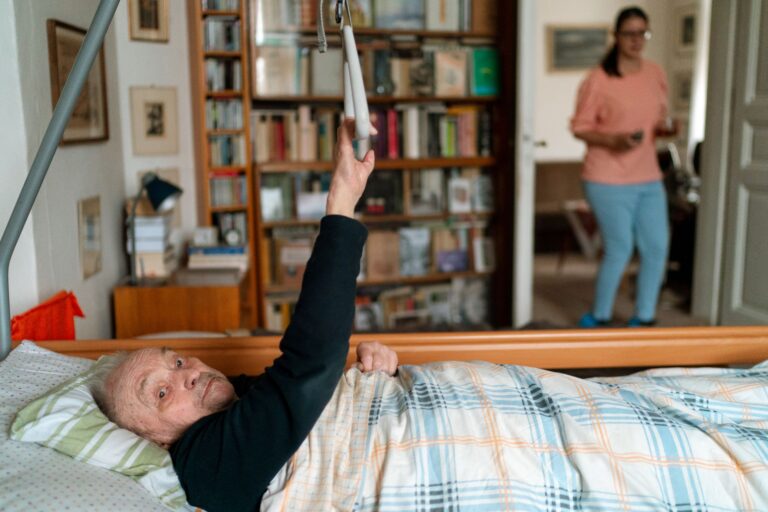
Practical limitations also surface during this time. If the person is being cared for at home, the family may need to make modifications like installing a hospital bed, ramps, or grab bars, and hiring caregivers or nursing support. The cost of care can be substantial and is often not fully covered by insurance. Some families face conflict over care decisions, cultural or religious differences in how to approach end-of-life care, or unresolved relationships with the dying person. These tensions do not disappear when hospice is involved; in fact, hospice social workers often help families navigate them, but families should know that these conversations can be painful and that professional mediation or family counseling may be necessary. A limitation specific to late-stage dementia is that the person is often unable to participate in their own decision-making or to say goodbye in a meaningful way. This absence of closure is something families must grieve and process, often with help from a counselor or spiritual advisor.

The Role of Advance Directives and Surrogate Decision-Making
Advance directives—legal documents that specify a person’s healthcare wishes—are invaluable in late-stage dementia care because the person can no longer communicate their preferences. An advance directive might appoint a healthcare proxy (someone legally authorized to make decisions), specify whether the person would want life-sustaining treatments, and express their values about quality of life and acceptable trade-offs. For example, a person might specify in their advance directive: “I do not want to be kept alive by machines; I want comfort and dignity above all else.
If I cannot recognize my family or engage with the world, I would not want to continue.” This clarity, even in general terms, helps the appointed decision-maker feel confident that they are honoring their loved one’s wishes. If there is no advance directive, the family member(s) making decisions are called surrogate decision-makers, and their authority is determined by state laws that typically establish a hierarchy: spouse, adult children, parents, siblings. Surrogate decision-makers should try to use “substituted judgment”—deciding what the person would have chosen if they could speak—rather than imposing their own preferences. When there is significant family disagreement about care, the medical team’s ethics committee, palliative care specialists, or legal counsel may be needed to help clarify what’s in the person’s best interest and what’s legally and ethically appropriate.
After Death: Grief, Meaning-Making, and Ongoing Support
The death of a parent, spouse, or loved one with dementia is a layered loss—many families have already begun grieving during the long decline, experiencing what’s called “anticipatory grief.” After death, some people feel relief, others feel emptiness or guilt about that relief, and still others feel a sudden, acute grief that can feel new even though they’ve been watching their loved one decline for years. Grief after late-stage dementia is valid and multifaceted, and there is no “right” timeline for recovery. Some families find meaning in continuing to participate in dementia research, advocating for better late-stage care, supporting others going through similar experiences, or creating rituals that honor their loved one’s memory and the care they provided.
Bereaved family members should consider counseling, grief support groups, or continuing involvement with the hospice organization (many offer ongoing bereavement support for a period of time after death). Over time, the acute grief often softens into a more integrated sadness and appreciation for the time shared, though waves of grief can resurface during holidays, birthdays, and other significant moments. The experience of caring for someone in late-stage dementia, while extraordinarily difficult, often brings families closer and creates a deeper understanding of what matters—presence, comfort, and unconditional care at the most vulnerable moments of life.
Conclusion
Late-stage dementia care represents a profound shift in how we approach medical care—from fighting disease to honoring the person and their remaining life with comfort, dignity, and realistic compassion. Hospice and comfort-focused care are not abandonment but a different kind of commitment, one that prioritizes the person’s well-being and values over extending life through interventions that often cause suffering. Families navigating late-stage dementia decisions need honest information, practical support, and emotional space to process grief and guilt while they are still in the midst of caregiving.
The decisions ahead—about feeding tubes, infections, hospitalization, and what kind of care environment feels right—are deeply personal and deserve time for reflection, conversation with trusted medical providers, and consultation with family members and spiritual advisors if they are part of the person’s life. Resources like advance directives, palliative care consultation, hospice services, and family support groups are available to help families chart this difficult course with greater clarity and less isolation. Ultimately, late-stage dementia care at its best is about bearing witness to someone’s final chapter with love, honoring their dignity, and making space for a natural, comfortable death.
You Might Also Like
- Dementia Wandering: Safety Tips Every Family Should Know
- Caregiver Advocacy After Dementia Loss: Why Family Stories Matter
- Dementia and Hospice: When Families Begin End-of-Life Care
For more, see Alzheimer’s Association.