Yes, dancing is linked to lower dementia risk, and starting slowly can still help. Short, light sessions with support offer a practical entry point for older adults. Dementia means a decline in memory and thinking that interferes with daily life. For slow starters, the key question is what dance can offer and where its limits lie.
Medical information disclaimer: This article is for general educational purposes only and does not provide medical advice, diagnosis, or treatment. Always consult a physician or other qualified health professional about symptoms, medications, tests, or treatment decisions.
Table of Contents
- What links dancing to lower risk?
- Can dance help after memory changes begin?
- Is dance better than other exercise?
- How can slow starters begin safely?
What links dancing to lower risk?
Researchers in the New England Journal of Medicine followed 469 community adults over age 75 without dementia for a median of 5.1 years PubMed summary. During follow-up, 124 developed dementia, and dancing was among leisure activities linked to reduced risk, along with reading, board games and playing instruments.
This was an observational study of free-time habits, not a dance prescription. It shows a link, not proof that dancing alone prevents dementia.
Can dance help after memory changes begin?
Mild cognitive impairment means noticeable memory or thinking changes that do not block daily tasks. It often precedes dementia and is a focus of dance research. A 2021 systematic review and meta-analysis in Frontiers in Aging Neuroscience found dance improved overall thinking in older adults with mild cognitive impairment full review.
The benefit was large for global cognition (SMD 0.73, 95% CI 0.47-0.99, p<0.00001), with better rote and immediate recall. Rote recall means repeating back words or steps right after learning them. Immediate recall helps follow a dance sequence, a recipe, or directions.
Is dance better than other exercise?
A 2026 Bayesian network meta-analysis in Frontiers in Physiology compared dance with other exercise types for mild cognitive impairment and dementia comparative analysis. Dance showed no statistically significant advantage over other exercise, though it ranked highest for global cognition on MoCA.
MoCA is a short test of overall thinking skills. The ranking suggests promise, not superiority. Other aerobic or strength activity may offer similar brain benefits.
How can slow starters begin safely?
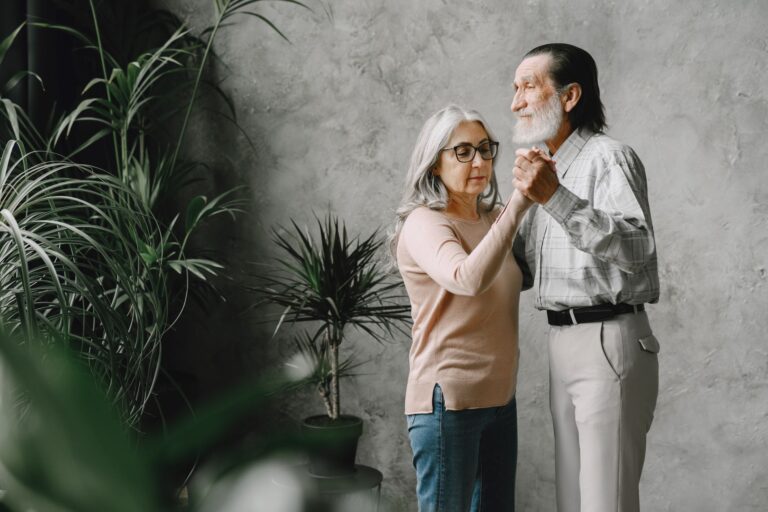
NHS guidance for adults 65 and older says to stay active daily, even when activity is light NHS activity guidance. It supports brief low-intensity dance sessions with hand support, suitable footwear, and gradual buildup toward weekly targets.
Start with music you like and a clear floor space. Keep each try short and steady. Aim to move a little each day rather than saving all movement for one day.
- Keep sessions brief and easy, near a counter or sturdy chair for hand support
- Wear supportive, non-slip footwear and clear the floor space
- Build up gradually toward weekly targets as stamina improves