Reviewed by the Help Dementia Editorial Team — our editors review every article for accuracy against guidance from the National Institute on Aging, the Alzheimer’s Association, and peer-reviewed sources.
Yes, dementia can cause a fear of strangers, and this is one of the more distressing behavioral changes family members and caregivers encounter. When someone with dementia becomes afraid of unfamiliar people, it often stems from cognitive decline that affects memory, recognition, and the brain’s ability to process new information and faces. A person who has spent decades in a profession meeting clients may suddenly feel threatened by a visiting nurse, or a grandfather may become agitated when grandchildren visit after an absence. This fear is not a character flaw or stubbornness—it’s a neurological response rooted in how dementia damages the areas of the brain responsible for social recognition and emotional regulation.
The fear of strangers in dementia develops through multiple pathways. As the disease progresses, people lose the ability to recognize faces consistently, even of people they’ve known for years. This creates a genuine cognitive gap: the brain no longer confirms who this person is, so the mind fills in uncertainty with suspicion or fear. Additionally, dementia can heighten baseline anxiety and reduce the capacity to tolerate ambiguity or change. A visitor becomes an undefined threat rather than a known entity.
Table of Contents
- How Does Dementia Affect Recognition and Social Awareness?
- The Role of Anxiety and Hypervigilance in Dementia-Related Fear
- How Fear of Strangers Manifests in Different Dementia Types
- Strategies for Managing Visitors and Reducing Fear of Strangers
- When Fear of Strangers Becomes Dangerous: Aggression and Wandering
- The Impact on Family Relationships and Caregiving Burden
- Emerging Understanding and Care Evolution
- Conclusion
How Does Dementia Affect Recognition and Social Awareness?
Dementia disrupts the brain circuits that process faces and build social memory. The temporal and parietal lobes, which integrate facial recognition with emotional context, deteriorate in diseases like Alzheimer’s and vascular dementia. Early on, a person might struggle to name a visitor but still sense familiarity. As dementia advances, that familiarity evaporates—the brain genuinely does not retrieve the social connection, so a long-time friend becomes, neurologically speaking, a stranger. This differs from normal aging or simple forgetfulness.
A healthy older adult might say, “I’m sorry, I can’t quite place you,” but feel at ease once reminded. Someone with dementia often cannot form or hold that reminder. Even if told “This is your daughter,” the explanation may not integrate with visual input. The cognitive system has fractured, so each encounter can feel novel and potentially threatening. Research in cognitive neurology shows that face recognition depends on a network that includes the superior temporal sulcus, fusiform gyrus, and amygdala—all regions vulnerable to Alzheimer’s pathology.

The Role of Anxiety and Hypervigilance in Dementia-Related Fear
Dementia doesn’t just erase memories; it often amplifies baseline anxiety. The disease can damage the brain’s fear-regulation centers, particularly the prefrontal cortex and anterior cingulate, leaving people more reactive to perceived threats. A stranger—someone the person cannot place—triggers an exaggerated startle response. What might have been mild caution in a healthy adult becomes full-blown fear or aggression in someone with dementia.
This heightened vigilance serves an evolutionary purpose in a cognitively intact brain: we’re wary of the unknown. But in dementia, that protective mechanism has no off switch. The person cannot reason themselves out of the fear by retrieving a memory or trusting past experience. A caregiver who tries reassurance (“I’m your nurse, I come every Tuesday”) may meet resistance because the reassurance itself is a stranger’s voice, adding to the confusion. One limitation of current dementia care is that pharmaceutical interventions (antianxiety drugs) carry risks of falls and worsening cognition, so managing fear through environmental design and behavioral de-escalation is often the safer approach.
How Fear of Strangers Manifests in Different Dementia Types
Fear of strangers appears across dementia diagnoses but with different presentations. In Alzheimer’s disease, the fear often emerges mid to late stages as memory loss becomes severe and recognition networks fail. In frontotemporal dementia, behavioral changes including suspicion and withdrawal can appear earlier and more abruptly, sometimes without the memory loss that characterizes Alzheimer’s. In Lewy body dementia, fear of strangers may be accompanied by visual hallucinations, making the stranger not just unfamiliar but seemingly threatening in their appearance. A concrete example: a woman with Alzheimer’s disease becomes afraid when her adult son visits after a two-week absence.
Her brain has not encoded his face stably, so she sees a man she cannot identify in her home. Rather than remembering “this is my son,” she may perceive intrusion or danger. She might hide, call for help, or become aggressive. Her emotional response is genuine and neurologically driven, even though her son feels rejected. Understanding this distinction—that the fear is a symptom, not a personal slight—helps families navigate these moments without escalating the situation.

Strategies for Managing Visitors and Reducing Fear of Strangers
Practical approaches can significantly reduce fear-based reactions. First, prepare the person with dementia before a visitor arrives. Use photos if available, explain the visitor’s relationship, and allow extra time for adjustment. A visitor should enter calmly, speak slowly and clearly, use the person’s name, and avoid sudden movements or crowding. Some care facilities and homes use a “visitor protocol” that includes soft lighting, seated positions (to reduce the sense of threat), and keeping visits shorter initially.
The tradeoff in managing stranger fear is between protecting the person’s emotional comfort and maintaining their social connections. Complete isolation prevents distressing encounters but accelerates cognitive and emotional decline. Frequent, carefully managed visits from a consistent set of people can actually help—repetition allows the brain to build new encoding pathways. A nurse who visits the same time each week may eventually feel familiar, even if the person cannot name them. In contrast, new caregivers or infrequent visitors will always trigger the stranger response. This underscores the value of continuity in care and why frequent staff turnover in institutional settings is particularly harmful for people with dementia.
When Fear of Strangers Becomes Dangerous: Aggression and Wandering
In some cases, fear of strangers escalates into aggression or attempts to escape. A person with dementia who feels threatened may strike at a visitor or caregiver, or bolt from the home trying to flee a perceived threat. This is one of the most challenging behavioral symptoms and a common trigger for institutional placement. The danger is real—for the person with dementia, who may injure themselves, and for staff and family who may be hurt. A critical limitation in managing this symptom is that restraint and isolation are both harmful and often illegal, yet the behavior can be genuinely unsafe.
Medication may help, but sedation carries its own risks. Behavioral de-escalation—removing the trigger (the stranger), creating a calm environment, and redirecting attention—is the first-line approach. However, this is labor-intensive and requires training. Many families and understaffed care settings cannot provide this level of individualized care. Warning: if aggression becomes frequent or severe, a conversation with the person’s doctor about medication, environmental changes, and potential care-setting adjustments is necessary. Waiting and hoping the behavior improves often leads to crises.

The Impact on Family Relationships and Caregiving Burden
Fear of strangers in dementia creates profound emotional pain for family members. Adult children who cannot visit without upsetting their parent, or partners who feel rejected despite decades of marriage, experience grief compounded by guilt. Visitors are often told, “It’s not personal,” but the emotional impact is deeply personal. Some families reduce visits to avoid the distressing scenes, which ironically worsens the situation. Others visit frequently despite the distress, accepting the repeated “stranger” experience as part of the disease.
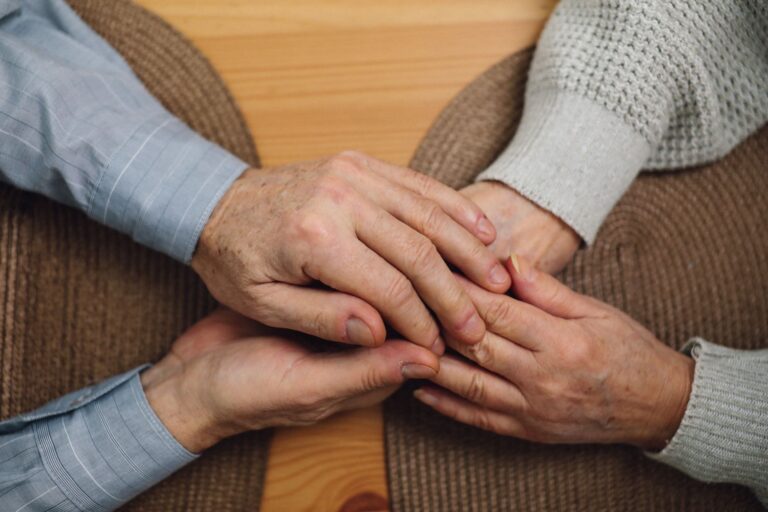
A daughter describes visiting her mother with advanced Alzheimer’s: “Every visit, she’s afraid of me. I show her photos of us, but she doesn’t believe them. I leave feeling like I’ve traumatized her rather than comforted her.” This experience is common and heartbreaking. Some families find that visiting at the same time each day, keeping the visit brief, and focusing on non-verbal connection (music, hand-holding, quiet sitting) rather than trying to convince the person of the relationship helps both parties. Video calls can sometimes reduce the intensity of the fear response compared to in-person visits, though research on this is limited.
Emerging Understanding and Care Evolution
Research into dementia and social behavior is evolving, with newer studies examining whether consistent, repeated exposure to the same person can gradually reduce the fear response even in advanced dementia. Some evidence suggests that multisensory input—hearing a familiar voice, smelling a familiar scent, combined with visual recognition work—may create new memory traces, though this is not yet standard practice. The emerging field of dementia care is moving toward person-centered approaches that prioritize the person’s emotional state over the caregiver’s expectations, acknowledging that their fear is real and valid within their neurological experience.
The future of dementia care may include better screening for early recognition problems, allowing interventions before fear behaviors develop. Technology like spaced-repetition photo training or virtual visits with consistency might also play a role. For now, the most evidence-supported approach remains environmental modification, behavioral consistency, and deep patience from those who love the person with dementia.
Conclusion
Fear of strangers in dementia is a neurological symptom rooted in the disease’s damage to recognition, memory, and emotional regulation circuits. It is not rejection, defiance, or personality change in the moral sense—it is the brain responding to genuine cognitive gaps with heightened vigilance and anxiety. Understanding this distinction is the first step for families and caregivers to respond with compassion rather than frustration.
Managing this symptom requires patience, consistency, and often professional support. Visitors should be prepared, visits should be brief and carefully timed, and the focus should be on creating a calm emotional environment rather than “proving” relationships through rational argument. If fear of strangers is emerging or worsening in your loved one with dementia, discuss it with their doctor, consider whether there are triggers that can be modified, and connect with other caregivers who have navigated this challenge. Your goal is not to eliminate the symptom—that may not be possible—but to minimize distress and preserve meaningful connection despite the disease.
You Might Also Like
- Can Sleep Aids Worsen Dementia Symptoms?
- Can Reassurance Help Dementia Patients Feel Secure?
- Can Liver Disease Cause Dementia-Like Symptoms?
Related reading
- how Anxiety Drives Repeated Calls and Questions
- why Changes in Recognition Are Distressing
- how to Respond When a Loved One Does Not Recognize You
- what Emotional Safety Looks Like in Dementia Care
- can Dementia Patients Learn New Routines
For more on this topic, see CDC — Alzheimer’s and Dementia.