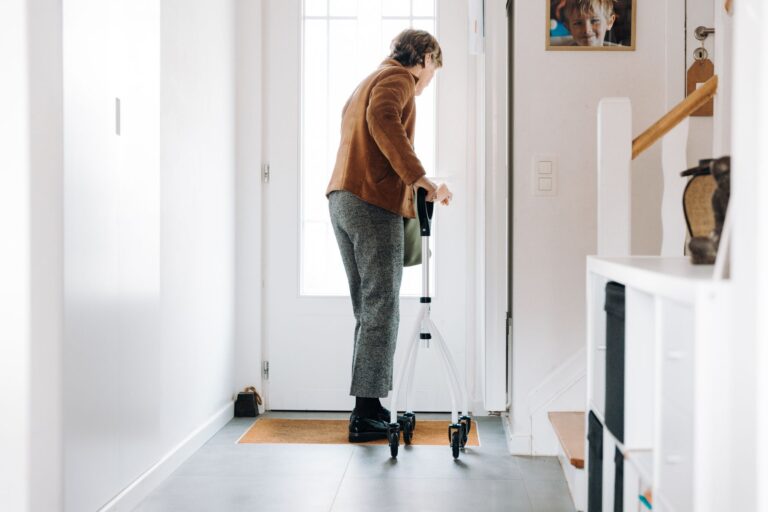
Building regular walking into a dementia prevention routine starts with a small, specific number: about 3,800 steps a day, not a punishing fitness goal. A 2022 study of roughly 78,000 UK Biobank adults tracked by wrist accelerometer found that this modest daily total was associated with a 25% lower risk of developing dementia, according to the JAMA Neurology study. That threshold matters most for someone who currently walks very little, because it shows measurable benefit shows up long before anyone approaches a formal exercise target. The rest of the routine is a matter of building up gradually from that starting point, adding pace and distance as the habit holds.
Medical information disclaimer: This article is for general educational purposes only and does not provide medical advice, diagnosis, or treatment. Always consult a physician or other qualified health professional about symptoms, medications, tests, or treatment decisions.
Table of Contents
- What's the Smallest Amount of Walking That Actually Helps?
- How Much Walking Matches Public Health Guidelines?
- Does Walking Pace Matter as Much as Distance?
- Who Benefits Most, and What Comes Before Starting?
- Frequently Asked Questions
What's the Smallest Amount of Walking That Actually Helps?
The UK Biobank research, published in JAMA Neurology in 2022, is the clearest evidence that a low daily step count still lowers dementia risk. Among roughly 78,000 adults aged 40 to 79 who wore wrist accelerometers, those who averaged about 3,800 steps a day had a 25% lower risk of developing dementia than less active peers, according to the JAMA Neurology study. That number works as a starting line precisely because it is achievable. For someone who currently walks very little, 3,800 steps is roughly two miles spread across a day, not a single long outing.
A short walk after breakfast, a loop around the block at lunch, and a few minutes pacing while on the phone can add up to that total without requiring a dedicated workout session. Benefits did not stop at that threshold. The same study estimated that the optimal dose is closer to 9,826 steps a day, associated with about a 50% lower dementia risk, according to the JAMA Neurology study. That gap between the minimum and the optimal dose is the realistic growth path: start at a few thousand steps, then add distance over weeks and months rather than treating 3,800 as a ceiling.
How Much Walking Matches Public Health Guidelines?
The CDC's Physical Activity Guidelines recommend at least 150 minutes of moderate-intensity aerobic activity per week, and they name brisk walking specifically as the example activity, according to the CDC's adult activity guidelines. Spread evenly, that works out to about 30 minutes a day, five days a week. A separate 2025 dose-response analysis in The Lancet Public Health, pooling 57 studies, found that 7,000 steps a day was associated with a 38% lower dementia risk compared with 2,000 steps a day, with most of the benefit curve flattening between 5,000 and 7,000 steps, according to the Lancet Public Health analysis.
That range sits comfortably above the JAMA Biobank's minimum threshold and close to its optimal dose, giving a reader two independent data sets that point to a similar practical target: somewhere in the 5,000 to 10,000 step range as a reasonable goal to build toward, not a number to hit on day one. The Lancet authors rated the certainty of this particular dementia finding as only moderate, since it was based on pooling just two cohort studies, and they noted the results are observational and cannot prove that walking causes the lower risk, according to the Lancet Public Health analysis. That caveat does not undercut the CDC's broader activity guidance, which rests on a wider base of evidence for physical activity's role in health generally; it means the exact dementia-specific numbers should be read as a strong signal rather than a guarantee.
Does Walking Pace Matter as Much as Distance?
Volume is not the only variable. The same JAMA Neurology study that identified the 3,800-step threshold also measured stepping intensity and found it mattered independently of total daily steps. Walking at about 112 steps per minute for 30 minutes a day was linked to a 62% lower dementia risk, according to the JAMA Neurology study.
That pace is faster than a casual stroll — close to what most people would call a brisk walk, the same intensity the CDC names in its 150-minutes-a-week guidance, according to the CDC's adult activity guidelines. For someone starting slowly, this means the walking routine has two separate levers to adjust over time: how far to walk, and how fast to walk it. Building up total steps first, then gradually picking up the pace on a portion of those walks, follows the structure the evidence actually measured rather than treating speed and distance as the same thing. A practical way to add pace without overhauling the whole routine:.
- Walk at a comfortable pace for most of the walk, then pick up to a brisker pace for 5 to 10 minutes.
- Use a flight of stairs, a slight incline, or a faster song's tempo as an informal pacing cue.
- Extend the brisk portion by a few minutes every one to two weeks rather than jumping straight to 30 minutes.
Who Benefits Most, and What Comes Before Starting?
Walking's connection to brain health is not limited to healthy adults with no risk factors. Research presented at the Alzheimer's Association International Conference in July 2025 found that people who maintained or increased their walking activity over time showed greater improvements in brain function measures, and that walking appeared to matter more for people carrying higher genetic dementia risk, according to research from the Alzheimer's Association International Conference. No specific step target accompanied that finding, but it reinforces that walking consistency over time, not a single burst of activity, is what tracks with better outcomes.
The World Health Organization's 2019 guidelines on reducing cognitive decline and dementia risk place physical activity as the leading recommendation in the entire document, advising that it be recommended to adults with normal cognition and considered for those with mild cognitive impairment, specifically to reduce dementia risk, according to the WHO's 2019 guidelines. The WHO guidance does not prescribe an exact walking dose, which leaves the specific numbers from the JAMA Neurology and Lancet Public Health research as the practical targets to use when building a routine. Starting slowly, in practice, means choosing a number under 3,800 steps if that's genuinely where someone is starting, confirming with a doctor that walking is appropriate given any existing mobility or cardiovascular conditions, and tracking steps with a phone or simple pedometer to see progress without needing a wrist accelerometer like the one used in the Biobank study. The goal over the following months is to close the gap toward the 7,000 to 9,800 step range identified across both major studies, adding a brisk-paced segment once the daily distance feels sustainable.
Frequently Asked Questions
Is 3,800 steps a day really enough to matter, or is that just a minimum?
It's the threshold where benefit becomes measurable, not a ceiling. The same research found risk kept dropping up to nearly 10,000 steps a day, according to the JAMA Neurology study.
Does walking speed matter if someone can't walk very far yet?
Yes, independently of distance. A brisk 30-minute walk at about 112 steps per minute was linked to a 62% lower dementia risk in the same study, according to the JAMA Neurology study.
How confident is the research behind these specific step numbers?
The Lancet Public Health review rated the dementia-specific finding as only moderate certainty, based on two pooled cohort studies, and noted it cannot prove walking directly causes lower risk, according to the Lancet Public Health analysis.