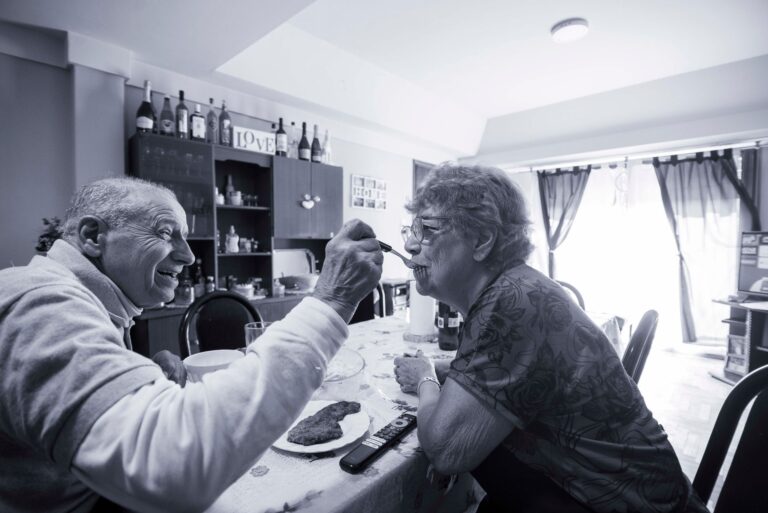
Subjective cognitive decline, or SCD, is a person's own report of confusion or memory loss that has gotten worse over the past year, measured without any clinical test. One in nine adults aged 45 and older report it, and the data point to specific places where a caregiver can act in 2026.
The Centers for Disease Control and Prevention tracks SCD through its Behavioral Risk Factor Surveillance System, a state-based telephone survey. The BRFSS Statistical Brief on the Cognitive Decline Optional Module defines SCD as self-reported confusion or memory loss happening more often or getting worse over the past 12 months, among adults 45 and up. This is a screening-level signal, not a diagnosis, and that distinction shapes how a family should use the numbers below.
Medical information disclaimer: This article is for general educational purposes only and does not provide medical advice, diagnosis, or treatment. Always consult a physician or other qualified health professional about symptoms, medications, tests, or treatment decisions.
Table of Contents
- What the national numbers show
- Why caregivers themselves are part of this data
- The gap between noticing a problem and reporting it to a doctor
- What self-reported decline does and does not tell you
- Why the scale of dementia care makes this data urgent
- Frequently Asked Questions
What the national numbers show
Nationally, 11.1% of adults aged 45 and older report SCD, according to CDC's analysis "Subjective Cognitive Decline — A Public Health Issue". That is roughly one in nine adults in this age group, based on 2015-2017 survey data. The rate is slightly higher among adults 65 and older (11.7%) than among those 45 to 64 (10.8%), a narrower gap than many people expect between middle age and older adulthood.
That same CDC analysis found something that matters more for daily life than the percentage itself: about half of adults aged 45 and older with SCD also report related functional limitations, meaning difficulty with daily activities or self-care. SCD is often not a passing complaint. When a parent or spouse mentions worsening memory, there is roughly a coin-flip chance that the problem is already affecting what they can manage on their own, which is a reason to look at daily functioning alongside the memory complaint itself, not after it.
Why caregivers themselves are part of this data
The population reporting SCD is not limited to the person receiving care. A CDC MMWR study of 22 states' 2015-2019 BRFSS data found that 12.6% of unpaid caregivers who had cared for a family member or friend in the past 30 days reported SCD themselves, compared with 10.2% of noncaregivers, according to the CDC MMWR report by Jeffers et al. That gap held at a statistically significant level (p<0.001). The same MMWR study narrowed down which caregivers carry the highest risk.
Among caregivers who reported SCD, the study found higher rates of chronic health conditions, lower educational attainment, and lower likelihood of being married or employed, compared with caregivers who did not report SCD — despite similar age distributions across both groups. In other words, age alone does not predict which caregivers are vulnerable; chronic illness, lower income potential, and less social support do. A caregiver managing their own diabetes or heart disease while caring for someone with dementia fits the profile the data identifies as higher-risk, regardless of how old they are.
The gap between noticing a problem and reporting it to a doctor
CDC data show that few adults with SCD have discussed their confusion or memory loss with a health care professional. Closing that gap is a named target in CDC's Healthy Brain Initiative road map and is written into Healthy People 2030 as objective DIA-03, per the same CDC public health issue brief.
This is the most actionable number in the whole data set for a family caregiver, because it describes a problem a single conversation can fix. If a parent, spouse, or sibling has mentioned memory changes but has not raised it at a medical appointment, that is the specific gap CDC has identified as a public health priority — not a wait-and-see situation.
- Bring up memory or confusion changes at the next scheduled appointment, rather than waiting for a dedicated "memory" visit
- Describe specific incidents (missed bills, repeated questions, getting lost on a familiar route) rather than a general impression
- Ask directly whether a cognitive screening is appropriate, since the data show this step is the one most often skipped
What self-reported decline does and does not tell you
SCD prevalence estimates come from self-report over the phone, not from a clinical exam, memory test, or brain scan, according to the BRFSS Statistical Brief. That limits what a single person's report can tell a family on its own.
If a family member reports worsening memory, that report should prompt a clinical evaluation — it should not be treated as a dementia diagnosis by itself. Some people who report SCD will be found to have normal aging-related memory changes; others will be found to have a diagnosable condition. The survey data describe a population-level pattern, not an individual prognosis, so the right response to one person's self-report is an appointment, not an assumption.
Why the scale of dementia care makes this data urgent
The population already receiving a dementia diagnosis gives this SCD data its real-world weight. More than 7 million Americans — about 7.4 million of them aged 65 and older — are living with Alzheimer's disease in 2026, according to the Alzheimer's Association's 2026 Alzheimer's Disease Facts and Figures report, released April 21, 2026.
Supporting that population are more than 12 million family members and friends providing unpaid care, with total U.S. dementia care costs projected at $409 billion in 2026, not counting the value of the unpaid caregiving itself, per the same 2026 Facts and Figures report. Set against that scale, the SCD surveillance data function as an early-warning layer: a way to flag concern before it becomes part of those 7 million diagnosed cases, and before a caregiver's own health — already shown to be at higher risk of SCD — becomes a second problem inside the same household.
Frequently Asked Questions
Does reporting memory loss mean a person has dementia?
No. CDC's data describe self-reported confusion or memory loss, not a clinical diagnosis, so a report of SCD should prompt a medical evaluation rather than stand in for one.
Are caregivers at higher risk of SCD than the general population?
Yes. CDC's MMWR study found 12.6% of unpaid caregivers reported SCD versus 10.2% of noncaregivers, with the gap concentrated among caregivers who also had chronic health conditions, lower educational attainment, or were unmarried or unemployed.
What is the single most useful action this data points to?
Raising memory or confusion changes directly with a health care professional. CDC data show this step is the one most commonly skipped, and it is written into Healthy People 2030 as objective DIA-03.
You Might Also Like
- Maine’s 2026 ECHO Training for Dementia Risk Reduction: A Source-Checked Briefing for Family Caregivers
- Dementia Subtype Data Gaps Identified by NIA in 2026: Who Was Studied and Who Was Not for Family Caregivers
- Serious Illness and End-of-Life Dementia Research Priorities in 2026: Service Gaps That Matter to Family Caregivers