The toys with real evidence behind them are therapy dolls, low-cost robotic pets, and ordinary objects tied to activities the person already loves — and they help you most by holding the person's attention long enough that you stop having to steer every minute. The relief comes from what is called occupational disruptiveness: how much a person's agitation interrupts the people caring for them. That is the measure that moves in the strongest trials, more reliably than your own burden score does.
That distinction matters because the research on caregiver burnout and toys is genuinely split. Some trials show burden falling, others show the person calming while the caregiver's own stress holds steady. Knowing which outcome a toy actually buys you keeps you from spending money on a promise the evidence does not make.
Medical information disclaimer: This article is for general educational purposes only and does not provide medical advice, diagnosis, or treatment. Always consult a physician or other qualified health professional about symptoms, medications, tests, or treatment decisions.
Table of Contents
- Therapy dolls: strong on agitation, mixed on your burden
- Robotic pets and the staff-distress measure
- Why the home results are weaker than the care-home results
- Paro is a regulated device, not a toy
- The activity matters more than the object
- Choosing and introducing something this week
- Frequently Asked Questions
Therapy dolls: strong on agitation, mixed on your burden
A therapy doll is a weighted, realistic infant doll offered to a person with dementia without correcting them about what it is. A randomized controlled study in nursing homes, published in BMC Geriatrics in October 2021, found doll therapy more effective than standard treatment at reducing agitation and aggressiveness, and reported a significant drop in caregiver burden and delirium alongside it. The same research group later qualified that.
Reporting the DESCRIBE trial in the Journal of Clinical Medicine in October 2022, they found doll therapy still beat standard treatment for controlling agitation but did *not* reduce professional caregiver burden, and a separate 30-day randomized trial found no between-group difference in caregiver stress biomarkers. Read those two results together and the honest conclusion is this: the doll works on the behavior. Whether calmer behavior converts into a lighter load on you depends on what else your day contains. A home caregiver with no relief coverage can have an easier hour and the same exhausted week.
Robotic pets and the staff-distress measure
Robotic pets are battery-powered animals that purr, bark, and respond to touch. In a four-month stratified cluster randomized trial run by the University of Plymouth and published in JMIR Aging, four Cornwall care homes each received two low-cost Joy for All robotic pets — one cat, one dog — while four continued with usual care. Neuropsychiatric symptoms improved significantly (P<.001), and so did occupational disruptiveness, the staff-distress measure, at P=.03.
Staff in that trial reported a positive impact for 85% of residents who interacted with the pets — 46 of 54. Interaction was most common among residents with moderate-to-severe dementia and among those who described themselves as lonely. Those two subgroups are the practical targeting rule. A robotic pet is not a general-purpose purchase; it earns its place with someone whose dementia is past the mild stage and who is visibly lonely.
Why the home results are weaker than the care-home results
The robotic-pet evidence thins out sharply once you leave institutional settings. A 12-week randomized controlled trial in 28 caregiving dyads in community and day-care settings concluded that the Paro seal robot had limited effects on care-recipient symptoms and caregiver well-being compared with control. One likely reason is structural. In a care home, a robotic pet reduces how often one resident's agitation pulls staff away from everyone else.
At home, you are the only caregiver, and you remain in the room whether the person is calm or not — there is no interruption to prevent. Treat the care-home numbers as evidence about staffed environments, and set a lower expectation for a spouse or adult child caring alone. A calmer afternoon is a real gain. A measurable drop in your own burnout score is not what the home trial found.
Paro is a regulated device, not a toy
The Paro seal is worth separating from the rest for a reason that affects what you pay. The US FDA classified PARO in 2009 as a Class II neurological therapeutic biofeedback device, carrying GUDID product code HCC. That classification is why Paro can be prescribed for psychophysiological biofeedback therapy and reimbursed by some US insurers rather than bought off a shelf.
If cost is the obstacle, the reimbursement route exists for Paro and does not exist for a consumer robotic cat. It also means the comparison is not apples to apples. The Cornwall trial's positive staff-distress result came from inexpensive Joy for All pets, not from the regulated device — so the cheaper option is the one with the care-home evidence behind it.
The activity matters more than the object
The best-replicated caregiver finding in this area is not about a product at all. The Tailored Activity Program — occupational-therapist-designed activities matched to a person's retained abilities — ran a pilot of 60 dyads against a wait-list control for four months and reported fewer problem behaviors, reduced caregiver burden, and fewer caregiver hours "doing things" and "on duty," plus greater mastery and self-efficacy. The larger 250-dyad trial, published in BMC Geriatrics in 2021, tested it against attention control and split the result.
There was no benefit for agitation or aggression at three months (p=0.43, d=0.11), but less help was needed with instrumental activities of daily living (p=0.02) and basic ones (p=0.04), and caregiver well-being improved (p=0.01, d=0.39). The caregiver gain survived replication; the behavior gain did not. That is the opposite pattern from doll therapy, and it is the one burned-out caregivers should notice. Tailored activities bought back caregiver well-being and independent functioning even when they did not calm agitation.
Choosing and introducing something this week
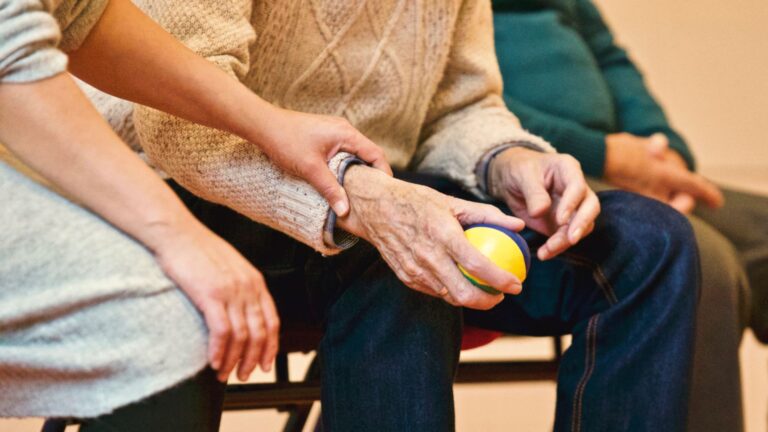
The Alzheimer's Association's guidance on activities at home sets the method: keep activities the person has always enjoyed and adjust them to current ability, break them into simple easy-to-follow steps, encourage involvement in daily life, avoid correcting the person, and simplify or retry later when something fails. The disability-toy field offers a sharper screening test. The National Lekotek Center's criteria, summarized by PACER, ask whether the person will be an active participant rather than a spectator, whether the item encourages social engagement, whether it accepts an adapted switch for physical limitations, and whether it has multi-sensory appeal.
Lekotek's AblePlay service rates toys across physical, communicative, sensory, and cognitive categories. Run a candidate through four checks before buying: Scale explains why this is worth the effort rather than a nice extra. AARP and the National Alliance for Caregiving reported on July 24, 2025 that about 63 million Americans are family caregivers, up 45% in a decade, with nearly one in five saying caregiving has left their own health fair or poor. If a doll or a robotic cat calms the afternoon but your week is unchanged, the missing piece is respite coverage, not a better toy.
- Active or passive? If the person only watches, it will not hold attention and will not free you.
- Does it connect to something they already did — gardening, folding, sorting, music?
- Does it work for the hands and eyes they have now, not the ones they had five years ago?
- Does it engage more than one sense, so it still works on a day when vision or hearing is poor?
Frequently Asked Questions
Is giving an adult with dementia a doll demeaning?
The trials that reduced agitation did so by offering the doll without correcting the person about what it is, which matches the Alzheimer's Association's instruction to avoid correcting. If the person shows no interest, the same guidance applies as to any activity: simplify it or try again later.
Should I buy an expensive therapeutic robot or a cheap robotic pet?
The Cornwall care-home trial that improved staff distress used low-cost Joy for All pets. The expensive Paro is FDA-classified as a Class II biofeedback device, which can make it prescribable and reimbursable — relevant if insurance is paying, less so if you are.
What should I expect in the first week?
Expect to learn whether the person engages at all, not to see your own stress drop. The trials ran four months, twelve weeks, and three to four months; one 30-day randomized trial found no difference in caregiver stress biomarkers.