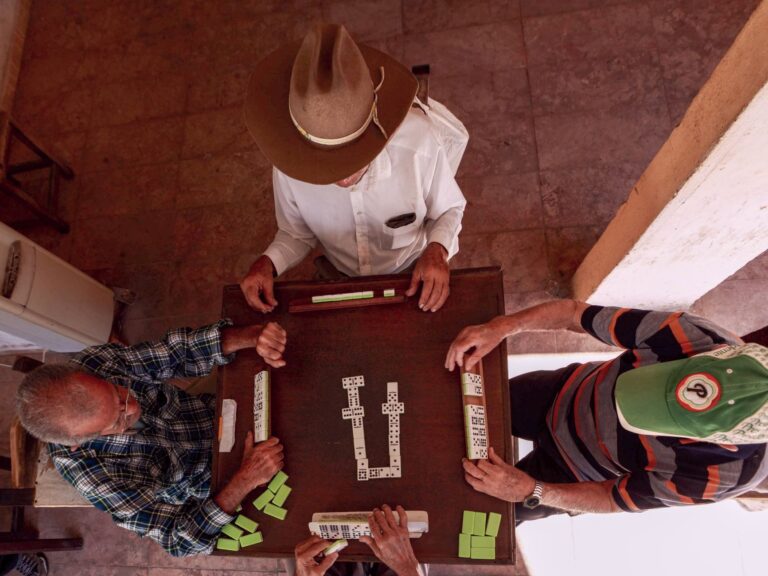
Neither one is a proven winner, but the evidence for classic card games is broader and more durable than the evidence for most brain-training apps. Card play is linked to lower dementia risk in large populations of older adults, while commercial apps have repeatedly shown gains only on the exercises themselves.
That difference matters for how you spend an hour. A deck of cards delivers thinking, conversation and routine in one package, and costs nothing. An app delivers measurable practice at one narrow skill, which is useful if that skill is what you want to sharpen.
Medical information disclaimer: This article is for general educational purposes only and does not provide medical advice, diagnosis, or treatment. Always consult a physician or other qualified health professional about symptoms, medications, tests, or treatment decisions.
Table of Contents
- What the research actually shows about card games
- Why brain-training apps keep failing their own promise
- The strongest case for structured training
- Where the card-game evidence runs out
- How to choose between them
- Frequently Asked Questions
What the research actually shows about card games
A prospective study of 11,821 dementia-free Chinese adults aged 65 and over, followed from 2008 to 2018, recorded 821 dementia diagnoses. Playing cards or mahjong more often was associated with significantly lower dementia risk, according to the cohort published in Frontiers in Aging Neuroscience. A separate analysis of 10,318 older Australians points the same way.
Frequent "active mental activities" — games, cards and chess among them — were associated with a 9% lower 10-year dementia risk in the JAMA Network Open study from July 2023, with an adjusted hazard ratio of 0.91. Both findings are observational. They describe what happens in the lives of people who play cards; they do not prove the cards caused the difference.
Why brain-training apps keep failing their own promise
The pattern in app research is improvement on the trained task and almost nothing beyond it. Adrian Owen's six-week online trial of 11,430 healthy adults aged 18 to 60, published in Nature in 2010, found "no evidence for any generalized improvements in cognitive function following brain training." The ACTIVE trial found the same ceiling in older adults. Its 2,802 participants aged 65 and over, randomized to memory, reasoning or speed-of-processing training, gained in the domain they practised but rarely in untrained abilities, as the NIH and Johns Hopkins results reported.
Marketing outran the science. The U.S. Federal Trade Commission charged Lumos Labs with deceiving consumers by claiming Lumosity would improve work and school performance and "reduce or delay cognitive decline" without supporting evidence; the company paid $2 million in redress under a suspended $50 million judgment in January 2016.
The strongest case for structured training
One result does break the pattern, and it deserves to be stated plainly. In ACTIVE's 10-year follow-up, participants assigned to speed-of-processing training were 33% less likely than controls to develop dementia — reported in Alzheimer's & Dementia in 2016. Two caveats shape what that means for a phone.
It is a secondary analysis of a single training program, not a consumer app. And ACTIVE training was delivered in supervised sessions with a fixed curriculum, nothing like a few minutes of puzzles on a commute. Everyday function tracked a different arm entirely. Five years after training, the reasoning group reported less difficulty with instrumental activities of daily living — managing money, medication, transport — while the memory and speed arms showed no such advantage in the JAMA 2006 follow-up.
Where the card-game evidence runs out
Reverse causation is the central problem. Healthier, more socially connected people may simply play more cards, so the games could be a marker of good health rather than a cause of it. The counter-example is instructive.
An earlier cohort of roughly 8,000 adults averaging age 56 found no link between games and cards and 18-year dementia risk — a reminder that age at measurement and follow-up length change the answer. Researchers know the gap. A randomized controlled trial of chess- and card-based leisure activities in adults over 60 is underway precisely because observational data cannot establish causation, per its protocol in Trials. No head-to-head comparison of card games against apps exists today.
How to choose between them
The honest framing is not either/or. It is which one you will still be doing in six months, and what else it brings with it.
If a person already has dementia, the goal shifts from risk reduction to engagement and enjoyment. Simplify the game, shorten the hand, and keep the table company — none of the studies above tested games as treatment after diagnosis.
- Choose cards if you want social contact, a standing weekly commitment and no subscription. The Chinese cohort's protective association was strongest among people playing almost daily.
- Choose a structured program if you have a specific target, such as visual processing speed, and will follow a real curriculum rather than dabble.
- Treat app marketing about delaying decline as unproven. The FTC has already acted on that exact claim.
- Do not drop exercise for either. In the same cohort, the strongest association appeared in people who played almost daily *and* exercised regularly, so card play works alongside physical activity rather than replacing it.
Frequently Asked Questions
Does it matter which card game I play?
No study has compared specific games. The cohorts grouped cards and mahjong together and measured how often people played, not what they played.
Is a daily crossword the same thing?
The Australian analysis counted a broad range of active mental activities together, so crosswords sit inside the same 9% association rather than being tested separately.
Should I cancel a brain-training subscription?
Only if you are paying for a promise about dementia. If the exercises are enjoyable and you keep doing them, they are a reasonable use of time — just not a substitute for exercise or company.