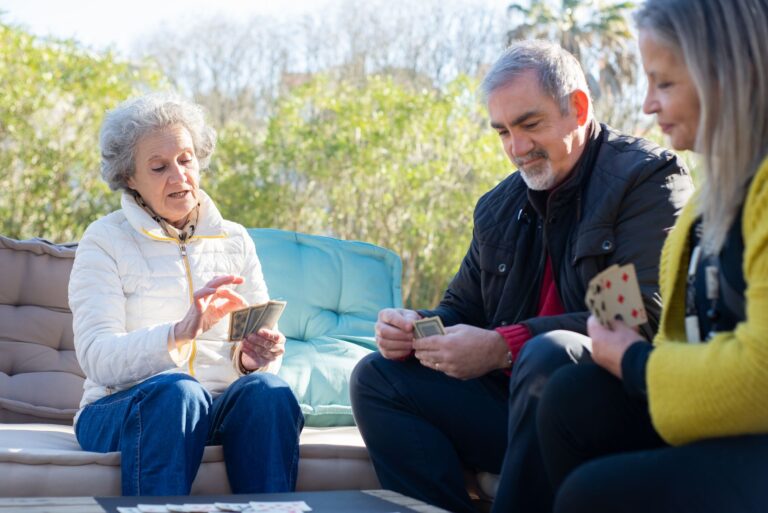
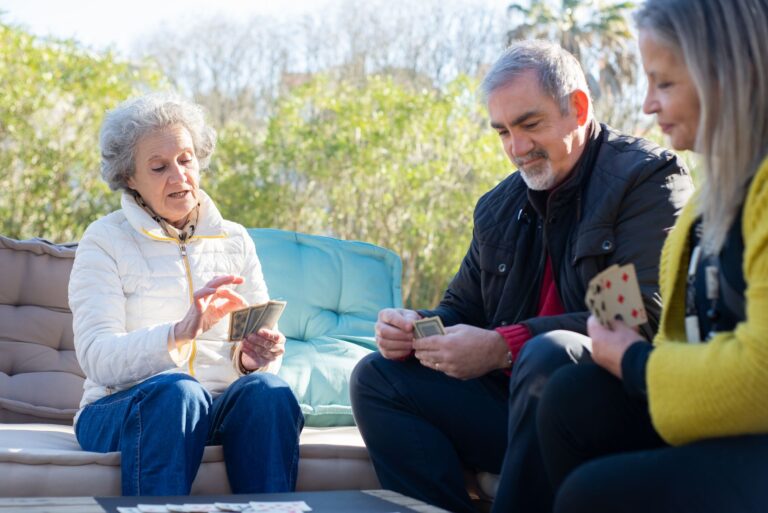
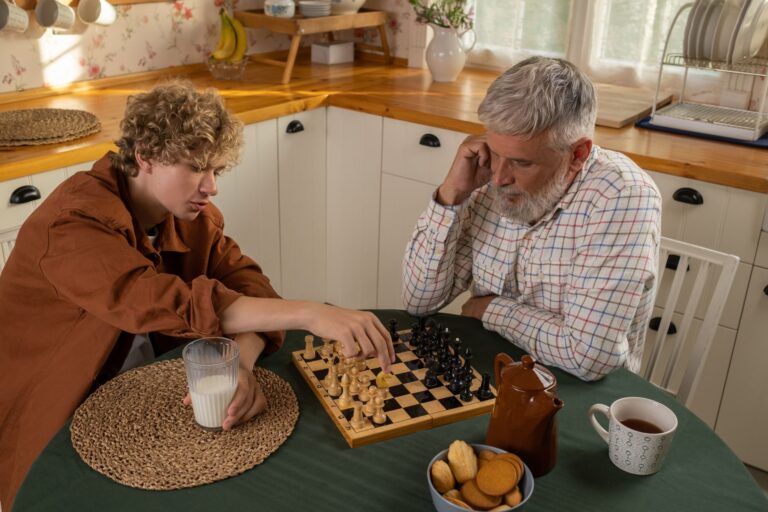
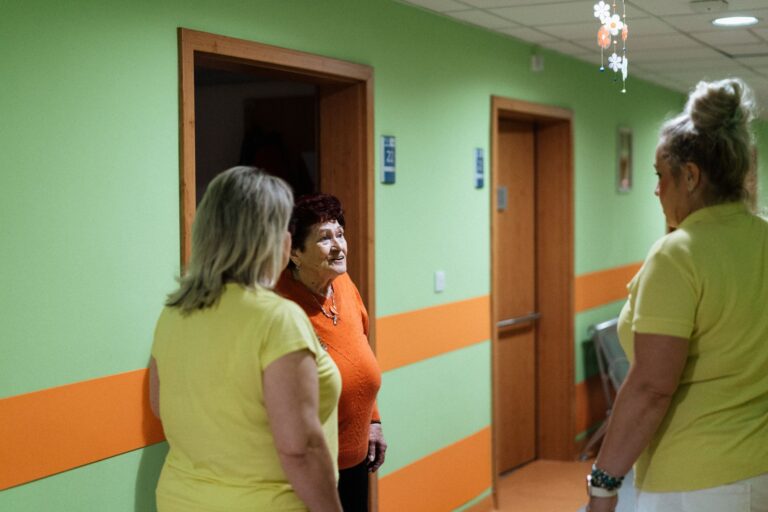
Plan on 30 to 45 minutes. For most memory care residents, a single game or activity session works best at about 30 minutes or less, which is what the Alzheimer's Association's dementia care practice recommendations advise, while the formal therapy protocols that have been tested in trials run 45 minutes per session.
The more important number is how often. The evidence that structured group sessions help cognition is tied to running them twice a week or more, not to stretching any one session longer. A 30-minute card game on Tuesday and Thursday beats a single 90-minute Friday afternoon marathon.
Medical information disclaimer: This article is for general educational purposes only and does not provide medical advice, diagnosis, or treatment. Always consult a physician or other qualified health professional about symptoms, medications, tests, or treatment decisions.
Table of Contents
- Where the 45-minute figure comes from
- Frequency matters more than duration
- Group sessions outperform solo play
- When to run sessions, and when to stop early
- What a US facility has to document
- Is group game time the default, or an extra?
- Frequently Asked Questions
Where the 45-minute figure comes from
Cognitive stimulation therapy (CST) is a structured group program of themed discussion and games — word association, physical games, categorizing objects, current affairs — designed for people with mild to moderate dementia. The original protocol, as Mayo Clinic Press describes it, runs 14 sessions of 45 minutes each, twice weekly for seven weeks, in groups of about five to eight people with two trained facilitators. That 45 minutes is a tested dose, not a ceiling.
A current trial of CST adapted for nursing home residents (ClinicalTrials.gov NCT06978972) describes sessions of 45 to 60 minutes. The difference between that and the 30-minute guidance is really a difference in conditions: a trained facilitator, a stable group of the same people each week, and a session built in parts rather than one continuous demand. So if your activity staff are not trained in a protocol, and the group composition changes week to week, 30 minutes is the safer planning figure. If you are running a real CST group, 45 minutes is the standard.
Frequency matters more than duration
The 2023 Cochrane review of cognitive stimulation pooled 34 randomized trials with 2,340 participants and found a small benefit to cognition — a standardized mean difference of 0.40 (95% CI 0.25 to 0.55), rated moderate-certainty evidence. Across 25 studies covering 1,893 people, that worked out to a 1.99-point difference on the Mini-Mental State Examination, a 30-point cognitive screening test, compared with controls. A two-point MMSE difference is modest but clinically meaningful. Crucially, the same Cochrane review reports that cognitive gains were larger when sessions ran twice weekly or more often rather than once weekly.
Frequency is the variable most clearly tied to benefit; session length is not. The Alzheimer's Association guidance points the same way, advising that frequent, meaningful activities beat a few isolated programs, and that even brief encounters count as engagement. The practical consequence for a schedule: if you have limited staff hours, split them. Two 30-minute sessions a week are a better use of the same hour than one 60-minute session.
Group sessions outperform solo play
The group format is where the evidence is strongest. Cochrane's analysis of group-delivered cognitive stimulation specifically — 27 trials, 1,637 participants — produced an SMD of 0.43 (95% CI 0.26 to 0.59), slightly better than the all-format estimate. That supports the small-group bingo table or trivia circle over handing a resident a puzzle book. The individual, home-delivered variant did not replicate it.
An eight-site UK trial of individual CST (iCST) in 356 caregiver-resident pairs, published by Orrell and colleagues in PLOS Medicine, found no cognitive benefit at 26 weeks: a mean difference of −0.55 (95% CI −2.00 to 0.90, p=0.45). Read the adherence numbers before concluding that one-to-one work is useless. Only 40% of iCST pairs (72 of 180) completed at least two sessions a week, and 22% (39 of 180) did none at all. What that trial really shows is that the dose actually delivered, not the dose prescribed, decides the result — a scheduling lesson that applies to any facility writing 45 minutes into a care plan it cannot staff.
When to run sessions, and when to stop early
The clock is a planning tool, not a stopping rule. The Alzheimer's Association notes that residents tire from demands accumulated over the course of the day, and that many experience increased confusion, agitation and restlessness late in the afternoon and evening.
Two things follow: schedule games earlier in the day, and end on the person's cues rather than at the scheduled minute. Signs to watch for and act on: Build the session so it can end gracefully at any point. A 30-minute block made of three roughly 10-minute segments — a familiar opening song or greeting, the main game, then a brief closing — lets a resident leave after the first segment having completed something, rather than abandoning a half-finished activity.
- Looking away, scanning the room, or pushing materials aside
- Repeating the same question or phrase more often than earlier in the session
- Standing up, pacing, or trying to leave the table
- Sharper tone, irritability, or tearfulness
- Going quiet and stopping responding after having participated
What a US facility has to document
Session length is also a compliance question. Federal rule 42 CFR §483.24(c)(1) requires nursing facilities to provide an ongoing activities program, both group and individual, based on each resident's comprehensive assessment and stated preferences. Activities deficiencies cited as F679 are among the most frequently issued tags, and surveyors read the care plan against what actually happens.
The implication is that a blanket "all games run 30 minutes" policy is the wrong artifact. The documentation needs to show individual assessment and preference driving the schedule — which resident tolerates 45 minutes, which one does better with three 10-minute visits, and what the staff observed. A facility-wide duration rule with no individual basis is exactly the shape of finding a surveyor writes up.
Is group game time the default, or an extra?
For people with mild to moderate dementia, it is the default. NICE's dementia guideline NG97 tells clinicians to *offer* group cognitive stimulation therapy (recommendation 1.4.2), and separately to *consider* group reminiscence therapy (1.4.3). In NICE's language that distinction is deliberate: "offer" is a firm recommendation, "consider" is optional.
That gives families a concrete question to ask on a tour. Not "do you have activities" — every facility does — but: do you run a structured group cognitive stimulation program, how many times a week does each resident attend, and who is trained to lead it? Set expectations honestly on the outcome, too. The best-supported effect is a roughly two-point MMSE difference against controls over a course of sessions. That is a real, measurable benefit and a reason to protect the schedule, but it is not a treatment that halts decline.
Frequently Asked Questions
How many people should be in a game session?
The original cognitive stimulation therapy protocol uses groups of about five to eight residents with two trained facilitators, according to Mayo Clinic Press.
How long does a full course of cognitive stimulation therapy run?
Fourteen sessions over seven weeks, at twice a week, in the standard protocol.
Can family members run sessions at home instead?
They can, but the UK trial of individual home-delivered CST found no cognitive benefit at 26 weeks, and most pairs never reached two sessions a week. Group sessions have the stronger evidence.
What if a resident wants to keep playing past 45 minutes?
Engagement is the goal, so a willing resident is not a problem to solve. Watch for fatigue later in the day, since demands accumulate across the day rather than within one activity.