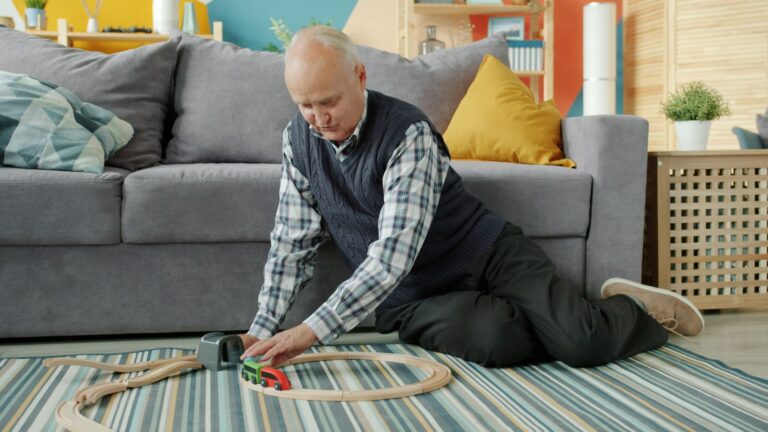
Caregivers pick toys for patients who wander by matching the item to dementia stage, abilities, and past hobbies. Wandering means restless walking that can lead to getting lost, and caregivers counter it with simple, safe sensory tools offered when restlessness usually starts.
The goal is engagement, not entertainment. A familiar texture or simple task gives restless hands something to do. Timing and safety matter as much as the object.
Medical information disclaimer: This article is for general educational purposes only and does not provide medical advice, diagnosis, or treatment. Always consult a physician or other qualified health professional about symptoms, medications, tests, or treatment decisions.
Table of Contents
- Match the toy to the person
- When should caregivers step in?
- Which tools work without instructions?
- How do caregivers keep wandering-time toys safe?
- What changes late, and what toys cannot do?
Match the toy to the person
Caregivers start with what the person can still do and enjoy. The PARF dementia-care guide recommends this stage-and-interest match over generic items PARF dementia-care guide. A former gardener may handle textured balls better than puzzles with rules.
They watch for frustration and swap items quickly. Success looks like calm handling, not correct use. If an object causes confusion, they remove it and try a simpler texture.
When should caregivers step in?
Caregivers schedule short, meaningful activities through the day. The Alzheimer's Association wandering guidance advises extra structure at the time restlessness usually starts Alzheimer's Association wandering guidance. This prevents long idle periods that invite pacing.
For sundowning, the late-day confusion and restlessness, caregivers redirect rather than argue. The National Institute on Aging sundowning tips describe offering a favorite snack, familiar object, or simple task such as folding towels National Institute on Aging sundowning tips. The toy becomes part of that calm redirection.
Which tools work without instructions?
Caregivers favor simple, failure-free tools that need no instructions. The Beast Putty sensory-toy guide points to therapy putty, textured balls, fidget blankets, and weighted lap pads. The person can squeeze, stroke, or hold without rules to remember.
A putty invites squeezing. A textured ball invites rolling. A fidget blanket invites rubbing, while a weighted lap pad adds calm pressure during sitting.
How do caregivers keep wandering-time toys safe?
Caregivers treat every wandering-period toy as something that may be mouthed, dropped, or carried. The DementiaWho caregiver guide recommends large, firmly attached parts, smooth edges, and non-toxic washable materials.
Small detachable pieces and mouthable parts stay out of reach. Before handing over an item, caregivers check: They remove anything that peels, cracks, or fits fully in the mouth.
- parts are large and firmly attached
- edges are smooth with no breakage points
- materials are non-toxic and washable
What changes late, and what toys cannot do?
In late-stage dementia, caregivers shift to soft tactile items. HelpDementia, citing Alzheimer's Association late-stage guidance, notes twiddle muffs and varied fabrics work because touch remains a connection when memory and speech fade. Warmth and texture matter more than shape or function. Toys and activities can lower anxiety, restlessness, and wandering urges, but they do not stop wandering alone.
Six in ten people with dementia wander at least once, according to the Alzheimer's Association via the Morrison Communities summary Morrison Communities summary. ID bracelets, supervision, and safer spaces stay in place alongside any activity. Expectations should stay practical for specific products. A NeuroLaunch review of therapeutic fidget quilts finds support mainly in caregiver reports, small case studies, and clinical observation rather than large trials. Caregivers try one item, watch the response, and keep what visibly calms.