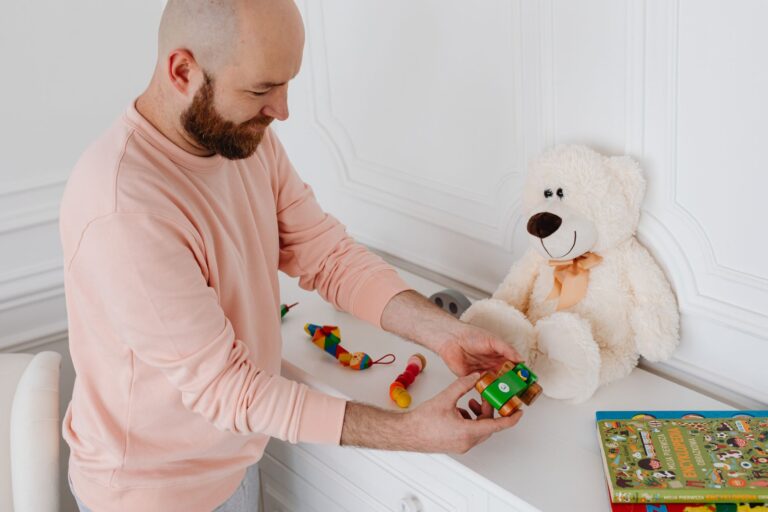
Fidget blankets, Tangle Jr. toys, spiky massage balls, and lacing beads help calm restless hands and anxiety in Lewy body dementia.
Music, pleasant activities, touch, scent, light, and familiar textures also reduce agitation during use. Lewy body dementia is a brain disorder that causes movement changes, thinking problems, vivid visual hallucinations, and strong reactions to medicines. Agitation often rises when hands lack occupation, surroundings feel dull or stressful, or a physical problem goes unnoticed.
Medical information disclaimer: This article is for general educational purposes only and does not provide medical advice, diagnosis, or treatment. Always consult a physician or other qualified health professional about symptoms, medications, tests, or treatment decisions.
Table of Contents
- Which hand toys help most?
- What other sensory input calms agitation?
- Why must calming tools be used repeatedly?
- When is agitation a medical warning?
Which hand toys help most?
Caregiver guidance points to fidget blankets, Tangle Jr. toys, spiky massage balls, and lacing beads for restless hands, because sensory hand activity reduces anxiety, calms nerves, and provides comfort, according to caregiver guidance from DailyCaring. These tools give fingers steady work without complex rules or sharp parts.
Offer one item at a time and watch the response. A soft blanket with zippers and textures may suit evening restlessness. A Tangle toy, squeeze ball, or large beads may suit daytime pacing and picking.
- Choose large, washable, and unbreakable items without small choking pieces
- Match grip strength and vision: high contrast helps more than tiny detail
- Remove the toy if chewing, throwing, or frustration starts
What other sensory input calms agitation?
A 160-study review found sensory interventions reduced both average and clinically significant agitation in care-home residents with dementia during the intervention, according to the Centre for Reviews and Dissemination summary. Benefit appeared while the activity continued, not as a lasting cure. A broad review grouped sensory stimulation as acupressure, aromatherapy, massage and touch, light therapy, and sensory gardens, and reported music therapy reduced agitation and anxiety, according to the SENATOR-OnTop umbrella review.
In practice, that means favorite songs, calm scent, daylight, gentle hand massage, and safe outdoor time. Pair a hand toy with one calm background cue. Play familiar music during sundowning. Offer warm hand lotion with slow touch while the person holds a soft object.
Why must calming tools be used repeatedly?
Structured music therapy and pleasant activities reduced average agitation during the intervention but not at later follow-up. Benefits require continued use rather than a one-time dose. Agitation often returns when the sensory input stops. Build short sessions into the daily routine.
Morning light plus music, afternoon fidget time, and evening texture comfort work better than one long session. Keep favorite items within reach so any helper can restart them fast. Supervised person-centred care, staff communication training, and dementia-care mapping reduced clinically significant agitation for up to six months. Toys work best inside that steady approach: know the person, speak simply, and repeat what soothes.
When is agitation a medical warning?
Check physical triggers first. Lewy Body Dementia Association guidance makes checking urinary infection, constipation, pain, and agitation-causing medicines the first step for hallucinations or behavioral disturbances, according to the Association's emergency treatment guidance. Treat the cause before adding sedating drugs. Visual hallucinations occur in up to 80% of people with Lewy body dementia.
Drug therapy may be unnecessary when hallucinations are not frightening, with reassurance and non-drug distraction favored first. Redirect with light, music, a familiar voice, or a hand toy. Use great caution with antipsychotics. An estimated 25–50% have severe sensitivity to usual doses, so typical antipsychotics should be avoided and any use must start low with specialist follow-up. Call the doctor promptly for sudden agitation, fever, new pain, constipation, reduced urine, recent drug changes, or frightening hallucinations.