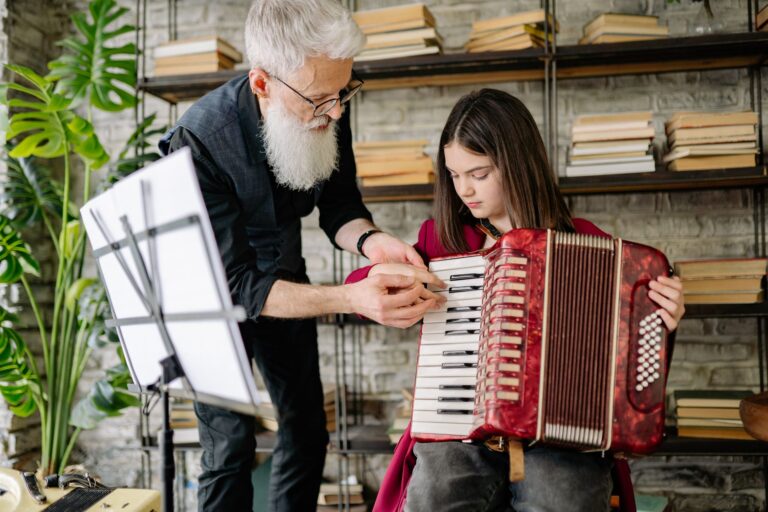
Building music practice into a realistic dementia prevention routine when starting slowly means short, regular sessions of listening and simple playing paired with exercise, sleep, vascular care and social contact. A dementia prevention routine is a set of repeated daily habits linked to lower risk, not a single activity that guarantees protection. Start with ten to fifteen minutes of focused listening or easy playing most days. Add movement, social playing and consistent sleep around that core habit.
Medical information disclaimer: This article is for general educational purposes only and does not provide medical advice, diagnosis, or treatment. Always consult a physician or other qualified health professional about symptoms, medications, tests, or treatment decisions.
Table of Contents
- What does research link music to?
- How do you start slowly?
- How do you pair music with other healthy habits?
- What keeps you playing after four months?
- Frequently Asked Questions
What does research link music to?
In 10,893 initially dementia-free Australians aged 70 and older, those who always listened to music had 39% lower dementia risk and 17% lower risk of cognitive impairment-no-dementia than never, rarely or sometimes listeners, according to the Monash University study abstract. In the same cohort, older adults who played an instrument often or always had 35% lower dementia risk than infrequent or non-players. People who both listened and played had 33% lower dementia risk and 22% lower impairment risk.
Always listening was also tied to better-maintained global cognition and memory scores, but not other cognitive domains. These links are observational associations, not proof that music prevents dementia. Treat music as one useful piece inside a broader brain-health routine.
How do you start slowly?
Pick one instrument that fits your hands, budget and living space. Good slow-start choices include ukulele, keyboard, recorder or simple percussion.
Stop each session before fatigue or frustration builds. Short regular practice supports steady progress better than long weekend sessions.
- Play five to fifteen minutes daily at the same time.
- Learn one chord, scale or short song at a time.
- Listen actively for ten minutes on rest days.
- Keep the instrument visible and tuned.
How do you pair music with other healthy habits?
The World Health Organization guideline summarized via Guideline Central recommends regular physical activity, cognitive training, cognitive stimulation and social activity to reduce cognitive-decline risk. Use music to carry those other habits. Walk after practice, join a beginner group class, or play for family and friends.
In the two-year U.S. POINTER trial of more than 2,000 at-risk older adults, multidomain programs combining exercise, nutrition, cognitive and social challenge plus health monitoring improved cognition, as reported by the Alzheimer's Association study results. Schedule music right before a walk, meal or social call. That link makes each habit easier to remember and keep.
What keeps you playing after four months?
In Kyoto University follow-up of adults averaging age 73 who learned an instrument for four months, those who kept playing preserved verbal working memory and right-putamen gray-matter volume, while stoppers declined, according to the Kyoto University research news. Verbal working memory means holding and using spoken information for a short time. Continuers benefit most, so plan for staying power.
Choose songs you enjoy, track practice days on a calendar, and lower the bar during illness or travel. Ask a teacher, friend or group to expect you weekly. Set out your instrument, music and chair the night before each session.
Frequently Asked Questions
Do I need prior musical skill to begin?
No. Choose a beginner-friendly instrument, learn one small part at a time, and keep sessions short and regular.
Is listening enough if playing feels too hard?
Frequent listening was linked to lower risk, and combined listening plus playing was linked to broader benefit, so do both when possible.