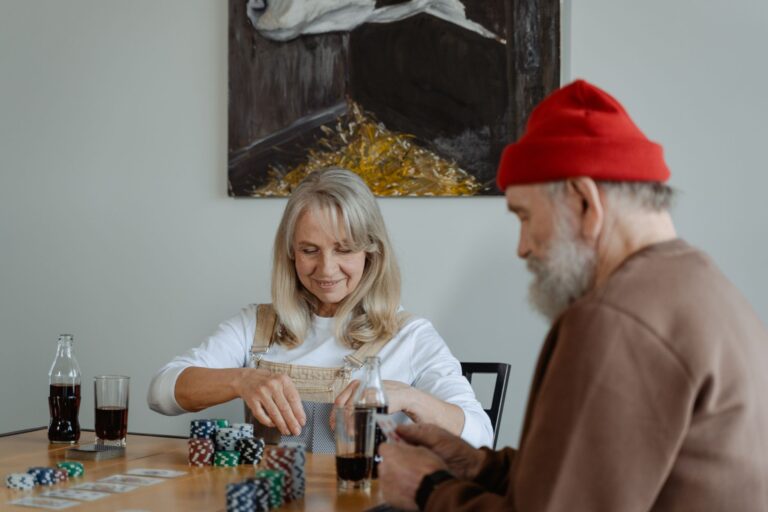
Nursing homes use games as structured cognitive stimulation, guided mental and social activity that prompts thinking, recall, and conversation. Trained staff run small-group sessions with word games, puzzles, music, past-and-present discussion, and creative tasks.
These sessions fit into daily care, not separate medical treatment. They aim to keep residents engaged, talking, and connected. Families can use the format to set expectations.
Medical information disclaimer: This article is for general educational purposes only and does not provide medical advice, diagnosis, or treatment. Always consult a physician or other qualified health professional about symptoms, medications, tests, or treatment decisions.
Table of Contents
- What does a typical session look like?
- How do games change with dementia stage?
- Why do memories become game material?
- Why are games part of the care plan?
What does a typical session look like?
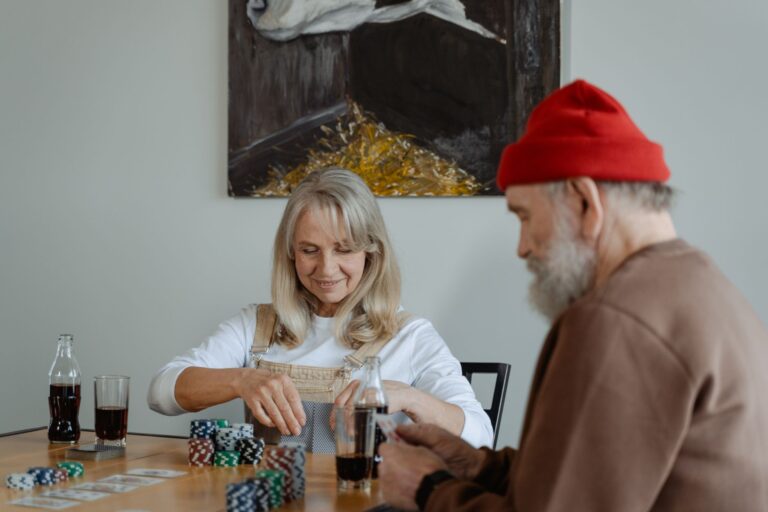
According to the Cochrane Taiwan evidence summary, sessions run about 45 minutes twice weekly in small groups. Trained staff mix word games, puzzles, music, discussion of past and present events, and creative activities.
Staff prompt talk rather than test memory. A song can lead to stories. A puzzle can become teamwork.
How do games change with dementia stage?
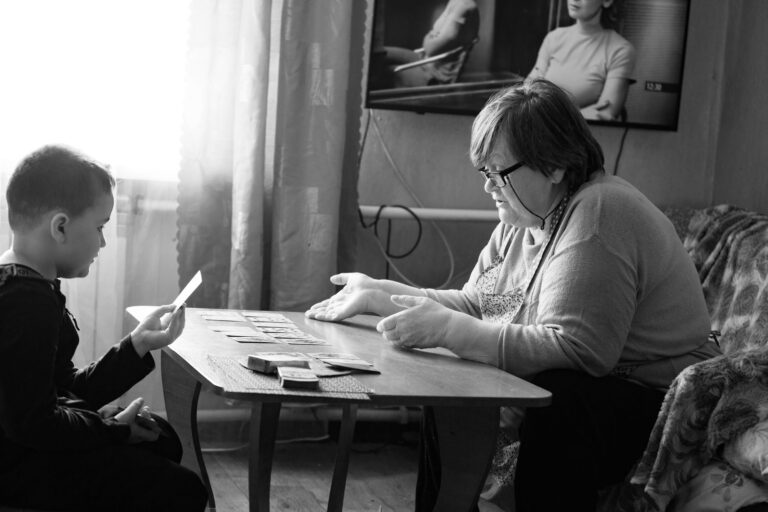
Staff adapt difficulty to dementia stage, Valley Spring Memory Care explains in its activity guide. Early-stage residents may play crosswords, trivia, and familiar card games. Advanced dementia calls for simpler, sensory steps. For advanced dementia, staff use simple image bingo and matching pairs.
Ring toss adds movement without complex rules. Sensory prompts invite touch, sound, or smell. Success means participation, calm, and connection. Score matters less than staying involved.
Why do memories become game material?
Reminiscence-style prompts use photographs, favorite music, keepsakes, and life-story questions. Dementia In Home notes these cues draw on remote memory, which often stays accessible after short-term memory declines. The goal is conversation and connection.
Pooled trials suggest cognitive-stimulation gains are probably small and vary greatly between studies, Cochrane Taiwan reports. Dementia In Home, summarizing a 2018 Cochrane review of 22 trials with 1,972 people, describes reminiscence effects as inconsistent and small across settings and formats. A 2025 preliminary study tested group board games with 36 older adults with dementia, mean age about 86. The Frontiers in Psychology report found a significant cognitive gain after the first month but no significant increase across the full period.
Why are games part of the care plan?
Federal CMS rule F679 requires each resident to receive an ongoing activities program. Penn State EIT-4-BPSD, summarizing CMS guidance in its 2017 overview, ties the program to assessment, care plan, and preferences. It must support physical, mental, and psychosocial well-being.
The American Nurse Journal connects this routine to CMS's 2012 National Partnership to Improve Dementia Care. The push favors meaningful mental and physical activities to support quality of life and curb antipsychotic use. At a care meeting, ask three direct questions: Bring one photo, song, or keepsake that usually sparks a response.
- What activities match interests and dementia stage?
- How is participation noted in the care plan?
- When should staff change the mix?