Caregivers choose games for mild cognitive impairment by matching the activity to the person's remaining abilities and long-standing interests, then favoring the formats with the strongest trial evidence behind them — which, so far, means word puzzles like crosswords rather than commercial brain-training apps. Mild cognitive impairment (MCI) is a stage of measurable memory or thinking decline that has not yet reached dementia, and the choice that matters most is whether the person will actually keep doing the activity. The research supports a modest, realistic goal rather than a dramatic one. No single game has been shown to prevent dementia, so the practical decision is about engagement, enjoyment and fit — with a thumb on the scale for crosswords, and a healthy skepticism toward anything sold as a clinically proven brain workout.
Medical information disclaimer: This article is for general educational purposes only and does not provide medical advice, diagnosis, or treatment. Always consult a physician or other qualified health professional about symptoms, medications, tests, or treatment decisions.
Table of Contents
- What the Strongest Trial Found: Crosswords Over Computer Games
- Why the Guidelines Still Rank Exercise Above Any Game
- The Evidence on Brain-Training Apps Is Genuinely Split
- Discounting the Marketing
- Fitting the Game to the Person
- A Workable Order of Decisions
- Frequently Asked Questions
What the Strongest Trial Found: Crosswords Over Computer Games
The clearest head-to-head answer comes from the COGIT-2 trial, published in NEJM Evidence by Devanand and colleagues in October 2022. The trial randomized 107 adults with MCI, mean age around 71, at two sites to 12 weeks of either intensive web-based crossword puzzles or computerized cognitive games, with booster sessions continuing out to 78 weeks. Crosswords beat the games on the primary outcome, the ADAS-Cog cognitive scale, at both 12 and 78 weeks, with a between-group difference of 1.38 points. The detail caregivers should notice is that the advantage was not only on a test score.
According to the Columbia and NewYork-Presbyterian summary of the trial, 37.3% of crossword participants improved by at least 2 ADAS-Cog points versus 25.0% of game participants. Crosswords were also superior at 78 weeks on the FAQ, a measure of everyday functioning — things like handling money, keeping appointments and managing medication. MRI measures of hippocampal volume and cortical thickness moved in the same direction. That is an unusually practical finding. A cognitive test improving is interesting; a person holding on longer to the tasks of daily life is the outcome families care about.
Why the Guidelines Still Rank Exercise Above Any Game
The American Academy of Neurology's MCI practice guideline, published by Petersen and colleagues in Neurology in 2018, draws a sharp line between two kinds of advice. The AAN's guideline gives regular exercise a Level B recommendation — clinicians *should* recommend it — on the strength of two six-month Class II trials. Cognitive training gets only Level C: clinicians *may* recommend it. For a caregiver, that gap has a direct meaning.
The time you spend getting someone out for a walk rests on better evidence than any decision about which puzzle to buy. Games are worth doing; they are not a substitute for the thing that scored higher. The guideline goes further on the specifics. The AAN found the evidence insufficient to support or refute any individual cognitive intervention strategy — only cognitive interventions taken as a group showed improvement on select cognitive measures. No particular puzzle, app or game type carries a professional endorsement over another.
The Evidence on Brain-Training Apps Is Genuinely Split
Caregivers hear confident claims in both directions, and the underlying research explains why. The Cochrane review by Gates and colleagues, published in 2019, pooled 8 trials with 660 participants on computerised cognitive training in MCI. It rated nearly all outcomes very low quality and concluded the available evidence cannot determine whether such training prevents dementia or maintains cognition. None of the included trials even measured progression to dementia.
A 2023 meta-analysis in npj Digital Medicine reached a more favorable verdict, finding that computerized cognitive training improved verbal, visual and working memory in people with MCI or dementia, at moderate certainty. Both findings can be true: training appears to move specific memory measures while leaving the bigger question of dementia prevention unanswered. Virtual reality is the newest entrant. A 2026 systematic review and meta-analysis of 11 randomized trials of VR-based training in MCI reported a medium pooled effect, Hedges's g of 0.60, with VR *games* (0.68) outperforming structured VR cognitive training (0.52). The trials were small, which limits how far a caregiver should generalize — but it is a point in favor of the enjoyable version over the clinical-feeling one.
Discounting the Marketing
Confident advertising is not evidence, and there is a regulatory record proving it. On January 5, 2016, the Federal Trade Commission announced that Lumos Labs would pay $2 million — against a suspended $50 million judgment — to settle charges that Lumosity deceptively claimed its games improved everyday performance and delayed age-related cognitive decline.
It was the agency's first settlement with a brain-health app maker. That history is a useful filter when comparing products: The practical consequence is that cost and polish should carry almost no weight in the decision. What the person will sit down with four days a week carries nearly all of it.
- Treat "clinically proven to delay cognitive decline" as a marketing phrase, not a finding, unless a named trial is cited.
- Be wary of subscriptions sold on fear of dementia; no game has been shown to prevent it.
- Testimonials and before-and-after score graphs inside an app are not independent evidence.
- A free crossword from the newspaper has better trial support than most paid alternatives.
Fitting the Game to the Person
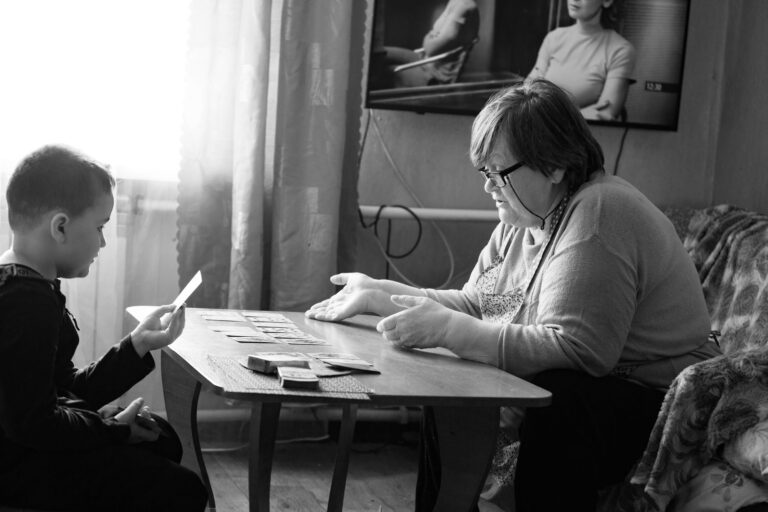
The Alzheimer's Association's guidance on activities turns this from a research question into a daily one. Its caregiving guidance advises keeping the person's remaining skills in mind, favoring activities they have always enjoyed, adjusting those activities to current abilities, focusing on enjoyment rather than achievement, and changing activities as the condition advances. Applied to games, that means a lifelong crossword solver is an easy call, while someone who has never liked word puzzles may do better with cards, dominoes or a familiar board game. Adjusting to current ability can be as simple as choosing an easier puzzle grid, working it together, or allowing answers to be looked up.
Framing matters too: scoring the session defeats the purpose if it turns a pastime into a test the person is failing. Timing is part of the choice, not an afterthought. The Association's "Activities at Home" caregiver sheet notes that the same activity can succeed or fail depending on the time of day it is offered. A puzzle that frustrates someone at 6 p.m. may go well at 10 a.m., and that is worth testing before concluding the activity itself is wrong.
A Workable Order of Decisions
One realistic expectation to hold onto: in the COGIT-2 trial, even the winning intervention ran intensively for 12 weeks with boosters out to 78 weeks before producing a 1.38-point ADAS-Cog difference. This is a long, low-intensity habit, not a short course with a visible result.
- Secure the exercise routine first — it holds the stronger AAN recommendation, and games do not replace it.
- Start with crosswords if the person has any history with word puzzles, since that is where the head-to-head trial evidence points.
- If crosswords do not land, pick the enjoyed activity over the clinically marketed one; adherence beats specification.
- Set difficulty so the person succeeds most of the time, and work alongside them rather than supervising.
- Fix a regular slot at the person's best hour of the day, and move it if the activity keeps going badly.
Frequently Asked Questions
Can any game prevent dementia in someone with MCI?
No. The Cochrane review found that none of its included trials on computerised cognitive training even measured progression to dementia, so the question remains unanswered rather than settled in either direction.
Are paper crosswords as good as the web-based ones in the trial?
The COGIT-2 trial tested intensive web-based crosswords, so that is what the 1.38-point result applies to. The format was the delivery method; the activity being tested was crossword solving.
What if the person refuses puzzles entirely?
The AAN found the evidence insufficient to favor any one cognitive strategy over another, so there is no clinical reason to force a disliked activity. The Alzheimer's Association advises choosing from what the person has always enjoyed.
Should we buy a VR headset?
The 2026 meta-analysis of 11 trials reported a medium effect for VR training in MCI, with games outperforming structured training, but the trials were small. It is a reasonable option if the person enjoys it, not an evidence-backed upgrade.