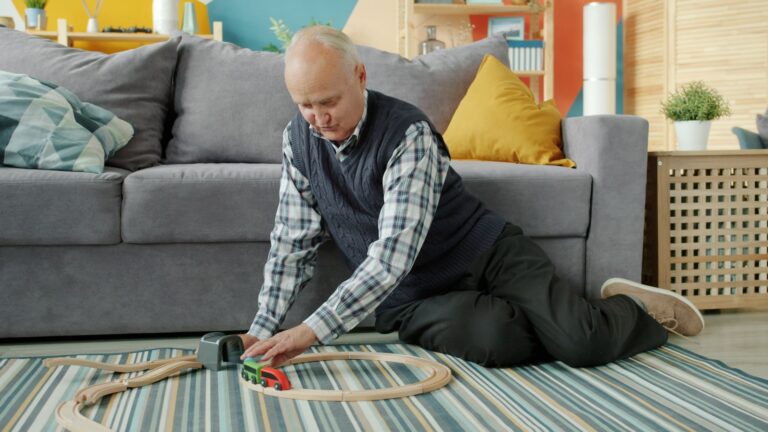
Store holiday toys with button batteries in locked containers out of reach with battery compartments secured. Keep toys with small or detachable parts in a separate designated bin or shelf away from a person with memory loss. Memory loss here means dementia-related confusion that raises risks of mouthing objects, choking, and misuse. Chaotic holiday visits increase exposure because guest toys, decorations, and hazards enter shared living spaces.
Medical information disclaimer: This article is for general educational purposes only and does not provide medical advice, diagnosis, or treatment. Always consult a physician or other qualified health professional about symptoms, medications, tests, or treatment decisions.
Table of Contents
- Why do batteries need a lock?
- Where should visiting children's toys go?
- What else should leave the common rooms?
- How do you reset the room after play?
Why do batteries need a lock?
A battery lodged in the esophagus can burn a hole in about 2 hours. That risk threatens confused adults who may swallow objects and visiting children who handle noisy holiday toys.
According to the National Capital Poison Center, caregivers should store button batteries and battery-powered holiday toys locked out of reach with secured compartments, as described in its holiday poison prevention tips. Check compartment screws before guests arrive. Keep spare batteries in a locked box, not a junk drawer.
Where should visiting children's toys go?
Give older children's gifts their own bin, shelf, or closed room away from the patient. Small pieces can tempt both a person who mouths objects and a toddler who can choke.
Children's Hospital of The King's Daughters advises this separation to protect both groups during family gatherings, explained in its safe toy buying guide. Label the bin clearly for guests. Ask visitors to bring only age-matched toys and to unpack them in that spot.
What else should leave the common rooms?
Move medicines, alcohol, cleaning products, poisons, sharp objects, and edible-looking decorations out of shared areas. Patients may eat candy-shaped ornaments, artificial fruit, or plants, or become agitated by blinking lights.
The National Library of Medicine's MedlinePlus directs caregivers to keep medicines, alcohol, cleaning products, poisons, and sharp objects in locked areas, detailed in its dementia home-care instructions. Replace holly, mistletoe berries, and other poisonous plants with nonpoisonous options. Place remaining plants well out of reach.
How do you reset the room after play?
Remove fragile shatterable ornaments, loose wires, and clutter from walkways. Memory loss changes vision, depth perception, and gait, so falls rise during crowded holidays.
The Alzheimer's Foundation of America recommends eliminating fragile ornaments and tripping hazards for this reason, noted in its tips for keeping joy in the holidays. Inspect floors before and after visits. Supervise play, reduce clutter, and return guest toys to locked storage immediately after use.