Compare meal delivery for a parent with dementia living alone by supervision, ease of eating, and daily safety contact — not by menu variety alone. Start with federally funded home-delivered meals, then fill gaps with commercial options that fit how your parent actually eats. Home-delivered meals under the Older Americans Act are prepared meals brought to homebound older adults. For dementia families, the delivery visit matters as much as the food because forgetting meals, utensils, and stove safety is common.
Medical information disclaimer: This article is for general educational purposes only and does not provide medical advice, diagnosis, or treatment. Always consult a physician or other qualified health professional about symptoms, medications, tests, or treatment decisions.
Table of Contents
- Should you start with community meals?
- Why doesn't delivery alone ensure eating?
- How do menus compare for dementia needs?
- What home setup makes delivery safer?
- What if there is a waitlist?
Should you start with community meals?
Check federally funded home-delivered meals first. The program funds meals for adults age 60 and older who are homebound due to illness, disability, or isolation, with details set locally, according to the Administration for Community Living in its Nutrition Services guide.
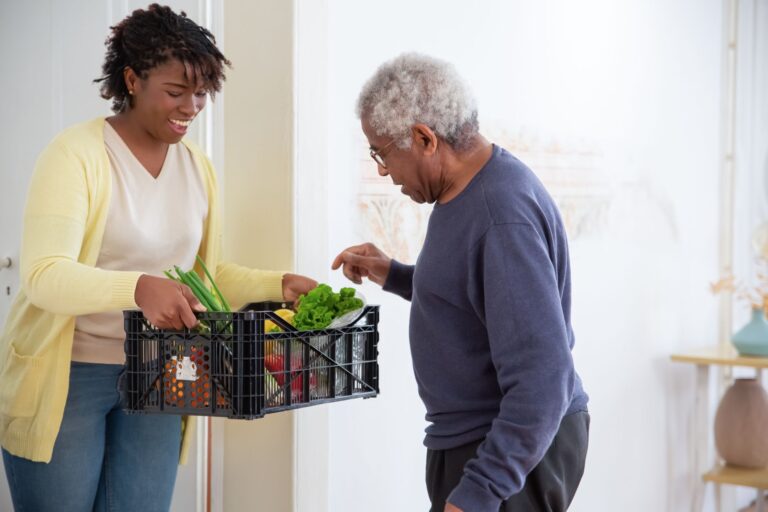
These programs typically pair food with a brief wellness and safety check at the door. That brief contact matters when a parent lives alone with memory loss.
- Enter the parent's ZIP code at the Eldercare Locator or call 1-800-677-1116
- Ask about eligibility rules, delivery days, and frozen backup meals
- Ask what the driver does if no one answers
Why doesn't delivery alone ensure eating?
Delivery solves shopping and cooking, but not always eating. People with dementia may forget meals, forget they already ate, overfill the mouth, misuse utensils, or have swallowing difficulty. Watch for uneaten trays, weight loss, pocketed food, coughing during meals, and stove burners left on.
These signs mean the plan needs supervision or simpler foods, not just more deliveries. Ask the care team promptly about choking, frequent coughing, or major weight change. A speech, medical, or dietitian review can guide texture, portion size, and mealtime help.
How do menus compare for dementia needs?
Compare format before flavor. Look for soft foods, finger foods, small portions, clear reheating steps, and packaging your parent can open without tools or heat. The UK National Health Service advises finger foods when cutlery becomes hard, plus adapted cups and supervision, in its living with dementia guidance.
Use that as a checklist when you read menus. Favor vendors that offer bite-size items, one-step microwave meals, liked familiar dishes, and no-cook backups. Avoid plans that require multiple pans, sharp tools, long oven times, or tiny-print instructions.
What home setup makes delivery safer?
Pair delivery with reminders and low-cook backups. Posted mealtime reminders, alarms, and explicit notes to turn off the stove help a person living alone, along with foods needing little or no cooking.
The National Institute on Aging suggests stocking liked, easy-to-prepare foods, considering meal-kit services, and offering smaller, more frequent meals in its tips for helping a person with Alzheimer's eat well. Keep two or three ready-to-eat options visible in the fridge.
- Post delivery days and reheat steps on the fridge
- Keep microwaveable meals, premade salads, fruit, and yogurt on hand
- Remove or lock risky appliances when cooking is unsafe
- Ask a neighbor or aide to check that meals were eaten
What if there is a waitlist?
Meals on Wheels programs serve over 2 million seniors yearly, but about 1 in 3 local providers now has a waitlist, according to Meals on Wheels America in its report on social connection. Apply early even if needs still seem mild.
While waiting, use a short-term commercial service, frozen community meals, grocery delivery, or scheduled family drop-offs. Keep the same check-in routine so missed meals and safety issues surface fast.