Adapt life story books for late-stage dementia by combining photographs and objects with music, familiar scents, and tactile elements—multisensory cues that trigger memory and engagement when verbal communication becomes limited. Life story books are personal reminiscence tools containing autobiographical memories, photographs, and meaningful objects that help people retain sense of self, but late-stage dementia requires sensory enrichment beyond text and images alone.
In late-stage dementia, the verbal abilities that made a traditional life story book effective fade significantly. This shift demands a different approach—one that engages whatever sensory pathways remain open. The research shows that multisensory life story tools reduce depression and agitation while improving quality of life, but only when adapted to match each person's remaining abilities and preferences.
Medical information disclaimer: This article is for general educational purposes only and does not provide medical advice, diagnosis, or treatment. Always consult a physician or other qualified health professional about symptoms, medications, tests, or treatment decisions.
Table of Contents
- Why Words Alone No Longer Work
- Building Sensory-Enriched Life Story Tools
- The Particular Power of Music
- Recognizing Non-Verbal Communication
- Realistic Outcomes and Individual Variation
- Frequently Asked Questions
Why Words Alone No Longer Work
As dementia progresses to late stage, the person loses the ability to process and respond to written or spoken narrative. Visual, olfactory, and auditory cues trigger memory recall more effectively than text or images alone, according to research in gerontology. A traditional life story book—a collection of photos and text—sits unused because the cognitive systems that decoded language first have deteriorated.
This does not mean the person cannot engage with their life story. Instead, engagement shifts to sensory channels. A photograph paired with the scent of their mother's perfume, or a music recording of a song from their youth, can activate memory and emotion in ways language no longer can. The difference is neurological: sensory-enriched approaches bypass the damaged language centers and access deeper autobiographical networks.
Building Sensory-Enriched Life Story Tools
Sensory-enriched life story tools combine music, photographs, familiar scents, and tactile objects like clothing or soft toys to create multisensory environments that enable both verbal and nonverbal engagement. Practical adaptations include: These elements work together because they engage multiple senses at once. A photograph alone may not register; a photograph paired with a favorite song and a familiar scent creates a complete sensory experience that's harder to ignore.
- Place photographs alongside familiar objects—a beloved scarf, a soft toy, a piece of jewelry—that the person can hold and touch
- Introduce scents linked to memory: a spouse's cologne, a particular soap, or a spice from a favorite dish
- Use music from the person's younger years—songs that played during important life events
- Pair visual cues with sound: show a photo while playing the corresponding music
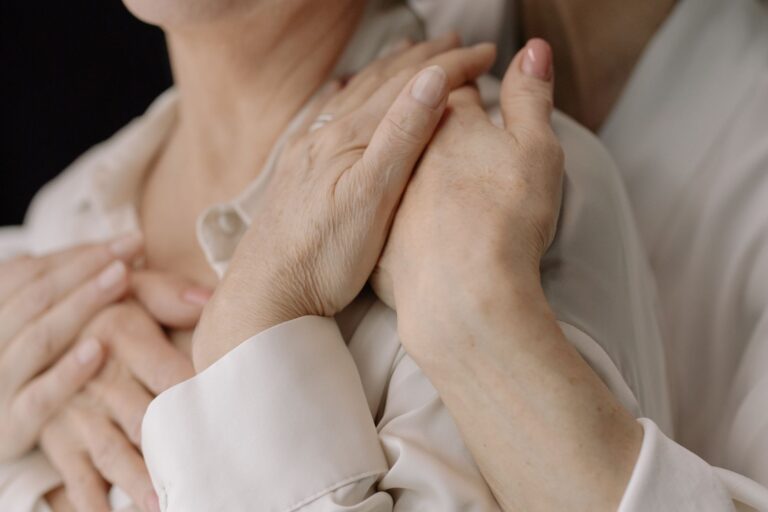
- Include textured materials: soft fabrics, smooth stones, or objects with varied weight and temperature
The Particular Power of Music
Music-facilitated storytelling proved particularly effective in late-stage dementia, creating sustained engagement through one-to-one interaction, with live music generating more immediate response than recordings alone. When verbal exchange has become impossible, music can still reach the person and hold their attention. Live music—a family member singing or playing an instrument—consistently outperformed recorded music in research studies.
This may be because the human presence, tone of voice, and responsiveness create an interactive experience rather than passive listening. Even a brief recording of a family member singing a familiar song can evoke visible engagement: eye contact, hand movement, or facial expression. These are the new markers of connection.
Recognizing Non-Verbal Communication
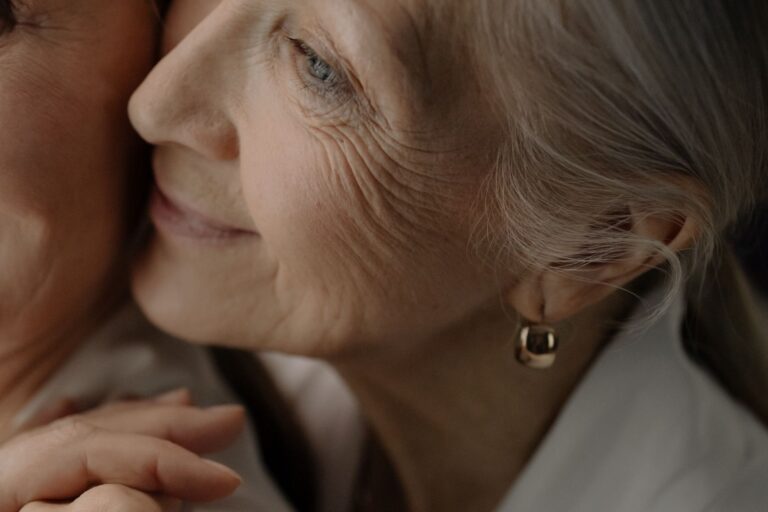
In late-stage dementia, communication becomes primarily non-verbal. Non-verbal behaviors—facial expressions, gestures, eye contact—accompany life story sharing, requiring caregivers trained to recognize and reciprocate these communicative attempts. A smile, a turn of the head, a reaching gesture, or sustained eye contact are all the person has to offer—and all the feedback needed to know the moment matters. Caregivers and family members should be alert to these signals and respond directly.
If the person reaches toward a photograph, pause and hold it closer. If their expression softens during a song, continue playing it. If they make eye contact during reminiscence, maintain that connection. Staff and family members using life story books report improved understanding of residents' preferences, values, and life history, enabling more person-centered care tailored to individual behavioral triggers.
Realistic Outcomes and Individual Variation
Life story book interventions demonstrably reduce depression and agitation while improving quality of life and autobiographical memory retention in long-term care residents with dementia, according to meta-analyses. However, results vary widely depending on the person's cognitive and sensory abilities. Some people show sustained improvement; others respond only in the moment and then return to baseline.
Limitations include inconsistent effect sizes across trials, with some studies showing immediate but not sustained behavioral improvements, and effectiveness varying based on individual sensory abilities—vision or hearing loss may require additional adaptations. A person with hearing loss may not benefit from music-based approaches without amplification or different sensory channels. Someone with visual impairment needs tactile and olfactory elements instead. The framework works, but implementation must fit the person's specific strengths and deficits, not a generic template.
Frequently Asked Questions
Is it too late to start a life story book if dementia is already advanced?
No. While early creation is ideal, late-stage adaptations can still create engagement and improve quality of life. Use existing photographs and objects combined with sensory elements; you do not need to compile a formal book.
What if the person seems unresponsive to music or objects?
Responsiveness varies widely. Try different music genres, different objects, and different sensory combinations. Some people respond to scent, others to tactile touch. Non-verbal signs—eye movement, stillness, breathing changes—may indicate engagement even without obvious reaction.
Can family members lead this, or does it require trained staff?
Family members are often the most effective guides because they know the person's history and preferences. Staff support helps sustain the practice, but there is no requirement for formal training—attention to non-verbal response and consistency matter more.