Simplify a life-story book for middle-stage dementia by using fewer photos, clear text, simple design, and one topic at a time. A life-story book is a personal collection of photos, memories, preferences, and routines that helps others understand the person. Middle-stage, or moderate, Alzheimer's often lasts for years, while communication becomes harder and daily care needs increase, according to the Alzheimer's Association. The evidence supports tailoring the activity to the person rather than following one fixed book format.
Medical information disclaimer: This article is for general educational purposes only and does not provide medical advice, diagnosis, or treatment. Always consult a physician or other qualified health professional about symptoms, medications, tests, or treatment decisions.
Table of Contents
- Make the book easy to see and follow
- Organize one topic at a time
- Let the person shape the content
- Protect the person from distress
- Choose the format that still works
Make the book easy to see and follow
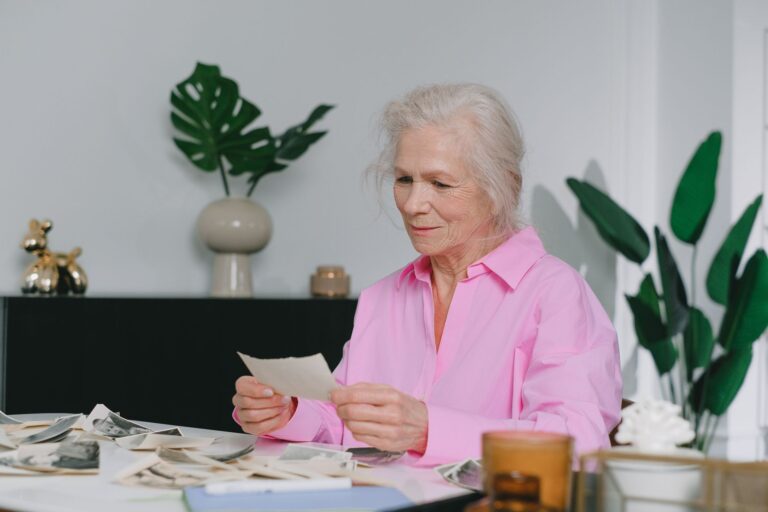
Use a clear font, familiar photographs, and a simple page design. dementia UK recommends using no more than two contrasting colours because several colours or patterns may confuse someone with dementia. Dementia UK's guidance also recommends photographs as a central part of the book.
Keep each page focused on one person, place, object, or event. Avoid crowded collages, decorative backgrounds, long captions, and several questions on one page. A practical page might include one large photograph, a short caption such as "Our house in Leeds," and one optional prompt: "Do you remember this place?" The person can look without answering.
Organize one topic at a time
Do not try to complete the whole book in one sitting. Dementia UK advises taking one topic at a time, pausing when needed, and completing the story over days, weeks, or months at the person's pace. Possible topics include: During a session, choose one topic and ask one question at a time.
The Alzheimer's Association recommends a quiet one-to-one setting, extra response time, and clear step-by-step prompts because lengthy requests can overwhelm. If the person does not respond, avoid turning the session into a test. You can name the person or place, describe the photograph, or simply move to another page.
- Childhood home
- Family members
- Work or school
- Favourite music
- Holidays
Let the person shape the content
Involve the person as fully as possible when choosing photographs and information. They might select a favourite image, point to someone they recognize, or show which pages they prefer. Communication difficulties do not mean relatives must stop the project. Family and friends can provide important information when an interview becomes demanding.
This approach can keep the book personal without requiring the person to supply every detail. Include the present as well as the past. Current preferences and routines can help family members, new care staff, hospitals, and care homes understand how to meet the person's needs. Examples include preferred drinks, bedtime routines, music, names for family members, and activities that cause distress.
Protect the person from distress
A life-story book should support comfort and recognition, not force painful recollection. Avoid prompting traumatic or distressing memories, especially when the person shows fear, agitation, withdrawal, or sadness. Dementia UK suggests keeping essential sensitive information in a separate document for carers rather than revisiting it in the main book.
The main book can then focus on safe, meaningful, and useful information. Ask before continuing when a page appears upsetting. Remove or replace photographs that repeatedly cause distress. A shorter book with trusted content may be more useful than a detailed history that the person does not want to revisit.
Choose the format that still works
A bound book is not the only option. When reading becomes difficult, Dementia UK notes that a photo-focused collage may be more usable. When touch or smell becomes more important, a memory box containing meaningful objects may be preferable. The format should match the person's abilities and interests. A familiar scarf, household object, music-related item, or photograph may prompt connection without requiring sustained reading.
A small randomized care-home trial found that life-story books developed with the person or by relatives were associated with better quality of life, autobiographical memory, relatives' relationship ratings, and staff knowledge and attitudes. However, the study was small, so its findings may not apply to every person or care setting. The International Psychogeriatrics study does not establish one ideal book design. NICE advises clinicians to consider group reminiscence therapy for people with mild-to-moderate dementia. That supports life-story work as a tailored wellbeing activity, but it does not define a specific middle-stage life-story-book format. NICE guideline NG97.