Doll therapy can support engagement in a memory care group when a person willingly explores, holds, or cares for a realistic doll. Distress is more likely when the person refuses, turns away, becomes fearful, cries, grows agitated, or otherwise shows clear discomfort. Doll therapy is a non-drug, person-centred activity, not a test or a required group program. The aim is to offer comfort, purpose, or connection while respecting each person's response.
Medical information disclaimer: This article is for general educational purposes only and does not provide medical advice, diagnosis, or treatment. Always consult a physician or other qualified health professional about symptoms, medications, tests, or treatment decisions.
Table of Contents
- What engaged participation looks like
- Signs that mean "stop or change course"
- How to introduce dolls respectfully in a group
- What the evidence can—and cannot—tell families and care teams
What engaged participation looks like
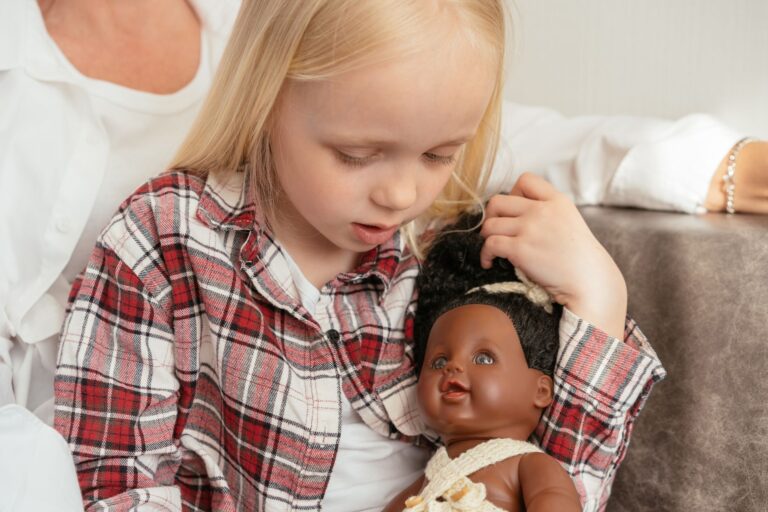
Look for voluntary interest rather than compliance. A person may pick up the doll, examine its features, hold it close, talk to it, rock it, tuck it in, or show caregiving behavior such as feeding or protecting it. Sustained interest matters more than a brief glance.
In a nursing-home trial, participants using dolls showed greater interest, caregiving and exploratory behavior, and acceptance of separation from the nurse—observable responses consistent with engagement. The study is described in the Journal of Clinical Medicine trial record. In a group, engagement may also mean sitting peacefully beside others while holding a doll. It does not have to mean joining a discussion, sharing, or performing a caregiving task.
Signs that mean "stop or change course"
There is no validated, universal distress checklist for doll therapy. Still, a current nursing-home research protocol identifies several forms of dissent that should end the interaction: verbal refusal, pushing the doll away, repeatedly turning away, crying, fear, increased agitation, and obvious discomfort. See the Frontiers in Public Health trial protocol.
Treat these responses as communication, not as a problem to correct. Remove the doll calmly, offer space, and shift to another familiar activity or a quiet presence. Watch for less direct signs, too. A person who becomes tense, searches urgently for someone, argues about the doll, or appears upset when it is moved may need reassurance and a gentler transition.
How to introduce dolls respectfully in a group
offer choice privately or in a low-pressure way. Place a small selection where participants can notice them, then invite—not urge—someone to look, hold, or decline.
The Alzheimer's Society advises allowing people to choose a doll or toy, noting that responses can differ by features such as open or closed eyes. Its Activities Handbook also frames these objects as potentially calming and purposeful for people in later-stage dementia.
- Let the person choose rather than assigning a doll.
- Offer different doll or toy features when possible.
- Avoid calling the object "a baby" unless the person does.
- Do not insist that participants share or give up a doll immediately.
- Record what seemed comforting, neutral, or upsetting for future sessions.
What the evidence can—and cannot—tell families and care teams
The evidence suggests potential benefit, but not a guaranteed result. In a 30-day randomized nursing-home trial involving 134 women with moderate-to-severe dementia, doll therapy reduced total neuropsychiatric symptoms and professional-caregiver distress compared with a cube control. It also reduced agitation, anxiety, apathy, irritability, and wandering more than the control, although measured stress biomarkers did not differ between groups, according to the Journal of Clinical Medicine report. Results have not been uniform.
A smaller three-week randomized trial found no significant reduction in anxiety, agitation, or aggression, though doll recipients showed a greater increase in observed pleasure. A 2022 systematic review concluded that the available studies generally point to improved emotional state, communication, and disruptive behavior, while also calling for larger and more rigorous trials. For a group, the practical question is not whether dolls work for everyone. It is whether a particular person freely shows comfort, interest, or purpose—and whether staff can stop promptly when that response changes.