Military uniforms and medals can become powerful links to identity, emotion, and family connection when dementia disrupts memory. For families, these objects may open communication and offer comfort even when names, dates, and events are difficult to recall. Their meaning is personal, not automatic. A uniform may evoke pride and belonging for one person, while another may feel indifferent, confused, or distressed.
Medical information disclaimer: This article is for general educational purposes only and does not provide medical advice, diagnosis, or treatment. Always consult a physician or other qualified health professional about symptoms, medications, tests, or treatment decisions.
Table of Contents
- Why service-related objects can still feel familiar
- How families can use them without testing memory
- What does the evidence actually show?
- When should you stop or choose something else?
- Protecting medals and getting caregiver help
Why service-related objects can still feel familiar
Dementia can impair memory, thinking, behavior, and daily function. Alzheimer's disease, the most common dementia, causes these abilities to decline progressively, according to the National Institute on Aging. A person may struggle to describe a posting or identify former colleagues yet still respond emotionally to a familiar image.
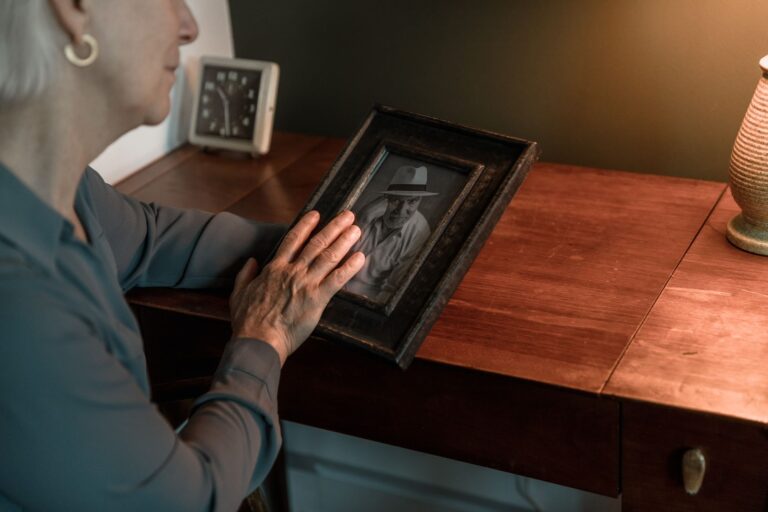
A uniform can represent purpose or belonging. Medals may recall recognition, sacrifice, or important family stories. The VA's dementia guidance identifies military group photos and "moments in uniform" as personalized prompts that may support conversation, emotion, identity, comfort, and connection. Its photo-based guide for Veteran caregivers focuses on the person's response rather than perfect recall.
How families can use them without testing memory
Treat a uniform, medal, or photograph as an invitation, not a quiz. Questions such as "Who is this?" or "What year was that?" can expose memory gaps and create pressure. Use simple, feeling-focused prompts instead: Accept the response without correcting dates, ranks, places, or names.
The goal is a comfortable moment together, not an accurate military history. Watch facial expression, posture, and tone. quiet attention, a smile, or relaxed handling of a photograph can be meaningful even when the person says little.
- "How does this picture make you feel?"
- "What do you notice about the uniform?"
- "That looks like an important day."
- "Would you like to hold this photograph?"
- "Should we look at another one?"
What does the evidence actually show?
This approach belongs to reminiscence care: using personally meaningful material to encourage memories, feelings, and social connection. A 2022 meta-analysis of 29 dementia studies associated reminiscence therapy with improvements in several outcomes, but a Cochrane review found that benefits varied by setting and outcome and called for clearer protocols and more randomized trials. The evidence therefore supports trying personalized prompts as supportive care. It does not show that uniforms or medals reverse dementia, slow the disease, or help every person.
Research and VA guidance focus especially on photographs and individualized reminiscence. They do not establish that medals themselves have a unique clinical effect. Their value depends on the person's history, preferences, and response that day. This is not an FDA-approved medicine or dementia treatment. The VA describes its photo guide as an educational best practice that does not replace advice from a clinician.
When should you stop or choose something else?
Military material can evoke grief, fear, conflict, or traumatic experiences as well as pride. Begin with familiar, calm images rather than crowded albums, graphic scenes, or an entire collection. Stop if the person becomes tense, agitated, frightened, withdrawn, or repeatedly asks to put the item away. Offer reassurance, remove the prompt, and shift to a familiar song, family photograph, or quiet activity.
Do not insist that the person once enjoyed discussing military service. Dementia can change tolerance and communication, while the original experiences may always have been private or painful. Try again another day only if that seems welcome. A prompt that comforts someone in the morning may overwhelm them when they are tired or confused.
Protecting medals and getting caregiver help
Irreplaceable medals, ribbons, documents, and uniforms can be lost, hidden, damaged, or repeatedly moved. Store originals securely and consider using framed copies, scanned photographs, replica ribbons, or a labeled memory book during reminiscence. If you bring out an original item, stay nearby and return it to its protected location afterward.
Photograph the collection and record where each item is stored. General Caregiver Support Services are available through every VA medical center for eligible Veterans enrolled in VA health care who need personal care or supervision. The VA says no application or clinical evaluation is required for intake through its Program of General Caregiver Support Services.