When dementia damages the parts of the brain that control movement, walking becomes unsteady, balance falters, and simple tasks like reaching for a cup grow complicated. What to do involves multiple concrete steps: modify your living space to remove fall hazards, introduce assistive devices like grab bars and walkers before they’re desperately needed, maintain structured physical activity to preserve muscle and coordination, and establish regular check-ins with physical therapists and physicians who understand dementia-specific movement challenges. These interventions don’t reverse the underlying brain changes, but they can add months or years of functional independence and prevent injuries that otherwise accelerate decline.
Movement problems in dementia aren’t just about weakness. They involve coordination loss, difficulty sequencing steps, poor balance recovery, and sometimes apraxia—the inability to carry out purposeful movements even though the muscles work. Someone might forget how to stand from a sitting position despite having the physical strength, or shuffle their feet unable to lift them properly from the floor.
Table of Contents
- Why Does Dementia Damage Movement and Balance?
- Early Warning Signs of Movement Changes in Dementia
- Creating a Safe Physical Environment
- Using Physical Activity to Slow Movement Decline
- Assistive Devices: When and How to Introduce Them
- Working with Physical and Occupational Therapists
- Medication and Medical Interventions for Movement
- Frequently Asked Questions
Why Does Dementia Damage Movement and Balance?
movement isn’t controlled by one brain center. The motor cortex initiates movement, the cerebellum manages coordination and balance, the basal ganglia regulate smooth, automatic motion, and the brain stem controls posture. Dementia damages these networks, particularly in conditions like Parkinson’s disease dementia and vascular dementia where motor pathways degenerate early. A person might appear physically strong during a manual strength test but struggle to walk in a straight line because the coordination centers have deteriorated.
The progression varies. Early-stage dementia often brings slowed movements and slight imbalance. Middle stages add gait changes—shuffling, shorter steps, or a wider stance to compensate for balance loss. Late-stage dementia can result in near-immobility, where standing becomes difficult and walking dangerous. This progression is not inevitable in all dementia types at the same pace; someone with Alzheimer’s might maintain decent walking ability for years while someone with vascular dementia might experience sudden, dramatic changes after a small stroke.
Early Warning Signs of Movement Changes in Dementia
Watch for slow, cautious movement where the person takes deliberate steps rather than moving fluidly. They might hold onto furniture while moving through the house, hesitate at thresholds, or become afraid of stairs they once navigated easily. Freezing—sudden inability to initiate or continue walking—is a red flag, especially if it happens when they reach a doorway or while trying to turn. loss of arm swing while walking, stooped posture, and tremors can also appear.
The critical limitation here is distinguishing movement problems caused by dementia from those caused by arthritis, Parkinson’s disease, stroke, or medication side effects. Some medications used for behavioral symptoms in dementia can worsen movement and balance. A physical therapist or neurologist needs to assess whether the movement problem is the dementia itself, another condition, or a medication effect, because the intervention depends on the cause. Treating medication-induced movement problems requires adjusting prescriptions, while dementia-related changes require environmental and compensatory strategies.
Creating a Safe Physical Environment
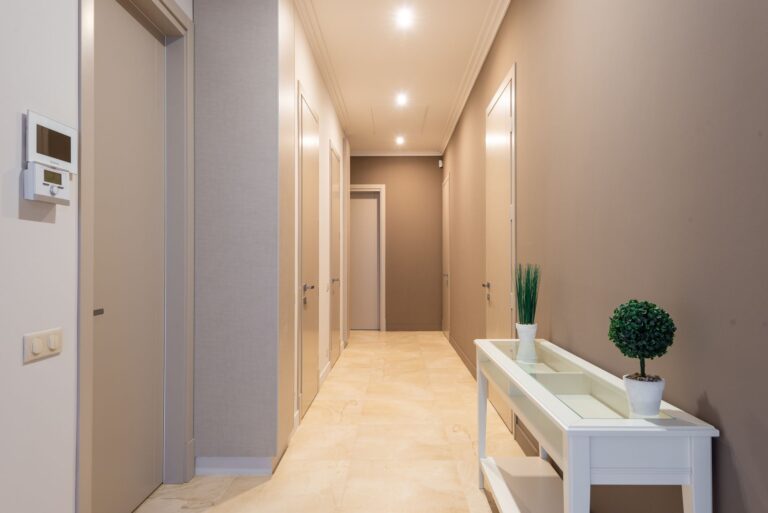
Remove throw rugs, secure loose cords, and ensure clear pathways from bedroom to bathroom—nighttime bathroom trips are where many falls occur in dementia. Install grab bars in bathrooms at the correct height (typically around 33-36 inches for toilet grab bars, positioned horizontally at elbow height). Adequate lighting is essential; motion-sensor lights in hallways prevent stumbling in darkness. Keep frequently used items at waist height to eliminate bending and reaching, which destabilize someone with poor balance.
A real example: a person with moderate dementia began falling frequently on stairs despite intact strength. The solution wasn’t removing stairs but adding a second handrail on the wall without a railing, installing edge-marking tape on step nosings so each step was visually distinct, and ensuring the stairway had unobstructed lighting. Falls stopped. Equally important is preventing someone from wandering into risky areas. Doors to garages, basements, or yards may need temporary locks; bathroom doors should be easy to open from inside but positioned to prevent unsupervised access to medication or cleaning supplies stored in cabinets.
Using Physical Activity to Slow Movement Decline
Structured exercise, even gentle walking or seated exercise, preserves muscle and may slow motor decline. Research shows that dementia patients who participate in regular physical activity maintain better balance and mobility longer than sedentary individuals, though the activity must be consistent—sporadic exercise has minimal benefit. The tradeoff is that safety concerns make exercise harder to maintain. Someone with declining balance can’t safely walk outdoors alone but may resist being supervised during what they see as unnecessary restriction.
Group exercise classes adapted for dementia and balance problems offer social connection plus structured activity. Tai chi, modified for seated or standing variations, has evidence for improving balance and reducing falls in older adults, including those with cognitive decline. Chair exercises—leg lifts, arm circles, torso rotation—maintain range of motion without fall risk. Walking on a treadmill with handrails can provide safe cardiovascular activity when outdoor walking becomes dangerous. The constraint: many people with dementia resist new routines, so establishing exercise early, before it becomes necessary, increases the chance they’ll continue.
Assistive Devices: When and How to Introduce Them
A walker, cane, or grab bars prevent falls but can also signal decline to the person using them, sometimes creating emotional resistance. Introducing assistive devices early—before the person desperately needs them—increases acceptance because they’re not a crisis response but rather a tool integrated into their routine. A person who uses a cane at 60% of functional decline may resist it at 80%, when alternatives have narrowed. Different devices serve different needs.
A standard cane helps with balance but requires some coordination; a walker with four points of contact provides more stability but is bulkier. Walkers with seats offer rest during walking and can prevent falls when someone sits abruptly from loss of balance. The limitation is that devices don’t prevent all falls—they reduce risk, particularly from trips or loss of balance, but not from sudden freezing, orthostatic hypotension (blood pressure drop on standing), or medication effects that cause dizziness. A person using a walker can still fall forward if they lurch unexpectedly or experience freezing gait.
Working with Physical and Occupational Therapists
A physical therapist trained in neurology can assess exactly what movement capacities have declined and design exercises tailored to those losses. They teach caregivers safe transfer techniques—how to help someone stand from a chair without jerking or straining either party—and how to recognize when someone is about to fall. An occupational therapist evaluates the home and recommends specific adaptations that address the individual’s movement pattern.
A person with severe balance loss needs different modifications than someone whose primary problem is forgetting how to stand. One example: a caregiver tried helping someone walk by gripping their arm, inadvertently pulling them off balance. A physical therapist showed a technique—standing at their side with the caregiver’s arm supporting the person’s arm and back—that provided stability without pulling. This single technique reduced falls during assisted walking significantly.
Medication and Medical Interventions for Movement
Some medications worsen movement; antipsychotics, certain antidepressants, and anticholinergics can increase rigidity, tremor, or balance loss. A physician knowledgeable about dementia should periodically review medications to identify culprits. Stopping a medication that worsens movement sometimes restores function dramatically, but it requires weighing the medication’s intended benefit—behavioral control, mood improvement—against movement costs. Certain conditions underlying movement changes benefit from specific treatment.
Someone with dementia and coincident Parkinson’s disease may benefit from dopaminergic medications. Vascular dementia sometimes involves treatable hypertension or diabetes, controlling which can slow new movement decline. Orthostatic hypotension—dizziness on standing that causes falls—can be managed with compression garments, increased fluids, and medication adjustments. Physical decline accelerates when hidden contributors go untreated. Someone falling frequently might actually have a urinary tract infection, common in dementia patients, causing delirium and unsteadiness; treating the infection restores mobility temporarily.
Frequently Asked Questions
Is physical decline inevitable in dementia?
Decline is common but variable. Some dementia types cause motor problems early and severely; others leave movement relatively intact through advanced stages. Staying active, treating medical conditions, and reviewing medications slow decline. You can’t stop all deterioration, but you can often slow it meaningfully.
Should I keep someone with dementia walking if I’m afraid they’ll fall?
Complete immobility accelerates decline and increases depression and contractures. The goal is walking that’s as safe as possible—supervised, on flat surfaces, with assistive devices—not elimination of all fall risk. A trained physical therapist can help you find the balance specific to your situation.
When should assistive devices be introduced?
Introduce them when balance begins to decline or when stumbling starts, not when someone is falling frequently. Starting early increases acceptance and prevents the crisis moment when someone resists because they’re already injured.
Can medication cause or worsen movement problems?
Yes. Antipsychotics, anticholinergics, and certain sedatives commonly worsen balance and gait. A physician familiar with dementia should review medications regularly; stopping problematic drugs can sometimes restore function.
What’s the difference between caregiving for someone with stable movement and one where it’s declining?
Stable movement allows independence and minimal adaptation. Declining movement requires more frequent assessment, earlier introduction of safety measures, and shorter intervals between evaluations. What worked three months ago may be unsafe today.