Making a home safer after a dementia diagnosis means removing environmental hazards that can lead to falls, injuries, and dangerous situations—and establishing systems that reduce confusion and wandering. The goal is to create a space where the person can move about with less risk while maintaining as much independence as possible. For example, a 72-year-old man with early-stage dementia began leaving the stove on and forgetting he’d done so; his family disabled the stove’s ignition and installed a timer-controlled electric kettle, immediately eliminating that fire risk while letting him still make tea.
Home safety planning should start immediately after diagnosis, before cognitive decline makes the person more vulnerable to injury. This isn’t about locking someone away or removing all autonomy—it’s about thoughtful modifications that match the person’s current abilities and anticipated needs. The changes range from simple (better lighting, grab bars) to more involved (removing or securing hazardous materials, installing door alarms), and they evolve as the disease progresses.
Table of Contents
- What Are the Main Hazards in a Dementia-Affected Home?
- Bathroom Modifications and Fall Prevention Strategies
- Medication Management and Toxic Substance Control
- Removing and Securing Potential Hazards
- Wandering Risks and Door Safety Systems
- Lighting, Navigation, and Orientation
- Security, Identification, and Outside Communication
- Frequently Asked Questions
What Are the Main Hazards in a Dementia-Affected Home?
People with dementia face specific, predictable risks: falls from poor lighting or clutter, injuries from heat sources like stovetops and hot water, poisoning from medications or cleaning products left accessible, and dangerous situations from wandering or opening doors to strangers. A person in mid-stage dementia may no longer remember that a bathtub drain will scald, or that the step at the front door exists, or that they should not answer the door to someone they don’t recognize.
Falls are the leading injury cause in this population. Studies show dementia roughly doubles fall risk compared to cognitively intact older adults, often because judgment and spatial awareness decline while physical balance issues may also be present. A woman with dementia tripped on a rolled-up rug near the bedroom door—a hazard her caregiver would have stepped over automatically—and broke her hip, requiring surgery and long-term care facility placement.
Bathroom Modifications and Fall Prevention Strategies
The bathroom is consistently the most dangerous room in a dementia-affected home because it combines slippery surfaces, hard fixtures, hot water, and enclosed spaces where falls go unnoticed. Installing grab bars (not towel racks, which don’t support weight) at the toilet, tub, and shower is non-negotiable. Anti-slip tape on tub floors and adhesive-backed mats at the bathroom door also help, though these require regular inspection for curling edges that can become trip hazards. Lowering water heater temperature to 120°F prevents scalding; at 140°F, a person can suffer third-degree burns in 3–4 seconds.
A caregiver discovered this the hard way when her mother with advanced dementia adjusted the shower and stood under 145°F water; she suffered burns on her legs and feet. Some families also remove the bathroom lock from the inside (a major safety issue—a locked door prevents emergency help) and replace it with a hook-and-eye on the outside, though this sacrifices privacy for safety. A serious limitation of bathroom modifications: no amount of grab bars, mats, or temperature control eliminates risk entirely. Older adults with dementia still fall on bathroom floors even when these measures are in place, especially as the disease progresses. Some families move toileting to a commode chair in the bedroom or living room during late stages, eliminating the bathroom trip altogether.
Medication Management and Toxic Substance Control
Dementia commonly leads to confusion about medications: forgetting whether a dose was taken, taking the same medication twice, or accidentally taking someone else’s prescription. Setting up a blister pack or pill organizer with a lock, and keeping all medications in a locked drawer or cabinet, prevents accidental overdose. Some families use an automated pill dispenser that releases the correct dose at the right time and alerts the caregiver—a proven way to enforce compliance without constant supervision.
Cleaning products, pesticides, personal care items, and even vitamin supplements must be stored in locked cabinets, not under the sink where a person with dementia might think they’re food or drink. A man with mid-stage dementia drank what he thought was iced tea but was actually glass cleaner; he experienced poisoning and had to go to the emergency room. All potentially toxic substances should be labeled clearly and kept physically separated from food and drink.
Removing and Securing Potential Hazards
Walking through the home with the mindset that the person might no longer remember danger is essential. Secure heavy furniture like bookcases and dressers to the wall to prevent tip-overs if the person leans or pulls. Remove throw rugs, electrical cords crossing walkways, and low coffee tables that the person might trip over or forget about. Open stairways should have gates at the top and bottom, and bottom stairs should be marked with bright tape so a person doesn’t miss a step. Kitchen hazards require special attention.
Disable or remove unused appliances like toaster ovens if the person might turn them on. Store sharp objects (knives, scissors) in locked drawers. Remove potentially dangerous foods like grapes or hard candy if the person is at risk for choking. The tradeoff here is that these measures reduce the person’s autonomy in their own kitchen—they can no longer freely grab a snack or prepare their own meal—but this loss of independence is necessary to prevent injury. A family who left a butter knife accessible found their father attempting to use it to scrape paint off the wall, creating a risk of hand injury.
Wandering Risks and Door Safety Systems
Wandering—leaving the home without awareness, direction, or recall—affects 60% of people with dementia at some point. An unlocked door allows the person to leave without supervision, leading to getting lost, exposure to traffic, or hypothermia if they wander at night. Installing locks high on doors (out of habitual reach), deadbolts that require a key from the inside, or door alarms that alert caregivers when the door opens are common solutions.
Wandering can happen suddenly and repeatedly. A man with moderate dementia appeared calm and engaged one moment, then left through a side door during his caregiver’s bathroom break; he was found three hours later two miles away, confused and in shock. A GPS watch or wearable tracker (some connect to a caregiver’s phone) can help locate the person quickly if they do wander, but no device replaces attentive supervision. The limitation is that door locks may violate fire code if they prevent emergency exit—consult local fire safety rules before installing interior locks that might trap someone during a fire.
Lighting, Navigation, and Orientation
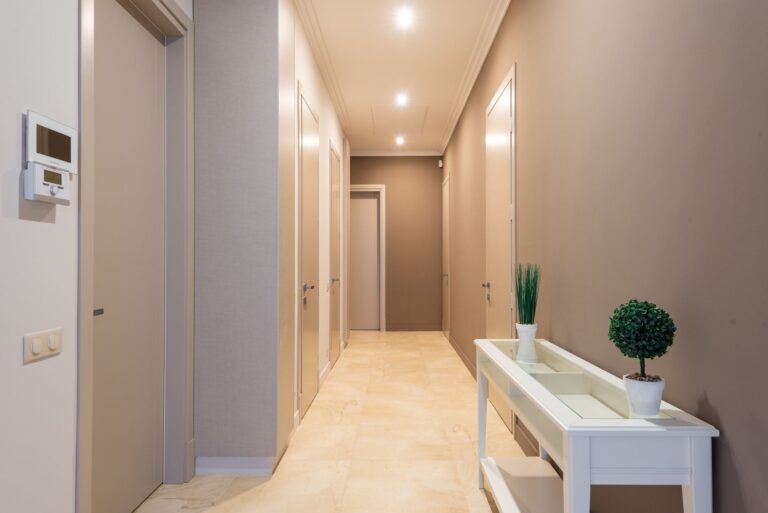
Dementia often impairs spatial awareness and increases confusion, especially in low-light conditions. Nighttime wandering to the bathroom is common, and poor lighting makes falls more likely. Installing motion-sensor lights in hallways, bathrooms, and bedrooms helps the person navigate safely without needing to remember where light switches are. Keeping a nightlight on in the bedroom and another in the bathroom prevents disorientation.
Color contrast also aids navigation. A bright-colored toilet seat against a white toilet bowl helps the person locate it. A 3-inch strip of contrasting tape on stair edges makes each step more visible. These low-cost modifications reduce the cognitive load of finding things and reduce falls from missteps or missing obstacles.
Security, Identification, and Outside Communication
Once doors are secured against wandering, consider what happens if an emergency responder or visitor needs to reach the person. Keep a spare house key with a trusted neighbor or in a lockbox, so caregivers or emergency services can enter. Attach identification to the person—a wristband or ID card stating their name, emergency contact, and diagnosis—in case they do wander and are found by police or a bystander.
Install a doorbell camera or video intercom so the person (or a caregiver) can see who’s requesting entry before opening the door. This prevents the person from letting in strangers or scammers who might take advantage of their confusion. A woman with dementia answered the phone and gave a scammer her credit card number, thinking it was a bank verification call; a smart speaker or phone that displays caller ID with a photo can reduce this risk by making the caller’s identity clearer and giving the caregiver time to intervene.
Frequently Asked Questions
How much does it cost to make a home dementia-safe?
Basic modifications (grab bars, nightlights, removing tripping hazards) cost $200–$500. More involved changes like installing door locks, motion sensors, security cameras, and replacing appliances can cost $1,500–$5,000. Some communities offer grants or in-home safety assessments through Area Agencies on Aging.
Can I use locks and gates without violating fire codes?
Most jurisdictions allow deadbolts with interior keypads or keyless exit (manual push-to-unlock) on bedroom and bathroom doors, but locking an exit door from the inside may be prohibited. Check with your local fire marshal before installing any interior lock that could trap someone during evacuation.
What’s the best device to prevent wandering?
GPS watches and wearable trackers work best for people who will wear them consistently. Simpler options (door alarms, motion sensors) alert caregivers to exits but don’t prevent them. The most effective approach combines multiple methods: secure doors, tracking devices, ID bracelets, and neighbor awareness.
Should I install cameras in bedrooms or bathrooms?
No. Cameras in private spaces violate dignity and are often illegal without consent. Use motion sensors outside bedrooms or bathrooms instead to alert caregivers to movement, or place cameras only in common areas like hallways and living rooms.
When should I hire a professional home safety assessment?
Early in the disease course (at diagnosis or shortly after) is ideal, before the person has had a fall or incident. Occupational therapists specializing in aging-in-place can identify hazards you might miss and recommend modifications matched to the person’s current abilities. Costs range from $150–$300 for a basic assessment.