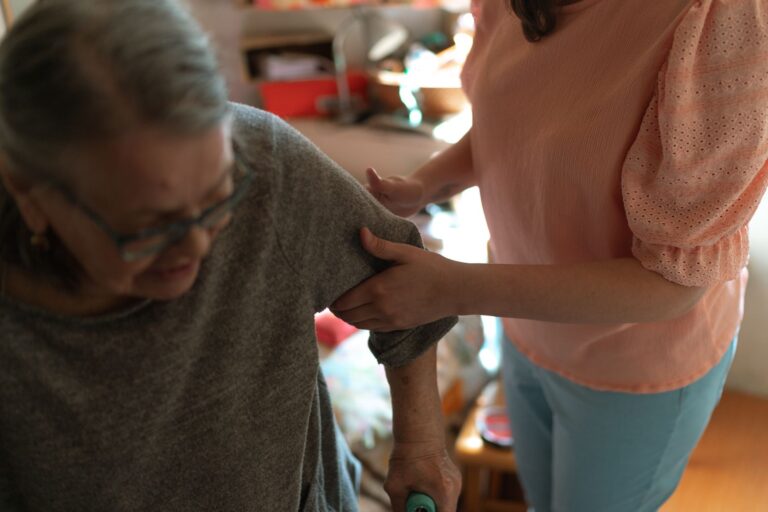
Movement helps dementia patients by rewiring how their brain processes and retains information, reducing behavioral symptoms like agitation and aggression, and stabilizing mood in ways that medications often cannot achieve alone. When an Alzheimer’s patient walks, swims, or dances regularly, they experience measurable improvements in cognitive function, sleep quality, and emotional stability—benefits that have nothing to do with cardiovascular fitness and everything to do with how physical activity preserves neural pathways and floods the brain with protective chemicals. A 78-year-old woman with moderate dementia who spent years refusing to leave her recliner began attending a twice-weekly water aerobics class; within six weeks, her nighttime agitation vanished, she stopped asking the same questions repeatedly within minutes, and her family reported she seemed more present during conversations.
Beyond keeping muscles strong, movement is one of the most powerful non-pharmaceutical interventions available for dementia because it addresses the disease’s core mechanism—the breakdown of brain cell connections. Research shows that regular physical activity can slow cognitive decline by 30 to 40 percent in people with early dementia, and it reduces the incidence of behavioral and psychological symptoms that become increasingly disruptive as the disease progresses. The benefits appear regardless of the type of movement or the person’s fitness baseline; a slow, supported walk through a neighborhood is as protective as a structured exercise program.
Table of Contents
- What Happens in the Brain When Movement Occurs?
- How Movement Reduces Behavioral Problems and Agitation
- Movement and Sleep Quality in Dementia
- Choosing Movement That Actually Fits the Person
- Balance, Falls, and When Movement Becomes a Safety Issue
- Movement as Social Connection and Stimulation
- How to Start and Sustain a Movement Routine
What Happens in the Brain When Movement Occurs?
When someone with dementia engages in physical activity, several critical processes activate simultaneously in the brain. exercise triggers the release of brain-derived neurotrophic factor (BDNF), a protein that acts like fertilizer for neurons—it strengthens existing connections and encourages the growth of new ones. In dementia, the brain is losing cells and connections at an accelerating rate, and BDNF production naturally declines. Movement is one of the few interventions that directly reverses this cellular decline.
People without dementia who exercise regularly have higher BDNF levels and better memory; in people with dementia, this effect is even more pronounced because their brains need that protective boost most urgently. Additionally, movement increases blood flow to the brain, delivering more oxygen and glucose to areas that are shrinking or underperforming. In Alzheimer’s disease, the hippocampus—the brain’s memory center—atrophies faster than other regions. Aerobic activity has been shown to increase hippocampal volume, literally rebuilding the structure of the memory system. A comparison between sedentary dementia patients and those who exercise regularly shows measurable differences on brain imaging scans: the exercisers have larger hippocampi and more active neural networks in regions associated with processing and forming new information.
How Movement Reduces Behavioral Problems and Agitation
One of the most draining aspects of dementia caregiving is behavioral change—the person who was calm becomes combative, or the evening hours fill with pacing, yelling, and confusion known as sundowning. Movement addresses this directly by regulating the nervous system and depleting excess energy that might otherwise manifest as aggression or anxiety. A consistent exercise routine creates predictable dips in cortisol (the stress hormone) and elevates serotonin and dopamine, which influence mood and impulse control. The limitation here is that the benefit requires consistency; a single workout will not calm an agitated dementia patient, but a routine becomes a kind of chemical anchor in the brain.
When a person exercises at the same time each day, their body learns to anticipate it, and the hormonal balance steadies. Caregivers who commit to a 30-minute walk before the typical time of day when agitation peaks often see that behavior diminish entirely. A 72-year-old man with vascular dementia who spent his evenings pacing and asking his wife if he had to go to work tomorrow began a late-afternoon routine of walking with a caregiver to a nearby park. Within two weeks, the evening agitation stopped, and he slept through the night for the first time in months. However, when his family took a vacation and the routine broke for a week, the agitation returned immediately, requiring the routine to be reestablished.
Movement and Sleep Quality in Dementia
Sleep disturbance is nearly universal in dementia, and it accelerates cognitive decline—people who do not sleep well forget faster and experience more behavioral problems. Movement corrects sleep in two ways: it tires the body and it regulates circadian rhythm, the internal clock that tells the brain when to sleep and wake. Dementia damages the brain structures that govern circadian rhythm, so people with the disease often lose the ability to fall asleep at appropriate times. Daytime activity, especially outdoor activity with exposure to natural light, resets this clock.
Evening agitation sometimes reflects the brain’s confusion about whether it is day or night. A study of nursing home residents with advanced dementia found that those who participated in a program of structured physical activity during the day had 45 minutes more nighttime sleep on average and fewer episodes of nighttime waking. The effect was not dependent on the type of activity—yoga, walking, and dance were equally effective—only that the activity occurred consistently. The warning here is that poorly timed exercise can backfire; strenuous activity within three hours of bedtime can raise cortisol and adrenaline, making sleep worse. A caregiver must find the timing that suits the individual’s patterns, which often requires trial and adjustment.
Choosing Movement That Actually Fits the Person
The best movement for a dementia patient is whatever they will actually do, not what a caregiver thinks they should do. If a person was never a runner, insisting on jogging will fail; if they loved gardening, gentle digging and weeding—even if it only takes 20 minutes—may offer better adherence and satisfaction. The goal is regularity and enjoyment, not intensity. A 64-year-old woman who had worked as a dancer for decades lost interest in most activities after her Alzheimer’s diagnosis, but music and dancing still reached her; her family found a community dance class for older adults, and she attended twice a week, often dancing with more energy and precision than in normal conversation.
The movement itself seemed to access a part of her memory and motor system that verbal communication no longer could. Walking is the most accessible option for most dementia patients and requires no equipment or instruction. It pairs well with companionship—many people walk longer and more consistently when accompanied by another person, which also adds social benefit. For people with mobility limitations or severe balance problems, chair-based exercise, water aerobics, or tai chi can provide the same neurological benefits with lower fall risk. The trade-off is that less intense activity requires longer duration or greater frequency to achieve the same cognitive results; a 15-minute slow walk may need to occur most days of the week, whereas a 30-minute brisk walk three times weekly might offer more benefit.
Balance, Falls, and When Movement Becomes a Safety Issue
Dementia affects balance through multiple mechanisms: damage to areas of the brain that coordinate movement, loss of muscle mass and strength, and medications that cause dizziness. This creates a paradox—movement is protective for the brain, but movement also carries a higher risk of falls in someone whose balance is already compromised. A person with moderate dementia might lose their footing during a walk and fracture a hip, an injury that often marks the beginning of rapid decline and loss of independence. The solution is not to eliminate movement but to make it safer through environmental adaptation, appropriate footwear, and assistive devices.
Walking indoors on flat, obstacle-free paths is safer than outdoor walking with curbs and uneven ground. Using a walker or cane is not failure; it is a tool that allows continued movement with reduced fall risk. Some caregivers worry that assistive devices signal decline or will discourage the person from attempting activity, but the opposite is true—they enable more activity because the person feels more stable. Water aerobics eliminates fall risk entirely because the water supports the body, which is why it is an excellent choice for people with significant balance problems. The warning is that supervision matters; a dementia patient should not be trusted to exercise alone outdoors, and in a group setting, a trained caregiver should be present to catch them if they stumble.
Movement as Social Connection and Stimulation
Exercise often becomes a social activity, which provides cognitive and emotional benefits distinct from the movement itself. Group classes, walking clubs, or paired walks with a family member address the isolation and loneliness that worsen dementia outcomes. The person with dementia may not remember the walk afterward, but the emotional warmth and engagement during the activity is real and therapeutic in the moment.
A 69-year-old man with advancing dementia who became withdrawn and uncommunicative began attending a weekly group tai chi class for seniors. During class, he spoke with other participants and smiled frequently, even though he could not perform the movements correctly. By the end of each session, his mood was noticeably elevated, and this emotional lift lasted several hours, improving his behavior and his family’s quality of life.
How to Start and Sustain a Movement Routine
The hardest part of any movement program is sustaining it beyond the initial weeks. Dementia caregivers are exhausted, and adding another task to an already overwhelming day feels impossible. The solution is to anchor movement to an existing routine—the after-lunch walk, the morning neighborhood loop before breakfast—so it does not require willpower, only habit.
Starting small (10 or 15 minutes) is more sustainable than attempting 30 or 45 minutes from the start, and it is acceptable to do less on difficult days rather than abandon the practice entirely. A caregiver managing a spouse with dementia began by walking to the mailbox and back, about 10 minutes, every morning after breakfast. Six months later, they were walking for 25 minutes most mornings, and the spouse’s verbal agitation had reduced by half. The key was consistency, not perfection; some mornings they only made it to the mailbox and back, and that was acceptable.
- —