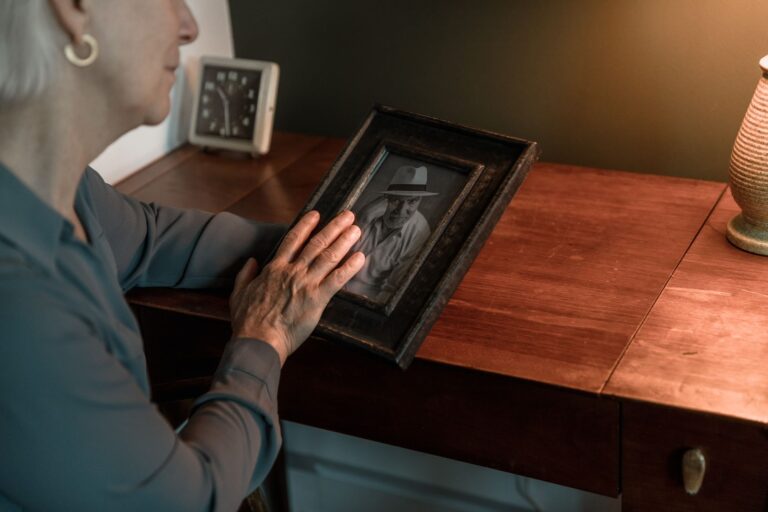
Favorite family photographs can mean everything because they offer a familiar way to connect when dementia—cognitive decline severe enough to disrupt daily life, as the National Institute on Aging explains—changes memory and conversation. A photograph can create a shared focus, invite a story, or let relatives sit together without demanding perfect recall. Their value is supportive, not curative. Photographs do not slow or reverse dementia, but thoughtful use may help families create moments of comfort, attention, and connection.
Medical information disclaimer: This article is for general educational purposes only and does not provide medical advice, diagnosis, or treatment. Always consult a physician or other qualified health professional about symptoms, medications, tests, or treatment decisions.
Table of Contents
- What can a favorite photograph offer?
- What does the evidence show?
- Which photographs should a family choose?
- How can photographs be used without creating pressure?
- What if the photograph does not help?
What can a favorite photograph offer?
A photograph gives everyone something concrete to notice. Instead of struggling to start a conversation, a relative might say, "I love the red coat Aunt May wore here," or "That garden looks beautiful." The picture may prompt a story, a comment, or a smile. It may also lead somewhere unexpected.
The person might focus on a pet, a dress, or the weather rather than the event the family hoped to discuss. That response still has value. The goal is not to recover every name and date. It is to meet the person in the conversation they can have now.
What does the evidence show?
Using photographs this way can be part of reminiscence therapy: discussing past experiences with another person, often with prompts such as pictures or music. A Cochrane evidence review found small, setting-dependent improvements in areas including quality of life, cognition, communication, and possibly mood. Benefits appeared most often in care-home studies, and the results were not uniform.
That means families should view photographs as one possible aid, not a treatment with a predictable effect. A pragmatic trial involving 291 people with dementia and their family carers found that group reminiscence did not improve the main quality-of-life outcomes. Carers did report a small improvement in relationship quality, according to the University College London-led study. Even a meaningful personal moment should not be mistaken for evidence that dementia itself has improved.
Which photographs should a family choose?
Begin with a small, manageable selection. Favorite images are not necessarily formal portraits or major milestones; an ordinary kitchen, familiar dog, old car, or much-loved holiday scene may invite more engagement.
Useful choices may include: Let the person's response guide the collection. Keep images that hold attention or support pleasant conversation, and put aside those that repeatedly cause confusion, sadness, or agitation.
- Clear photographs without crowded backgrounds
- People, places, pets, or activities important to the person
- Images from different periods of life
- Copies that can be handled without fear of damaging an original
- Pictures that have previously brought comfort rather than distress
How can photographs be used without creating pressure?
Choose a quiet moment and offer one or two images rather than an entire album. Sit where both people can see the photograph, make an observation, and leave time for a response.
Avoid turning the exchange into a memory test: Repeated questions such as "Don't you remember?" can make the encounter feel like an examination. Treat recognition as an invitation, not a measure of affection or relationship strength.
- Say, "This looks like a happy picnic," rather than, "Where was this?"
- Offer a name instead of demanding one.
- Accept the person's version of the story unless correction is necessary for safety.
- Change the subject if the person appears uncomfortable.
- Stop when interest fades.
What if the photograph does not help?
Not every picture will be welcome every day. A person may ignore an image, identify someone differently, become upset, or prefer another activity. Families can respond by removing the photograph calmly and trying music, conversation, or quiet companionship instead.
Keep well-loved photographs around when they contribute to a comforting setting, consistent with National Institute on Aging care guidance. Their purpose is to support the person, not require a particular reaction. Families wanting broader practical guidance can use the NIA's free booklet, Caring for a Person With Alzheimer's Disease.