
Athletes develop sacroiliac joint instability when the SI joint—which connects the lower spine to the pelvis and transmits forces between the legs and torso—becomes destabilized through repetitive asymmetric loading, sudden trauma, or progressive muscle imbalances that disrupt its ligamentous support system. A baseball pitcher who throws thousands of pitches per season, loading the SI joint unevenly on their throwing-arm side, exemplifies this pattern. About 32.39% of athletes experiencing low back pain have SI joint involvement, yet among general athletic populations, the mean prevalence is 10.72%, suggesting that certain training demands and individual biomechanics create substantially higher risk.
This article explores the specific mechanisms that lead to SI joint instability in athletes, the sport-specific patterns that emerge, the anatomical vulnerabilities involved, and the risk factors that predispose some athletes to this condition. The SI joint is primarily stabilized by ligaments—the anterior and posterior interosseous ligaments providing the main support, with the iliolumbar, sacrotuberous, and sacrospinous ligaments offering accessory stability. When these ligaments become stretched, irritated, or torn through repetitive motion or trauma, inflammation develops and stability deteriorates. Athletes face higher risk than the general population because the SI joint sustains substantially greater loads during athletic activity, and certain sports inherently create the asymmetric loading patterns that destabilize the joint.
Table of Contents
- How Athletic Loading Patterns Create SI Joint Vulnerability
- Muscle Imbalances and Uneven Force Distribution
- Sport-Specific Patterns and Risk Vulnerability
- The Role of Prior Injury, Biomechanics, and Accumulated Risk
- Acute Trauma Versus Chronic Overuse Instability
- Sex-Specific and Demographic Vulnerability Patterns
- Prevention, Recovery, and the Future of SI Joint Management
- Conclusion
How Athletic Loading Patterns Create SI Joint Vulnerability
The sacroiliac joint‘s primary structural role is to link the lower extremities to the spine and distribute forces between them during movement. Unlike joints that move freely, the SI joint is designed for stability with minimal movement—typically allowing only 2-3 degrees of motion. During athletic activity, however, it must sustain dramatically higher compressive, shear, and rotational forces than during daily life. Running creates repetitive vertical loading through the joint; cycling generates sustained compression; throwing and kicking introduce powerful asymmetric forces; and weightlifting concentrates massive loads through the pelvis.
The SI joint becomes unstable when repetitive loading disrupts this delicate balance. The ligaments that normally stabilize the joint can become stretched and ineffective through chronic overuse, or they can be partially torn through sudden trauma. Once stability is compromised, even normal movement patterns can irritate the joint capsule and surrounding tissue, creating pain and further instability. In baseball pitchers, this pattern is particularly pronounced—more than 80% of SI joint dysfunction in throwing athletes occurs on the side of the throwing arm, indicating that the asymmetric loading inherent to pitching directly drives joint destabilization.
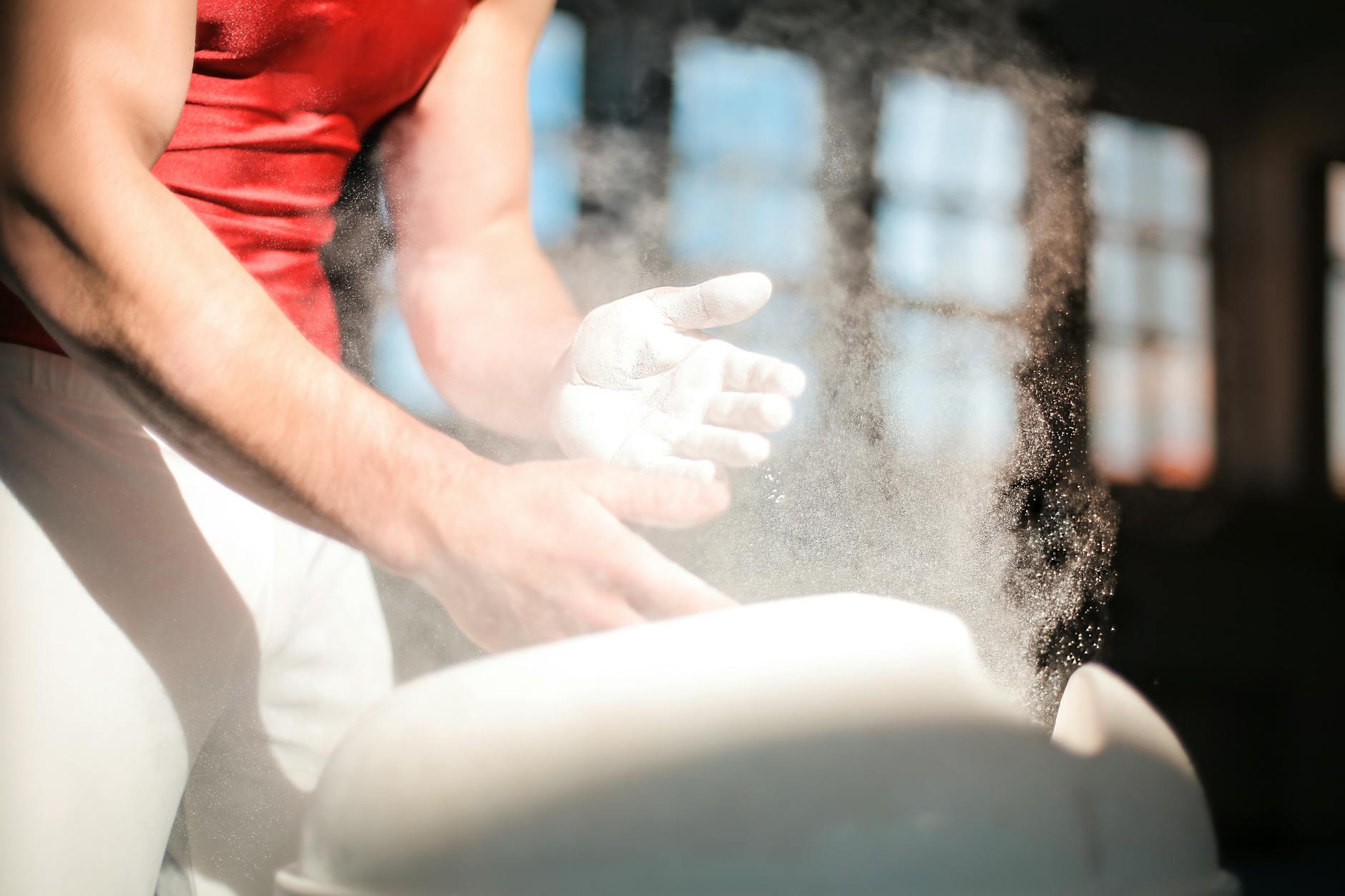
Muscle Imbalances and Uneven Force Distribution
While ligaments provide passive stability, muscles provide dynamic control of the SI joint. The core stabilizers—particularly the gluteus maximus and medius, transverse abdominis, and deep spinal stabilizers—work continuously to distribute forces evenly across the joint. When these muscles are weak, tight, or imbalanced, they fail to properly stabilize the joint, forcing it to compensate with excessive movement or uneven loading patterns.
This is where the specifics become critical: weakness in the glutes relative to tight hip flexors, or an imbalanced core, creates asymmetric force distribution across the SI joint. A distance runner with weak hip stabilizers may develop imbalances that cause the pelvis to drop or rotate unevenly during the push-off phase of running, concentrating force on one side of the SI joint. An athlete with chronically tight hamstrings and weak core stabilizers may display altered movement patterns that further load the joint asymmetrically. These muscle-based problems are particularly insidious because they develop gradually and often go unnoticed until pain emerges—by which point months of improper loading may have already irritated ligaments and joint cartilage.
Sport-Specific Patterns and Risk Vulnerability
Different sports create distinct SI joint vulnerability patterns. Basketball players with SI joint pain report significantly higher rates of additional lower extremity and pelvic injuries compared to basketball players without SI dysfunction, suggesting that SI instability is both a result of and a gateway to broader movement dysfunction. Baseball pitchers show a strong association between limited hip internal rotation on the throwing arm side and SI joint dysfunction—the restricted hip mobility forces the SI joint to compensate, driving instability. Football and rugby players, who experience frequent high-impact collisions, can develop SI joint problems through acute traumatic disruption of ligaments rather than gradual overuse.
The implication for athletes is that SI joint risk is not uniform—your specific sport creates specific vulnerability patterns. A swimmer’s SI joint stress differs fundamentally from a soccer player’s or a gymnast’s. Swimmers experience primarily repetitive flexion-extension loading, soccer players experience rapid multi-directional forces and sudden deceleration, and gymnasts experience extreme ranges of motion with significant spinal load. Understanding your sport’s specific loading pattern allows for more targeted prevention, but it also means that training modifications that work for one sport may not apply to another.

The Role of Prior Injury, Biomechanics, and Accumulated Risk
Certain individuals carry higher baseline risk for SI joint instability because of factors entirely outside their control. Female athletes are at higher risk than male athletes—a pattern that appears to be related to both ligamentous laxity (a structural feature of female pelvic tissue) and hormonal influences on tissue elasticity. Pregnancy substantially elevates SI joint risk through hormonally-mediated ligament loosening and altered biomechanics. Athletes with a history of lumbar fusion surgery, scoliosis, leg length discrepancies, or obesity all show elevated SI joint dysfunction rates because these conditions alter how forces are distributed through the pelvis.
Years of athletic experience is itself a risk factor—not because training is harmful, but because accumulated sport-specific loading, particularly in asymmetric sports, progressively stresses the joint. An athlete with multiple prior stress injuries or a history of pelvic dysfunction is more vulnerable to SI joint problems. However, not every athlete with these risk factors develops SI joint pain, and many athletes without apparent risk factors do develop problems, emphasizing that SI joint instability results from an interaction between structural vulnerability, accumulated loading, and specific biomechanical patterns. This complexity explains why prevention requires personalized assessment rather than generic protocols.
Acute Trauma Versus Chronic Overuse Instability
SI joint instability can develop through two distinct mechanisms: acute traumatic injury and chronic overuse. Contact sport athletes—football players, rugby players, ice hockey players—can experience acute SI joint dysfunction when direct trauma or high-impact collision disrupts ligaments. A tackle that forces sudden twisting or compression through the pelvis can acutely stretch or partially tear SI ligaments, creating immediate instability and pain.
In contrast, distance runners, pitchers, and cyclists typically develop instability through chronic repetitive loading that progressively weakens ligamentous support and creates compensatory muscle patterns. The distinction matters because acute injuries may respond more dramatically to rest and protection, while chronic instability often requires addressing the underlying biomechanical patterns that created it. An athlete who suffered acute SI joint trauma but then resumes the same movement patterns and muscle imbalances that preceded the injury may experience recurrence. Similarly, an athlete with chronic SI joint instability may experience acute exacerbations when tired or under excessive load—a limitation that requires ongoing management rather than a simple “recovery” endpoint.
Sex-Specific and Demographic Vulnerability Patterns
Female athletes carry inherently higher SI joint dysfunction risk, a pattern driven by multiple overlapping factors. Ligamentous tissue in females is typically more lax than in males, a structural difference that reduces passive stability and places greater demand on muscle-based dynamic stabilization. Hormonal fluctuations across the menstrual cycle alter tissue elasticity and collagen synthesis, creating periods of greater vulnerability.
Pregnancy dramatically loosens SI joint ligaments through hormone-mediated changes, and these changes may not fully reverse post-pregnancy, leaving some athletes with residual instability. The practical implication is that female athletes require particular attention to hip and core stability throughout their careers, and pregnant or postpartum athletes need modified training approaches and specialized rehabilitation. Age also influences vulnerability—younger athletes with developing skeletal systems and older athletes with degenerative changes both show increased SI joint dysfunction rates, though the underlying mechanisms differ. Understanding these demographic patterns allows for more targeted prevention but also illustrates that SI joint stability is not equally distributed across athletic populations.
Prevention, Recovery, and the Future of SI Joint Management
As understanding of SI joint dysfunction in athletes has grown, so has recognition that prevention requires specific attention to hip and core stability, movement quality in sport-specific patterns, and appropriate load management. Recovery from SI joint instability typically involves addressing the biomechanical causes—whether that means improving core stability, correcting muscle imbalances, addressing hip mobility restrictions, or modifying sport-specific movement patterns. An athlete with SI joint pain should expect not just pain reduction, but restoration of the underlying stability that will prevent recurrence.
The outlook for SI joint management in athletics is increasingly personalized and biomechanically sophisticated, moving away from generic stability protocols toward sport-specific and individual-pattern approaches. As more athletes and clinicians recognize that SI joint dysfunction is not primarily a “popping it back in place” problem but rather a stability and movement control issue, prevention and recovery have become more effective. For athletes willing to invest in addressing the underlying causes, returning to sport without recurrence is increasingly achievable.
Conclusion
SI joint instability in athletes develops when the demanding biomechanical environment of sport—repetitive asymmetric loading, sudden trauma, or sustained high-impact forces—exceeds the joint’s stabilizing capacity. This occurs through disruption of ligamentous support, development of muscle imbalances and weak dynamic stabilizers, and accumulated microtrauma from movement patterns that concentrate force unevenly across the joint. The condition is neither random nor inevitable; it emerges from the specific interaction between an athlete’s sport, individual anatomy and risk factors, and movement patterns developed through training.
If you are an athlete experiencing pelvic pain, SI joint pain, or recurrent lower extremity injuries, assessing your SI joint stability should be part of your evaluation. More importantly, building robust hip and core stability, addressing any movement imbalances specific to your sport, and managing training load appropriately are the most effective approaches to prevention. Understanding why the SI joint destabilizes—rather than simply treating the pain once it emerges—allows you to build a training approach that protects this critical joint throughout your athletic career.




