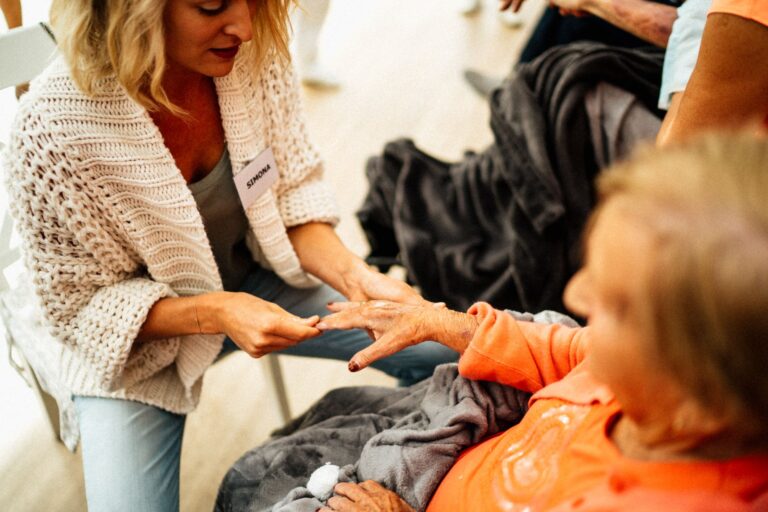
Nonverbal connection—communication through eye contact, expression, gesture, proximity, or touch—can keep someone involved when Alzheimer's makes speech difficult. Small moments matter because they convey attention, choice, warmth, and respect without demanding spoken words. Alzheimer's disease is a progressive brain disorder that damages memory and thinking and eventually affects basic function. It is one cause of dementia, not another name for every form of dementia.
Medical information disclaimer: This article is for general educational purposes only and does not provide medical advice, diagnosis, or treatment. Always consult a physician or other qualified health professional about symptoms, medications, tests, or treatment decisions.
Table of Contents
- Why does conversation become difficult?
- What does a small moment look like?
- How can you respect individual preferences?
- What does the evidence actually show?
Why does conversation become difficult?
Alzheimer's can disrupt word-finding, comprehension, attention, and the ability to organize a conversation. As speech becomes less clear, facial expressions may communicate sadness, anger, or frustration, according to the National Institute on Aging's communication guidance. A missed answer does not necessarily end the exchange.
A person may still respond through a look, expression, gesture, movement, or acceptance of contact. Treat those responses as clues, not definite explanations. A tense expression may suggest distress, but it does not tell you the cause. Slow down and adjust instead of assuming you know what the person means.
What does a small moment look like?
A supportive interaction can be brief. The goal is to make your attention clear while giving the person enough time and space to respond.
A 2022 review of 16 dementia studies identified eye contact, gestures, facial expression, touch, close proximity, and facing the person as potentially supportive strategies. However, the International Journal of Nursing Studies review found disagreement about what "supportive" means.
- Face the person and move into their field of view.
- Make eye contact without forcing it.
- Use a warm tone and calm body language.
- Pause long enough for a verbal or nonverbal response.
- Pair simple gestures with your words when helpful.
How can you respect individual preferences?
No gesture works for everyone. Eye contact may feel reassuring in one moment and uncomfortable in another. Touch may be welcome from one caregiver but not from someone else. Offer connection rather than imposing it.
If the person turns away, avoids contact, or does not welcome touch, stop and try a less intrusive approach. You might remain nearby, face the person, soften your tone, and wait. Respect also depends on how you speak. Continue using an adult tone even when sentences must be slower or clearer. Allowing response time shows that the person remains part of the interaction.
What does the evidence actually show?
Research supports better communication practices more strongly than it proves that any isolated gesture improves well-being. In a trial across 13 nursing homes, staff communication training reduced elderspeak—patronizing speech toward older adults—by 13.6 points and residents' resistance to care by 15.3 points immediately after training, according to the University of Iowa-led randomized trial. A smaller randomized trial involving 52 family carers found that individualized communication coaching reduced reported communication difficulties and increased carers' feeling of being valued.
It did not improve anxiety, depression, quality of life, or self-efficacy, as reported in the 2018 family-caregiver study. These findings do not prove that every shared look, gesture, or touch produces a reliable benefit. Nonverbal communication is a care strategy, not a treatment that slows Alzheimer's, implies a drug approval, or affects clinical-trial eligibility.