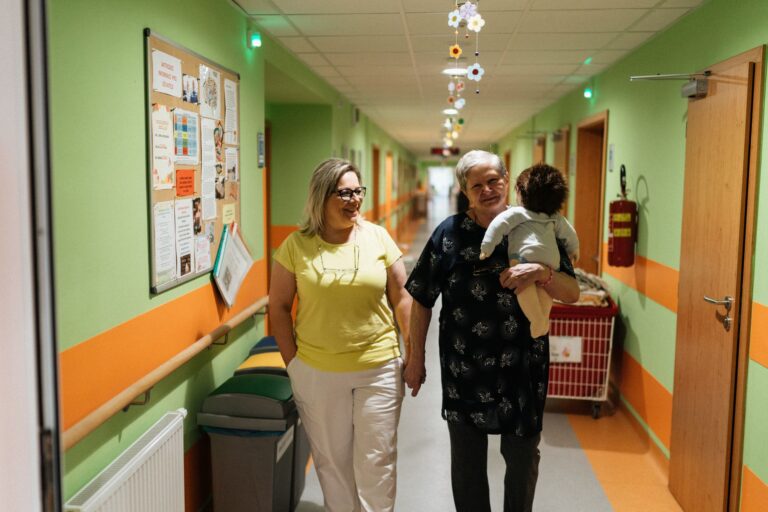
It is time to consider memory care when a person with dementia is no longer safe at home, or when caregivers can no longer meet their needs. Memory care is residential long-term care with secured spaces and staff trained for dementia, and the Alzheimer's Association frames the move around one word: safety.
No single test tells you the day has come. Instead, watch for a cluster of warning signs across the home, the person's body, and the caregiver's own limits. When several appear together, the plan at home has likely stopped working.
Medical information disclaimer: This article is for general educational purposes only and does not provide medical advice, diagnosis, or treatment. Always consult a physician or other qualified health professional about symptoms, medications, tests, or treatment decisions.
Table of Contents
- The 12 signs home care may no longer be safe
- Why wandering and getting lost carry the most weight
- The physical hazards that add up at home
- Caregiver burnout is a valid sign, not a failure
- How to act on the signs
- Frequently Asked Questions
The 12 signs home care may no longer be safe
Individual bad days are normal in dementia. A pattern of the signs below—especially three or more at once—means home care may no longer be safe.
The U.S. News senior care guide, reviewed by geriatric experts, lists burned cooking, unpaid bills, spoiled food, poor hygiene, weight loss, unexplained bruising, and repeat ER visits as clear signals that home care is straining.
- Wandering or getting lost, even in familiar places
- Leaving stoves, ovens, or appliances on
- Medication errors—missed, doubled, or wrong doses
- Falls, or unexplained bruising from falls
- Burned or forgotten cooking, and spoiled food in the fridge
Why wandering and getting lost carry the most weight
Wandering is the single sign that most often forces the decision. The Alzheimer's Association reports that 6 in 10 people living with dementia will wander at least once, and it can be dangerous or life-threatening. Anyone who can walk is at risk, even inside a home they have lived in for decades.
The danger is that wandering happens fast and often silently. A person may slip out during the few minutes a caregiver sleeps, showers, or answers the door. Memory care units use secured entrances precisely because ordinary locks and reminders stop working as the disease advances. If wandering is already happening, the National Institute on Aging recommends practical steps now: alert neighbors and local police that the person may wander, and keep a recent photo on hand for a fast search.
The physical hazards that add up at home
Beyond wandering, the home itself becomes riskier as dementia progresses. The National Institute on Aging points to leaving stoves and appliances on, medication mistakes, getting lost, and falls as the hazards that most often make home care unsafe. Falls deserve particular attention.
In a Los Angeles County study of 243,136 fall-related hospitalizations from 2016 to 2022, 20.5% involved dementia patients, who fell from beds at higher rates than others. That points to a hard truth: even a well-supervised bedroom can be dangerous. As the disease advances, the NIA's home-safety guidance emphasizes locks, secured hazards, and eventually 24-hour supervision. When around-the-clock watching at home still cannot keep the person safe, professional round-the-clock care is warranted.
Caregiver burnout is a valid sign, not a failure
The person with dementia is only half the safety equation. When the caregiver is exhausted, the whole plan becomes unsafe—and that is a decision signal, not a personal shortcoming. The numbers show why.
According to the Family Caregiver Alliance, dementia family caregivers provide roughly 9 hours of care a day, about 40% are in high-burden situations, and 92% of those giving 21 or more hours a week report high burden. A tired caregiver misses medications, sleeps through wandering, and gets injured lifting. Behavioral changes often push past what one person at home can handle. Aggression, disorientation, exit-seeking, new incontinence, and loss of bathing, dressing, or eating skills commonly signal a higher level of care is needed.
How to act on the signs
Turning worry into a decision works best as a short, deliberate process rather than a single panicked moment. Start these steps while the signs are still occasional. Waiting until a fall or an ER visit forces the choice removes your ability to plan, compare options, and involve the person in the decision.
- Track the signs for two weeks—note dates, times, and what happened.
- Rule out fixable causes: a urinary infection, a new medication, or dehydration can mimic sudden decline.
- Ask the person's doctor to assess safety and stage.
- Tour two or three memory care communities and ask about staff training and secured exits.
- Call the Alzheimer's Association 24/7 Helpline at 800-272-3900 for free guidance on care decisions.
Frequently Asked Questions
Does one warning sign mean it's time for memory care?
Usually not. Look for a pattern—often three or more signs at once, or any single sign that creates immediate danger, such as wandering into traffic or leaving a stove burning.
Can a sudden change be something other than dementia progressing?
Yes. Infections, dehydration, and new medications can cause abrupt confusion or decline. Have a doctor rule these out before assuming home care has failed.
What makes memory care different from a regular nursing home?
Memory care offers secured environments to prevent wandering and staff specifically trained for dementia behaviors, which standard settings may not provide.