A person with dementia may sing words they cannot produce in conversation because melody can provide a stronger cue for stored lyrics than ordinary speech. This ability is most likely with songs learned long ago, and it does not mean the person's language or memory has returned. Dementia is a group of conditions that impair memory, language, thinking, and daily function. These abilities do not always decline evenly, so singing and speaking can remain strikingly different.
Medical information disclaimer: This article is for general educational purposes only and does not provide medical advice, diagnosis, or treatment. Always consult a physician or other qualified health professional about symptoms, medications, tests, or treatment decisions.
Table of Contents
- Why can singing unlock words?
- Does this happen only in Alzheimer's disease?
- Can songs teach or restore new words?
- How caregivers can use singing
- What singing does—and does not—tell you
Why can singing unlock words?
Conversation requires a person to choose words, arrange them into a new message, and respond in real time. A familiar song provides much of that structure in advance: melody, rhythm, phrasing, and the expected sequence of lyrics all act as cues. In a small 1991 study, 10 people with Alzheimer's disease recalled 61.9% of sung words, compared with 37.4% of spoken words.
They recalled 71.8% of words from long-familiar songs but only 42.6% from a newly presented song, according to the Journal of Music therapy study. This pattern suggests that singing often helps retrieve material already learned. It does not show that melody generally restores the ability to find words or hold a conversation.
Does this happen only in Alzheimer's disease?
Most of the supplied evidence concerns Alzheimer's disease, but the effect is not limited to one diagnosis. Researchers have also documented it in semantic dementia, a condition marked by progressive loss of word meanings and knowledge about familiar things. In one case, a woman with semantic dementia accurately continued 25 of 40 familiar tunes.
Yet she continued only 5 of 20 song lines or nursery rhymes when researchers spoke them, and she could not complete common sentences or idioms, according to the UCL case report in Brain. One case cannot predict what another person will retain. It does show that access to familiar sung material can remain much stronger than access to ordinary spoken language.
Can songs teach or restore new words?
Singing may sometimes help a person remember unfamiliar material, but results vary by task and timing. It should not be treated as a dependable way to rebuild conversational language. A controlled study found that 12 patients with Alzheimer's disease recognized unfamiliar lyrics better after hearing them sung rather than spoken.
Healthy older adults did not show the same significant advantage, according to the 2010 Neuropsychologia study. Other findings narrow that promise. A later study found better memory for the general meaning of newly learned practical lyrics, but not their specific details. In another study of eight people with mild Alzheimer's disease, singing improved delayed recall but not immediate recall; after four weeks, its advantage was slight.
How caregivers can use singing
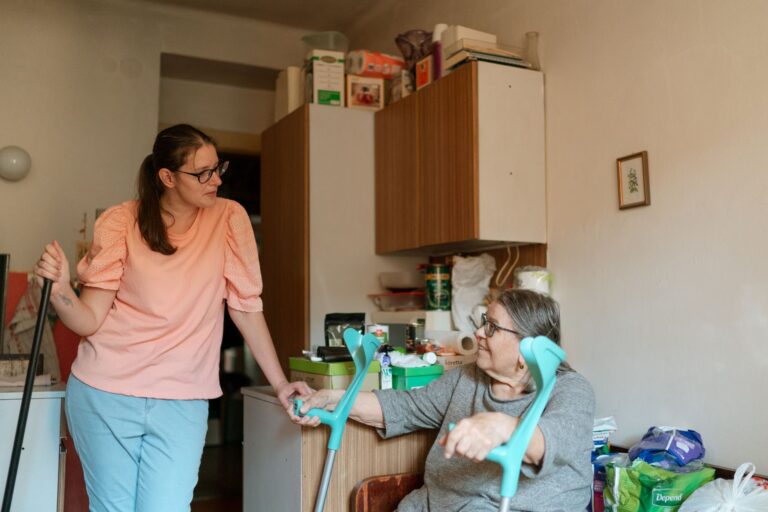
Treat singing as an invitation, not a test. The useful goal may be connection, participation, or a smoother care routine—not proof that the person remembers every word.
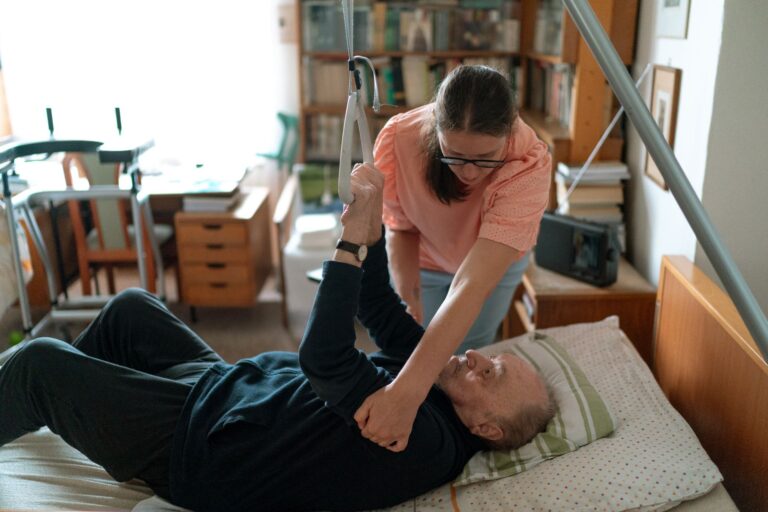
A caregiver can try these simple approaches: Singing may also support communication during hands-on care. In a qualitative study involving severe dementia, caregiver singing was associated with patients showing implicit understanding of care even when caregivers gave less verbal explanation. "Implicit" means understanding shown through responses or participation rather than a spoken account.
- Choose a song the person knew well earlier in life.
- Start with the melody or first few words, then pause.
- Sing at a comfortable pace without correcting mistakes.
- Watch facial expression, movement, and tension for signs of comfort or distress.
- Stop or switch activities if the person appears upset, tired, or overwhelmed.
What singing does—and does not—tell you
Clear lyrics do not prove that dementia is mild, that speech is being withheld, or that the person could speak normally with more effort. Singing a memorized line and creating a new sentence place different demands on the person. The response may also be uneven.
Someone might sing one chorus accurately, miss the next verse, or recognize the tune without producing words. A strong response to one familiar song does not guarantee the same response to unfamiliar music or newly written instructions. Music-based care can still offer a meaningful way to engage someone, but evidence does not show that it reverses dementia. A 2025 Cochrane review of 30 trials involving 1,720 participants found uncertain or no lasting effects on cognition, and many studies had a risk of bias.