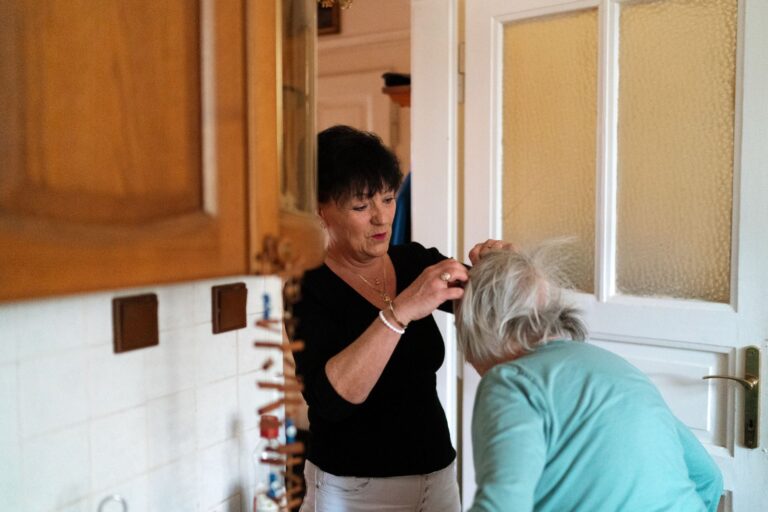
A hospital bedside note can tell staff who a person with dementia is, how they communicate, and what helps them feel safe and understood. It may record important relationships, routines, preferences, sensory needs, and comforting objects or activities. "Bedside note" is not a universal clinical term. The closest documented tool is a visible personal profile or passport, such as *This is me*, used alongside the medical record.
Medical information disclaimer: This article is for general educational purposes only and does not provide medical advice, diagnosis, or treatment. Always consult a physician or other qualified health professional about symptoms, medications, tests, or treatment decisions.
Table of Contents
- What personal details can the note contain?
- How does it improve communication?
- What can behavior reveal when staff know the context?
- How should staff use the information?
- What are the note's limits?
What personal details can the note contain?
A useful profile describes the person beyond their diagnosis. It may include cultural and family background, significant life events, former roles, important people and places, and personal interests. It can also record likes, dislikes, food preferences, daily routines, and sources of comfort.
The Alzheimer's Society's description of *This is me* explains how these details help professionals understand what matters to the person. Staff might learn that a patient prefers tea at a particular time, becomes unsettled without glasses, or relaxes when discussing a familiar place. Small facts can shape meals, personal care, activities, and conversations.
How does it improve communication?
dementia can affect word-finding, comprehension, attention, and logical speech. Background noise may also make conversation harder. A bedside profile can identify these difficulties and explain how the person shows pain, hunger, fear, agreement, or refusal.
It might tell staff to use the person's preferred name, speak slowly, ask one question at a time, or allow extra time for an answer. The National Institute on Aging's communication guidance recommends eye contact, a calm tone, and reducing distractions. The note should describe what works for that individual rather than treating every person with dementia alike. A patient who cannot explain a need clearly may still respond to familiar words, gestures, objects, or routines.
What can behavior reveal when staff know the context?
Actions that seem puzzling may become understandable when staff know the person's history. Former work, family responsibilities, habits, and relationships can all influence what someone does in an unfamiliar hospital. For example, a person who gets up early and tries to leave may believe they need to reach a former workplace.
Information about that role can help staff respond to the perceived responsibility instead of viewing the action only as aimless movement. This context does not prove why someone is behaving in a certain way. It gives staff a more informed starting point for listening, observing, and considering the person's immediate needs.
How should staff use the information?
Staff can use the profile to anticipate needs, adapt communication, and involve the patient in decisions as far as possible. It can also support continuity when different teams care for the person. However, availability is uneven.
The Royal College of Psychiatrists' 2024 National Audit of Dementia found that 98% of participating hospitals used bedside documents, but such a document was present for only 55% of checked patients. A profile is most useful when staff read it, confirm key details with the patient where possible, and apply them during care. Simply displaying the document does not guarantee individualized treatment.
What are the note's limits?
A family member or care partner can provide valuable information, especially when the patient cannot explain preferences easily. Yet another person's account should not automatically be treated as the patient's own view. In a study of 116 pairs, care partners significantly projected their preferences onto those of people with cognitive impairment in areas including autonomy, personal growth, and routine.
The study published in the *American Journal of Geriatric Psychiatry* shows why staff should check assumptions with the patient whenever possible. The profile also cannot replace clinical records, safety assessments, or documented medical values and goals. Families can make it more useful by supplying specific, current details and separating known preferences from their own interpretations.