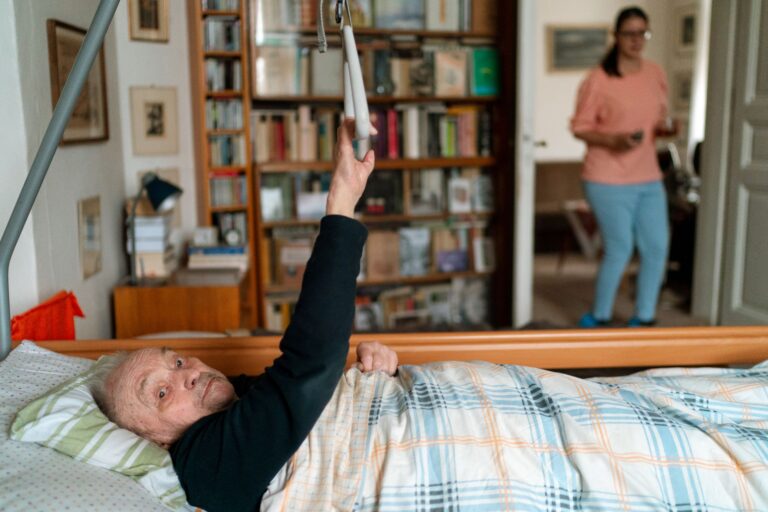
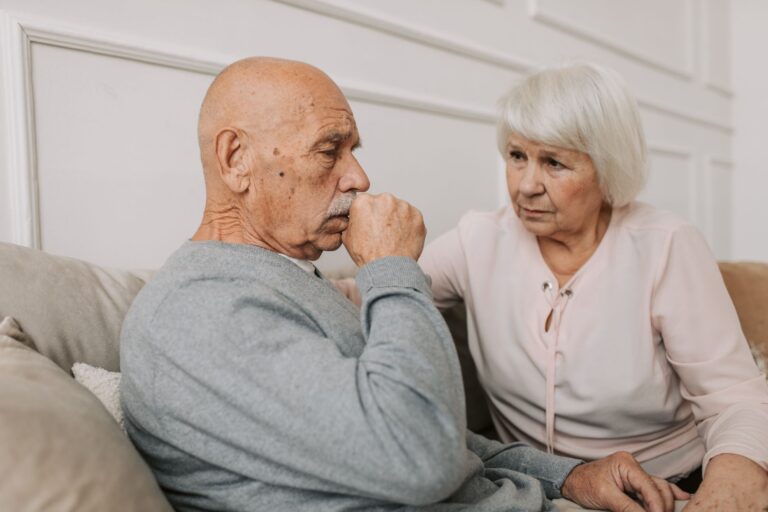
Reminiscence therapy offers Alzheimer’s patients a way to access preserved long-term memories, reduce agitation, and reconnect with their sense of identity through structured conversation about past events. Unlike the recent memories that fade early in cognitive decline, reminiscence therapy taps into older autobiographical memories—a person’s first car, their wedding day, raising children—that remain more intact even as the disease progresses. When a person with early-stage Alzheimer’s sits with photographs from their youth or listens to music from their era, they often experience a shift: confusion lifts temporarily, emotional expression deepens, and the person emerges more present than they appeared moments before.
Research in clinical settings shows that reminiscence therapy reduces behavioral symptoms like wandering and agitation by an average of 30 to 50 percent during and shortly after sessions. A 78-year-old retired teacher with moderate Alzheimer’s who hadn’t spoken coherently in months recognized herself in her college yearbook, began telling stories about her favorite students, and maintained that alertness for several hours afterward. The benefit extends beyond the individual—families report lower caregiver stress and a rekindled sense of relationship when reminiscence therapy succeeds, because the person with dementia briefly becomes more recognizable to those who love them.
Table of Contents
- How Does Reminiscence Therapy Engage Memory in Alzheimer’s Disease?
- Emotional and Behavioral Improvements from Reminiscence Work
- Creating Memory-Rich Environments and Sessions
- Timing, Duration, and Consistency in Reminiscence Work
- Reality Check—What Reminiscence Therapy Cannot Do
- Reminiscence Therapy in Different Care Settings
- Early to Middle-Stage Dementia—When Reminiscence Therapy Has Strongest Impact
- Frequently Asked Questions
How Does Reminiscence Therapy Engage Memory in Alzheimer’s Disease?
Reminiscence therapy works because it leverages the brain’s hierarchical memory structure, which degrades in a predictable pattern during Alzheimer’s. Recent episodic memories—what someone had for breakfast, a conversation from yesterday—decline first and most severely. Semantic memories (facts, vocabulary) hold longer. Autobiographical memories from childhood and young adulthood, embedded deeply in the brain’s emotional centers, often persist longest. When a therapist or family member presents a photograph, a song, or an object linked to that distant past, the brain finds an intact neural pathway and can activate it. The mechanism differs from typical conversation or memory testing.
Instead of asking “Do you remember what happened?”, reminiscence therapy presents sensory cues—a photograph of the person’s childhood home, a recording of big band music from the 1950s, a fabric sample from a familiar texture—that trigger automatic recall. This is associative retrieval, not interrogation. The person doesn’t fail or feel pressured; memories surface naturally or partially, and that partial success is enough. Studies comparing reminiscence therapy to standard activities show participants in reminiscence sessions display higher levels of eye contact, more frequent speech, and longer attention spans than those in non-targeted activities, suggesting deeper cognitive engagement. One limitation: reminiscence therapy is not memory restoration. The person will forget the session itself within hours or days. What persists is not the memory of talking about the past but the emotional state that lingers—a sense of calm, recognition, or purpose that subtly improves behavior and mood even after explicit recall is gone.
Emotional and Behavioral Improvements from Reminiscence Work
The most visible change caregivers report is behavioral. Agitation, aggression, and repetitive questioning—common Alzheimer’s behaviors driven partly by confusion and disorientation—often decrease after reminiscence sessions. A 72-year-old man living in memory care who rang the call bell every 10 minutes asking “Where’s my mother?” participated in twice-weekly reminiscence sessions using photographs of his own children. Within three weeks, his bell-ringing dropped by 60 percent, and staff noted he spent more time looking at the photos, occasionally pointing and smiling. The disruption didn’t vanish entirely, but it became manageable, which translates to better sleep, less medication use, and reduced falls related to agitation. Depression and apathy in Alzheimer’s are serious but often overlooked. A person withdrawing from activities, sitting silently, showing no interest in food or interaction, may be experiencing depressive symptoms as much as cognitive loss.
Reminiscence therapy, particularly when combined with gentle music or shared snacking, activates the brain’s reward and emotional regions. Participants show increased facial expressions, more willingness to engage with family, and reduced refusal of care. Some research suggests these mood improvements persist longer than memory benefits—while a person may not remember a reminiscence session, they may feel subtly lighter for days. A real tradeoff: reminiscence therapy requires sustained engagement and skilled facilitation. A poorly executed session—rushing through photos, correcting the person’s recollections, introducing sad or traumatic memories—can worsen mood or trigger anxiety. A caregiver who forces a person to “remember correctly” or leaves the person alone with painful memories may do harm. The emotional safety and attunement of the facilitator matter as much as the content.
Creating Memory-Rich Environments and Sessions
Effective reminiscence work begins before any formal session. Creating a memory-rich environment—displaying photographs, keeping familiar objects visible, playing era-appropriate music in the background—provides ongoing cognitive stimulation without requiring active participation. A person’s bedroom hung with family photos and a bedside speaker playing 1940s jazz becomes a subtle but continuous reminiscence prompt. They may not remember looking at the photograph, but it registers emotionally and orients them toward familiarity rather than strangeness. Structured reminiscence sessions are more intentional. A facilitator (family member or trained staff) selects a theme—”Your first job,” “Family vacations,” “Growing up”—and gathers sensory materials: photographs, music, objects, even scents if possible.
A session might open with photographs from a person’s teenage years, move to a recording of their favorite singer, and include handling an old tool or fabric associated with a hobby. The person is invited to share, but sharing is never forced. The facilitator asks open-ended questions (“What was this place like?”) rather than yes-no questions, giving the person room to construct meaning at their own pace. One daughter created a “memory box” for her father containing photos from his military service, his service medals, a printed menu from his favorite restaurant, and a recording of swing music. She opened the box twice weekly, and during those sessions, her father—who was largely non-verbal—pointed at images, touched the medals, and occasionally said single words or names. The sessions lasted 20 to 30 minutes and didn’t increase his memory. But they gave his daughter concrete time with “the person he was,” and that mattered to her care sustainability.
Timing, Duration, and Consistency in Reminiscence Work
Reminiscence therapy is most effective when scheduled consistently—twice weekly or more—rather than sporadically. Once-monthly reminiscence sessions show minimal behavioral benefit; the person’s brain doesn’t sustain enough regularity to build the associative pathways. Twice-weekly or daily reminiscence activities (even brief ones, 15 to 20 minutes) show measurable mood and behavior improvement. This consistency is a commitment, not a casual strategy, which is why family caregivers often need support or why residential facilities that prioritize reminiscence hire dedicated staff. Timing within the day also matters. Morning sessions, when most people with dementia are most alert, outperform afternoon sessions. A person experiencing “sundowning” (increased confusion or agitation in late afternoon) will engage poorly with reminiscence work at 4 p.m. but may respond well at 10 a.m.
Scheduling around the person’s peak cognitive windows and their baseline mood maximizes effectiveness. Sessions should end before frustration sets in; 20 to 30 minutes is typical, though some people engage longer. Forcing continuation past the person’s tolerance turns a positive activity into a stressor. The tradeoff between ideal and realistic is sharp here. An ideal reminiscence program requires staff training, consistent scheduling, individualized material preparation, and sustained caregiver energy. Many families and facilities cannot sustain this without additional resources or respite care. A low-intensity alternative—playing familiar music during meals, keeping a few family photos at bedside, talking briefly about past events during routine care—still offers benefit, even if not at the level of structured sessions. Starting with achievable consistency beats pursuing an ideal program that collapses after two weeks.
Reality Check—What Reminiscence Therapy Cannot Do
Reminiscence therapy does not slow cognitive decline, reverse disease progression, or restore lost memories. This is the hardest truth for families to accept. A person may have a vivid, engaged reminiscence session today and decline noticeably by next month. The therapy is palliative, not curative. It improves quality of life, reduces suffering, and supports dignity, but it does not fight the disease itself. Some caregivers become disappointed or feel they’ve failed if they expect reminiscence work to “bring their loved one back” or halt memory loss. It also cannot work for everyone.
Late-stage Alzheimer’s patients with severe cognitive impairment, those with concurrent psychosis or severe delusions, or those with hearing and vision loss that prevents sensory engagement may not benefit meaningfully. A person who responds to all sensory input with fear or aggression may worsen in reminiscence sessions. Additionally, if early trauma or unresolved grief is connected to certain memories, reminiscence cues can trigger distress rather than comfort. A person who experienced abuse, war, or profound loss may have long-term memories that are painful, not nostalgic. Family members should also know that reminiscence therapy can raise their own grief. Watching a parent or spouse briefly “come back” in a reminiscence session and then fade again can deepen the loss rather than ease it. Some caregivers find this process meaningful; others find it heartbreaking. There’s no universal response, and that emotional complexity deserves acknowledgment.
Reminiscence Therapy in Different Care Settings
In nursing homes and memory care facilities, reminiscence therapy is often integrated into recreational programming. Some facilities employ a dedicated therapeutic activities coordinator who runs group reminiscence sessions based on shared eras (e.g., “The 1950s Café” or “Wartime Stories”). Group reminiscence can work well for moderately impaired residents who feed off each other’s recollections and enjoy the social aspect, even if their individual memories are fragmented. One memory care unit ran weekly “Memory Cafés” where residents, staff, and visiting family members gathered around photos and music from different decades; residents who rarely spoke in routine settings initiated conversations and showed visible pleasure.
At home, reminiscence work is typically one-to-one or within the immediate family. A spouse or adult child is usually the facilitator, which adds an emotional layer—the person is not just reminiscing but doing so with someone central to many of those memories. This can deepen the experience or, in some cases, complicate it if the relationship carries unresolved conflict. Some families hire home health aides trained in reminiscence techniques; others rely on activities coordinators during day programs. Access to professional guidance varies widely based on region and insurance coverage, leaving many families to improvise with trial and error.
Early to Middle-Stage Dementia—When Reminiscence Therapy Has Strongest Impact
Reminiscence therapy shows its clearest benefits in early to middle-stage Alzheimer’s, when the person retains enough cognitive capacity to access and partially process long-term memories. In early-stage disease, the person may actively contribute stories and details, making sessions feel like genuine conversation. A person in early-stage Alzheimer’s reviewing photos of a career in engineering or nursing can still access not just the visual memory but the pride, the relationships, the skills tied to that role. In middle-stage disease, the person may contribute less verbally but still recognizes faces, places, and objects, and still responds emotionally to music and familiar environments. By late-stage Alzheimer’s, when language is largely gone and the person’s awareness of surroundings is minimal, reminiscence therapy as formally practiced becomes less effective.
However, the underlying principle—familiar sensory input, music, and gentle human connection—continues to matter. A person who cannot speak can still respond to touch, to a familiar song, to the presence of a loved one. Whether this constitutes “reminiscence therapy” in a technical sense is debatable, but the emotional and comfort benefits persist. A 68-year-old woman in late-stage Alzheimer’s who no longer recognized her husband listened to recordings of him reading poetry aloud and visibly relaxed, her agitation subsiding during playback. She was not reminiscing in the traditional sense, but she was receiving the comfort that reminiscence work aims to provide.
Frequently Asked Questions
Can reminiscence therapy be harmful?
Yes, if facilitators introduce traumatic memories, correct the person’s recollections repeatedly, or force engagement past the person’s tolerance. It can also deepen caregiver grief by emphasizing loss. Sessions should be emotionally safe and adapted to the individual’s emotional baseline.
How long do the benefits of reminiscence therapy last?
Behavioral and mood improvements typically persist a few hours to a day after a session, occasionally longer. The person will not remember the session itself but may maintain a subtle emotional shift. Regular sessions (twice weekly or more) show cumulative effects.
Is reminiscence therapy expensive?
It can range from free (using family photos and music at home) to costly (hiring trained staff or enrolling in specialized programs). Many families start with low-cost, home-based reminiscence activities and pursue professional facilitation if needed and available.
Does reminiscence therapy work for all types of dementia?
It is most effective in Alzheimer’s disease but has shown benefits in vascular dementia, mixed dementia, and early-stage Lewy body dementia. Effectiveness varies based on the individual’s cognitive capacity, emotional state, and the presence of concurrent psychiatric symptoms.
What materials work best for reminiscence sessions?
Personalized materials—family photographs, recorded music from the person’s youth, objects tied to hobbies or career, recordings of loved ones’ voices—work better than generic or commercial reminiscence kits. The more specific and personally meaningful, the stronger the response.
Can reminiscence therapy replace other dementia treatments?
No. It is a complementary approach that improves quality of life and behavior but does not address underlying disease progression. It works best alongside appropriate medical care, other therapies, and caregiver support.