Caregivers preserve connection when memory fades by shifting from relying on shared recall to building connection through presence, emotional responsiveness, and adapted communication. When a person with dementia no longer remembers yesterday’s conversation or even your name, the relationship does not disappear—it transforms. A daughter who has cared for her mother with moderate Alzheimer’s for three years might find that while her mother cannot remember their lunch, she lights up when her daughter enters the room, responding to the tone of voice and the familiar comfort of presence.
This shift from memory-based connection to emotion-based connection is not a loss of relationship; it is a different kind of relationship that many caregivers learn to navigate. The process requires caregivers to become observers and adapters—noticing what brings calm or joy, what triggers confusion or distress, and what moments of genuine connection still exist. Connection persists because it is rooted in much more than memory. It lives in the body’s response to a familiar voice, in the emotional tone of an interaction, in the routine rhythms of shared daily life, and in the caregiver’s willingness to meet the person where they are rather than where they used to be.
Table of Contents
- Why Emotional Connection Survives Memory Loss
- Learning to Communicate in New Languages
- Anchoring Connection Through Familiar Routines and Environments
- The Irreplaceable Role of Physical Presence and Touch
- When Caregiving Strains the Caregiver’s Own Capacity for Connection
- Including Family and Friends in Connection-Building
- Using Objects and Creative Expression to Bridge Connection
Why Emotional Connection Survives Memory Loss
Emotional memory—how a person feels about someone or something—can remain intact even when factual memory deteriorates. Research in dementia care shows that individuals with advanced memory loss often retain emotional responses and can feel comforted, validated, or agitated based on the tone and manner of interaction, not necessarily the content. A husband who cannot recall his wife’s name may still feel safe and content in her presence. A grandmother who doesn’t recognize her grandchildren may respond warmly to their gentle touch and patient voice.
This emotional layer of connection is far more durable than people often realize, and caregivers who understand this can work with it rather than against it. One practical implication is that caregivers benefit from paying less attention to whether the person “gets it right” and more attention to whether the person feels okay. If a woman with dementia asks the same question ten times in an hour, answering it with genuine kindness the tenth time is more valuable to her wellbeing than being honest about the repetition. The truth of the situation—that she asked before—matters less than the emotional truth of the moment: Does she feel heard? Does she feel safe? Caregivers who shift this perspective often report that interactions become less frustrating and more meaningful, even as the disease progresses.
Learning to Communicate in New Languages
As dementia advances, verbal communication becomes increasingly challenging, but caregivers who adapt their communication style often find new channels for connection still open. Rather than relying on complex sentences or expecting the person to follow multi-step instructions, caregivers can use shorter phrases, repetition, gestures, touch, and visual cues. Some families create picture boards or use simple objects to help communicate needs. Others rely more on physical closeness and tone of voice than on words themselves. This is not infantilizing the person; it is matching the person’s current capacity to process language.
However, a significant challenge caregivers face is the impulse to correct. When someone with dementia says something factually wrong—insisting they need to go to work, or that a deceased parent is still alive—the caregiver’s instinct may be to correct them. This almost always backfires, creating distress and conflict rather than clarity. A more effective approach is validation: “You’re thinking about your job—that was important to you. Let’s sit down together for a bit.” The person may still be confused, but they feel understood rather than wrong, and the connection is preserved. Learning not to correct is one of the hardest adjustments caregivers make.
Anchoring Connection Through Familiar Routines and Environments
Routine becomes a language all its own when memory is compromised. Daily rhythms—morning coffee at the same time, lunch together, a walk in the afternoon—create predictability that the person’s brain may not consciously remember but that feels right and safe in their body. An environment that stays consistent, with familiar furniture and objects in the same places, reduces confusion and agitation. Some of the strongest moments of connection happen during these routines because there is less friction, less need for explanation, and more opportunity for presence. One specific example: a caregiver who takes her father on the same walking route every afternoon reports that he often cannot recall who she is during the walk, yet his body relaxes into the familiar path.
Near the end of the walk, they pass a bench where they always stop, and for those ten minutes sitting together, no words are exchanged, but the father leans against his daughter’s shoulder. This is connection—not based on him remembering their history, but on the comfort of routine and presence. The limitation to keep in mind is that while routine is powerful, it is also fragile. Moving to a new home, a change in caregiver, or significant disruption to the daily schedule can trigger confusion and behavioral changes. For this reason, transitions should be planned carefully and introduced gradually when possible.
The Irreplaceable Role of Physical Presence and Touch
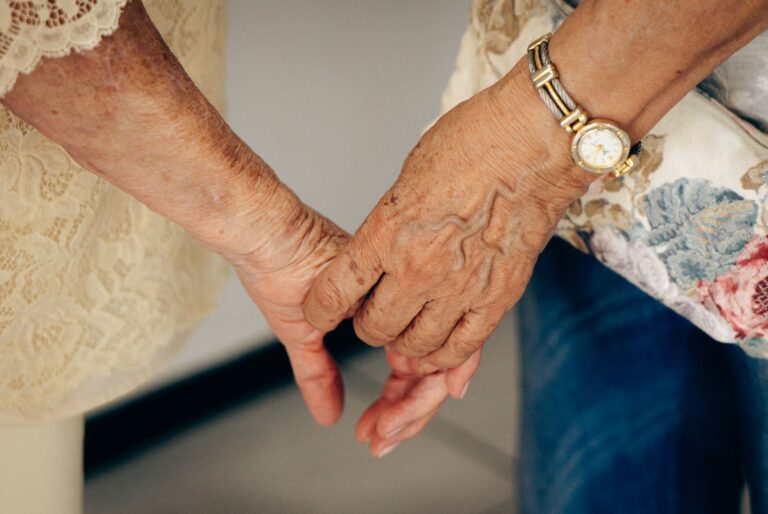
Physical proximity matters more as memory fades. A person with dementia may not recall that their spouse visited yesterday, but they will feel the difference between a day with physical contact and a day without it. Touch—holding hands, a hand on the shoulder, a gentle stroke on the arm—communicates care in a way that words cannot. For some people, a hug or a held hand calms anxiety. For others, certain kinds of touch trigger distress, which is why caregivers need to learn what feels right for each individual.
There is no one-size-fits-all approach; attention to the person’s responses is essential. The comparison worth noting is the difference between presence in the same room and genuine physical presence. Sitting next to someone while on your phone or preoccupied with other tasks is not the same as sitting with them with attention. People with dementia, despite cognitive loss, often remain acutely sensitive to whether someone is truly with them or just physically nearby. This does not mean caregivers cannot rest or manage other responsibilities, but moments of authentic presence—even brief ones—are more valuable than hours of physical proximity without attention.
When Caregiving Strains the Caregiver’s Own Capacity for Connection
Caregiver burnout is not a side issue; it directly affects the quality of connection preserved with the person who has dementia. A caregiver who is exhausted, isolated, or grieving the loss of who their loved one was may struggle to show up with patience and presence. Some caregivers find that they are grieving in advance—mourning the person who is still alive but increasingly unreachable. This anticipatory grief is real and valid, and it can make each interaction feel heavy with loss rather than light with presence.
Without support, caregivers risk becoming depressed, resentful, or simply running on empty. The warning here is that preserving connection requires the caregiver to also preserve themselves. This might mean joining a caregiver support group, seeing a therapist, getting respite care, or setting boundaries about what they can realistically do. A caregiver who insists on being present 24/7 without support may find that their presence becomes strained, frustrated, or distant—the opposite of what they intended. Many experienced caregivers say that getting help, even though it meant not being the sole person caring for their loved one, actually improved the quality of their connection because they could be more genuinely present when they were there.
Including Family and Friends in Connection-Building
Extended family members and friends can play a valuable role in preserving connection, but they often feel uncertain about what to do or say. Explaining to a grandchild how to interact with a grandparent who no longer recognizes them can be difficult. Some family members withdraw because they find the changes too painful or confusing.
Yet including them in connection-building can help sustain the person’s social world and give the primary caregiver needed support. One approach is giving family members specific, manageable tasks: bring a favorite food, sit together during a favorite activity, or help with a simple routine. A brother who reads aloud from the sports section for twenty minutes is providing valuable connection and giving the primary caregiver a break. These contributions need not involve complex conversation; they are about presence and participation in the person’s daily life.
Using Objects and Creative Expression to Bridge Connection
Some families find that objects, music, photographs, or creative activities provide unexpected bridges for connection. A man with severe dementia who no longer speaks may respond with emotion to a recording of music from his youth. A woman may engage more fully during an art activity than during conversation.
Photographs, especially ones with brief captions, can prompt engagement even if the person cannot fully recall the memory. Some families create a memory book or a care plan that includes notes about what the person responds to: “Dad smiles when we listen to folk music” or “Mom becomes calmer when we sit in the garden.” These tools are not about testing whether the person remembers; they are about finding entry points for engagement. A caregiver who discovers that her mother with dementia becomes more animated and present when looking at a particular quilt—one she made decades ago—has found a language of connection that does not depend on verbal memory or factual recall. The act of sitting together with the quilt, talking about the colors or the feel of it, creates a moment of shared presence.