Amyloid imaging fundamentally shifted how researchers understand Alzheimer’s disease by allowing them to see and measure the actual protein accumulation in living brains—rather than only confirming its presence after death during autopsy. Before amyloid imaging became available in the 2000s, scientists could only hypothesize about how amyloid-beta buildup contributed to cognitive decline. Now they can track it, quantify it, and correlate it with symptom severity in individual patients.
This ability transformed Alzheimer’s from a disease diagnosed only by ruling out other conditions into one that can be identified by its fundamental pathology years or even decades before memory loss appears. The shift from theoretical to observable changed everything about how drugs are developed and tested. Researchers could now enroll people in studies based on confirmed amyloid pathology rather than guessing who might later develop the disease. Clinical trials suddenly had objective measures of whether a treatment was actually clearing amyloid from the brain—measurable proof that something was happening at the molecular level.
Table of Contents
- What is Amyloid Imaging and How Does It Detect Protein Buildup?
- The Research Revolution Behind Amyloid Detection and What It Revealed
- Biomarkers and the Path to Early Detection Before Symptoms Appear
- From Laboratory Discovery to Clinical Practice and Treatment Approval
- Limitations and Challenges in Amyloid-Focused Therapeutic Approaches
- Tau Imaging and Expanding Beyond a Single-Pathology Model
- Liquid Biomarkers and the Shift Toward Blood-Based Detection
- Frequently Asked Questions
What is Amyloid Imaging and How Does It Detect Protein Buildup?
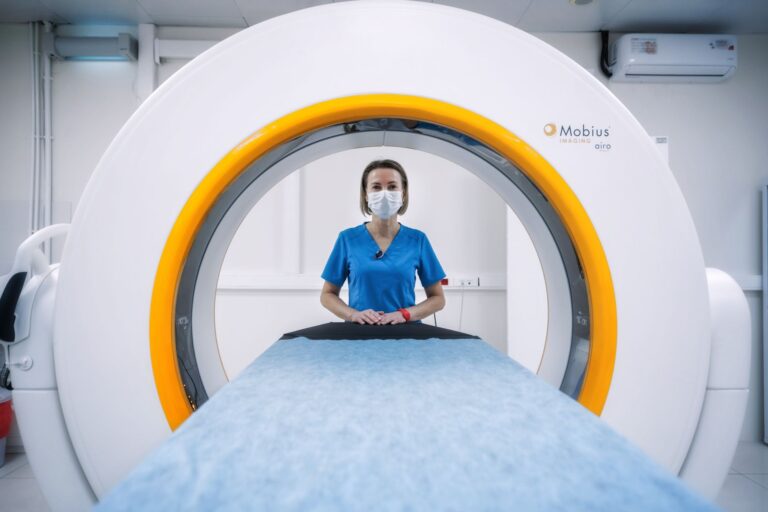
Amyloid imaging uses specialized PET (positron emission tomography) scanners with tracers designed to bind to amyloid-beta proteins. When a radioactive tracer molecule enters the brain, it attaches to amyloid deposits and emits signals that create a visual map showing exactly where and how much amyloid has accumulated. The resulting image looks like a heat map—bright colors indicate high amyloid concentration, darker areas show low or no amyloid. A person with significant amyloid buildup will light up on the scan; someone without amyloid pathology will show a relatively quiet image.
Different tracers have been developed over time, each with slightly different properties. Florbetapir was one of the first widely used amyloid tracers, approved by the FDA in 2012. Later, florbetaben and florborbir provided alternatives, each offering refinements in imaging clarity or processing time. The choice of tracer affects how clearly researchers can see the amyloid and how long the scan takes, but they all answer the same fundamental question: Is amyloid present in this brain? Some amyloid imaging uses PET, while other approaches use amyloid PET combined with mri to provide both molecular and structural information simultaneously. Advanced centers now perform these combination scans, giving clinicians a complete picture—not just where amyloid is, but also whether the brain shows structural changes like atrophy in regions prone to degeneration.
The Research Revolution Behind Amyloid Detection and What It Revealed
Before amyloid imaging existed, the amyloid hypothesis—the idea that amyloid-beta accumulation drives Alzheimer’s pathology—was just a theory supported by post-mortem brain tissue samples and laboratory studies. With imaging, researchers could finally test this hypothesis in living people across disease stages. Studies comparing cognitively normal older adults to those with mild cognitive impairment to those with dementia revealed a crucial pattern: amyloid accumulation often precedes symptom onset by years, sometimes 10 to 20 years or more. This was a watershed moment because it suggested the disease might be preventable or stoppable if caught early. The imaging studies also revealed unexpected findings that contradicted simple assumptions.
Some cognitively normal people had significant amyloid in their brains—they appeared to be “Alzheimer’s-resistant,” not showing symptoms despite substantial pathology. Meanwhile, some people with cognitive decline showed minimal amyloid, suggesting their memory problems arose from other causes. These discoveries complicated the narrative but made it richer: amyloid was necessary for Alzheimer’s in many cases, but not always sufficient on its own. A critical limitation emerged from this work: amyloid imaging cannot predict who will decline cognitively. Two people with identical amyloid levels can follow completely different trajectories—one remaining stable for years, another declining rapidly. This unpredictability has humbled researchers and forced more nuanced models of disease progression that incorporate other factors like tau pathology, neuroinflammation, and genetic susceptibility.
Biomarkers and the Path to Early Detection Before Symptoms Appear
Amyloid imaging became the centerpiece of a larger biomarker framework called the ATN classification system (later updated to AT(N)). ATN originally stood for Amyloid, Tau, and Neurodegeneration—three separate biological markers that researchers could now measure independently in living people. Before this framework, there was no standardized way to talk about preclinical Alzheimer’s pathology. Once amyloid imaging made detection possible, researchers developed criteria for amyloid positivity, tau positivity, and neurodegeneration markers.
Now a clinician could describe a patient’s biology precisely: “This person shows amyloid positivity, high tau burden, and significant hippocampal atrophy”—information that would have been impossible to gather without imaging. The ability to identify preclinical Alzheimer’s disease opened new clinical trial possibilities. Research studies began enrolling cognitively normal people who had amyloid positivity on imaging, creating cohorts of presymptomatic individuals who could be followed over time to understand disease progression naturally or in response to treatment. A landmark example is the Amyloid Biomarker Study (ABS), which tracked cognitively normal amyloid-positive individuals and documented how their amyloid burden, cognition, and other biomarkers changed over years. These studies provided the foundation for preventive drug trials, where researchers could test whether clearing amyloid from presymptomatic people might prevent or delay symptom onset.
From Laboratory Discovery to Clinical Practice and Treatment Approval
For decades, anti-amyloid drugs failed in clinical trials despite successfully reducing amyloid in laboratory and animal studies. Aducanumab entered trials with great fanfare based on amyloid imaging evidence showing it reduced amyloid burden in the brain, but it showed no clear cognitive benefit and was withdrawn from the market after FDA approval sparked controversy. This disappointment humbled the field, but amyloid imaging played a crucial role in understanding the failure: the drug was working at the molecular level (clearing amyloid), yet cognition wasn’t improving. This sparked a shift toward finding combinations of agents or targeting amyloid at earlier disease stages. By the early 2020s, amyloid imaging had matured into a standard part of drug development. Lecanemab, another monoclonal antibody targeting amyloid, entered Phase 3 trials with amyloid PET imaging as a primary outcome measure.
The trial enrolled people with mild cognitive impairment or mild dementia who had confirmed amyloid positivity on screening scans—a direct result of amyloid imaging capabilities. The drug showed modest slowing of cognitive decline and measurable amyloid reduction on imaging. When the FDA approved lecanemab in early 2023, amyloid imaging had become critical infrastructure: the drug was approved specifically for amyloid-positive individuals, making amyloid imaging necessary for patient selection in clinical practice. The tradeoff emerged immediately: amyloid imaging requires access to PET scanners, which are expensive and geographically concentrated in major medical centers. Rural patients and those without insurance coverage struggled to access the imaging needed to determine eligibility for newly approved drugs. This created a two-tiered system where access to cutting-edge Alzheimer’s therapeutics became partly dependent on imaging availability.
Limitations and Challenges in Amyloid-Focused Therapeutic Approaches
One critical limitation has become increasingly apparent: clearing amyloid from the brain doesn’t always translate to meaningful clinical benefit. Lecanemab slows cognitive decline by approximately 27% in people with mild cognitive impairment or mild dementia with amyloid positivity, meaning a person’s memory might deteriorate slightly more slowly on the drug, but the progression doesn’t stop. The drug also carries a risk of amyloid-related imaging abnormalities (ARIA), which appear on MRI as brain microhemorrhages or microinfarcts. Some patients develop headaches, confusion, or other symptoms related to ARIA, and a small percentage experience serious complications. Clinicians and patients must now weigh a modest slowing of decline against a real risk of imaging-visible brain changes and potential adverse effects. Another limitation is that amyloid imaging can overestimate the importance of amyloid pathology. In a portion of people with cognitive decline, amyloid burden correlates poorly with symptom severity.
A person with minimal amyloid on imaging might have significant memory loss, while another with heavy amyloid burden might remain cognitively intact. This discordance suggests that amyloid alone doesn’t tell the whole story—tau tangles, neuroinflammation, vascular disease, and other pathologies play important roles. Amyloid imaging has inadvertently encouraged a narrow focus on single-pathology drugs when multi-targeted approaches might prove more effective. There is also a growing concern about medicalization of preclinical disease. Telling cognitively normal people that they have amyloid pathology and offering them drugs carries psychological and social costs. Some people experience anticipatory anxiety, feel labeled as having a disease, or face discrimination in employment or insurance. Amyloid imaging made preclinical Alzheimer’s visible and measurable, but visibility doesn’t mean every amyloid-positive person needs treatment or will inevitably decline.
Tau Imaging and Expanding Beyond a Single-Pathology Model
As amyloid imaging matured, researchers developed tau PET imaging using tracers that bind to tau tangles. Unlike amyloid, which accumulates fairly diffusely throughout the cortex, tau follows a more predictable spatial pattern correlating with symptom severity and cognitive decline. Tau tangles appear first in the entorhinal cortex and gradually spread to other brain regions in a pattern that correlates with how much memory loss a person experiences. A 2023 study comparing tau imaging to amyloid imaging in the same cohort found that tau distribution in specific brain regions predicted cognitive decline better than overall amyloid burden did.
This discovery shifted the research focus: while amyloid might be the initiating pathology in Alzheimer’s disease, tau pathology appears more closely linked to symptoms. The combination of amyloid and tau imaging now provides a much richer biological picture. Researchers can identify people who have amyloid alone (thought to be early or presymptomatic), amyloid and tau together (more advanced disease), and rarely, tau without amyloid (suggesting non-Alzheimer’s tauopathy). This staging system is more precise than amyloid imaging alone and is increasingly used in clinical trials to select participants and track disease progression.
Liquid Biomarkers and the Shift Toward Blood-Based Detection
While amyloid PET imaging revolutionized research, a parallel discovery changed clinical practice: blood-based biomarkers for amyloid-beta, phosphorylated tau, and other Alzheimer’s pathology markers. These biomarkers appeared in blood tests that could be done in an office setting without expensive imaging technology. Plasma phosphorylated tau-181, plasma phosphorylated tau-217, and plasma amyloid-beta ratios emerged as sensitive measures of brain pathology that correlated strongly with PET imaging findings. In 2024, the American Academy of Neurology updated guidelines to recommend blood biomarkers as valid alternatives to PET imaging for diagnosing Alzheimer’s pathology in certain clinical contexts.
The practical impact was substantial: a patient could now get a blood test from their primary care physician and receive results indicating amyloid positivity or tau burden without traveling for a PET scan. However, amyloid PET imaging remains the gold standard for research, drug trials, and high-certainty diagnosis. Blood biomarkers are powerful screening and monitoring tools, but they measure proteins differently than imaging does—a blood marker might not detect amyloid in the same spatial distribution as a PET scan, and correlation isn’t perfect. For lecanemab eligibility, many patients still receive amyloid PET imaging to confirm amyloid positivity before starting therapy, though blood biomarkers are increasingly accepted as sufficient in some settings.
- —
Frequently Asked Questions
Do I need amyloid imaging if I’m worried about Alzheimer’s?
Amyloid imaging is primarily used in research studies and to evaluate people with cognitive symptoms or to confirm eligibility for amyloid-targeting drugs. If you have memory concerns, your physician can order cognitive testing and blood biomarkers first, which are more accessible and often sufficient.
Can amyloid imaging predict whether I’ll develop Alzheimer’s?
No. Amyloid imaging shows whether amyloid is present in your brain, but many cognitively normal people with significant amyloid never develop dementia. Amyloid positivity is a risk factor, not a diagnosis or certain prediction of future decline.
What’s the difference between amyloid PET imaging and blood biomarkers?
PET imaging directly visualizes amyloid deposits in the brain and shows their spatial distribution. Blood biomarkers measure amyloid and tau proteins in the bloodstream, which correlate with brain pathology but measure it indirectly. Blood tests are cheaper and more accessible; PET is more detailed and remains the research standard.
If I’m amyloid-positive but cognitively normal, should I take a drug like lecanemab?
This is a personal decision requiring discussion with your doctor. Lecanemab slows decline modestly in people with mild cognitive symptoms, but its effectiveness in truly asymptomatic, amyloid-positive people is still being studied. The drug carries risks including ARIA (visible brain changes on MRI), and treating preclinical disease involves psychological and social considerations.
How accurate is amyloid imaging?
Amyloid PET imaging is highly accurate at detecting amyloid deposits and correlates well with post-mortem neuropathology. However, it measures one type of pathology; other factors like tau, neuroinflammation, and vascular disease also contribute to cognitive decline and symptoms.
Are there alternatives to PET imaging for detecting amyloid?
Yes. Blood biomarkers for amyloid-beta and phosphorylated tau are increasingly used in clinical practice and research. Some specialized centers offer amyloid PET/MRI combined scans. For research, cerebrospinal fluid analysis (via lumbar puncture) can measure amyloid, but it’s invasive and less commonly used now that blood biomarkers are available.