
Difference sits at the center of this dementia and brain health question.
Iran’s military in 2026 is substantially larger, more technologically advanced, and more heavily armed than Iraq’s military was in 2003. While Iran fields approximately 610,000 active personnel with advanced ballistic missiles, thousands of drones, and modern combat aircraft, Iraq in 2003 had roughly 389,000 troops operating degraded equipment from the 1980s and early 1990s. The most striking difference lies in offensive capabilities: Iran possesses over 3,000 ballistic missiles with ranges exceeding 2,000 kilometers and an arsenal of nearly 4,000 drones, whereas Iraq in 2003 had essentially zero ballistic missile capability due to international sanctions and UN inspection regimes that had systematically dismantled its weapons programs.
The gap between these two militaries reflects fundamentally different circumstances. Iraq’s armed forces had been hollowed out by two decades of conflict, sanctions, and international restrictions that prevented modernization and equipment replacement. Iran’s military, by contrast, has invested heavily in developing indigenous weapons systems, establishing a far more robust defense infrastructure, and expanding its force projection capabilities across the region and beyond. This article examines the specific differences in personnel, weaponry, equipment condition, and strategic capabilities between these two military forces separated by more than two decades.
Table of Contents
- How Do the Troop Numbers and Military Personnel Compare?
- What Advanced Weaponry and Technology Does Each Military Possess?
- How Do Combat Aircraft and Air Defense Systems Differ?
- What Is the Status of Ground Combat Equipment and Tank Capabilities?
- What About Missile Technology and Modern Drone Warfare Capabilities?
- How Have Naval Capabilities Evolved Over These Two Decades?
- What Does the Equipment Condition and Modernization Gap Tell Us About Future Capabilities?
- Conclusion
How Do the Troop Numbers and Military Personnel Compare?
iran‘s 2026 military includes approximately 610,000 active personnel, distributed across the Army (350,000), the Islamic Revolutionary Guard Corps (SEPAH) (190,000), and the Navy and Air Force combined (80,000). Beyond active forces, Iran maintains 350,000 reserves and claims mobilization capacity exceeding 1,000,000 personnel. This structure provides substantial depth for sustained operations and allows for rotating deployments across multiple theaters. Iraq’s 2003 military, by contrast, fielded approximately 389,000 total armed forces, including roughly 350,000 Army personnel, 80,000 Republican Guard, 2,000 Navy, and 20,000 Air Force. Additionally, Iraq maintained the Fedayeen Saddam paramilitary force with approximately 44,000 members.
The numerical similarity between active personnel masks a crucial organizational difference: Iran’s forces are better equipped, better trained, and more combat-experienced. Iraq’s military in 2003 had been severely weakened by the Iran-Iraq War (1980-1988), the 1991 Gulf War, and the subsequent twelve years of sanctions and international isolation. Many Iraqi military personnel had minimal recent combat experience beyond internal security operations. Iran’s forces, meanwhile, gained extensive combat experience through regional interventions and proxy operations throughout Syria, Iraq, Yemen, and Lebanon, providing their personnel with operational experience in modern warfare scenarios. The quality of training and readiness represents a significant force multiplier that raw personnel numbers cannot capture.

What Advanced Weaponry and Technology Does Each Military Possess?
The technological gap between Iran’s 2026 military and Iraq’s 2003 military is perhaps the most dramatic difference. Iran possesses approximately 3,000 ballistic missiles, including the Sejjil and Khorramshahr systems capable of ranges between 2,000 and 3,000 kilometers and carrying warheads weighing 750 to 1,500 kilograms. These missiles are stored in hardened underground facilities designed to survive air strikes. Iraq in 2003 possessed no operational ballistic missile capability whatsoever—the UN inspection regime and international sanctions had dismantled its missile and weapons of mass destruction programs completely. This means Iran in 2026 has a strategic strike capability that Iraq lacked entirely, fundamentally altering the strategic equation.
However, raw numbers must be understood within context. While Iran’s ballistic missiles provide a powerful deterrent and strike capability, their actual deployment would trigger massive international response. Iraq in 2003 faced a different strategic environment: it was already weakened, under active sanctions, and operating within a post-Cold War framework where major powers had aligned against it. The presence of advanced missiles alone does not guarantee victory in conflict—as demonstrated by various regional conflicts where missile quantities have not translated to battlefield success. Effectiveness depends on accurate targeting information, command and control systems, defense suppression capabilities, and the ability to operate amid intensive air defense operations. Iran’s missiles are more numerous and longer-range than anything Iraq possessed, but this advantage must be balanced against modern air defense systems and intelligence capabilities available to potential adversaries.
How Do Combat Aircraft and Air Defense Systems Differ?
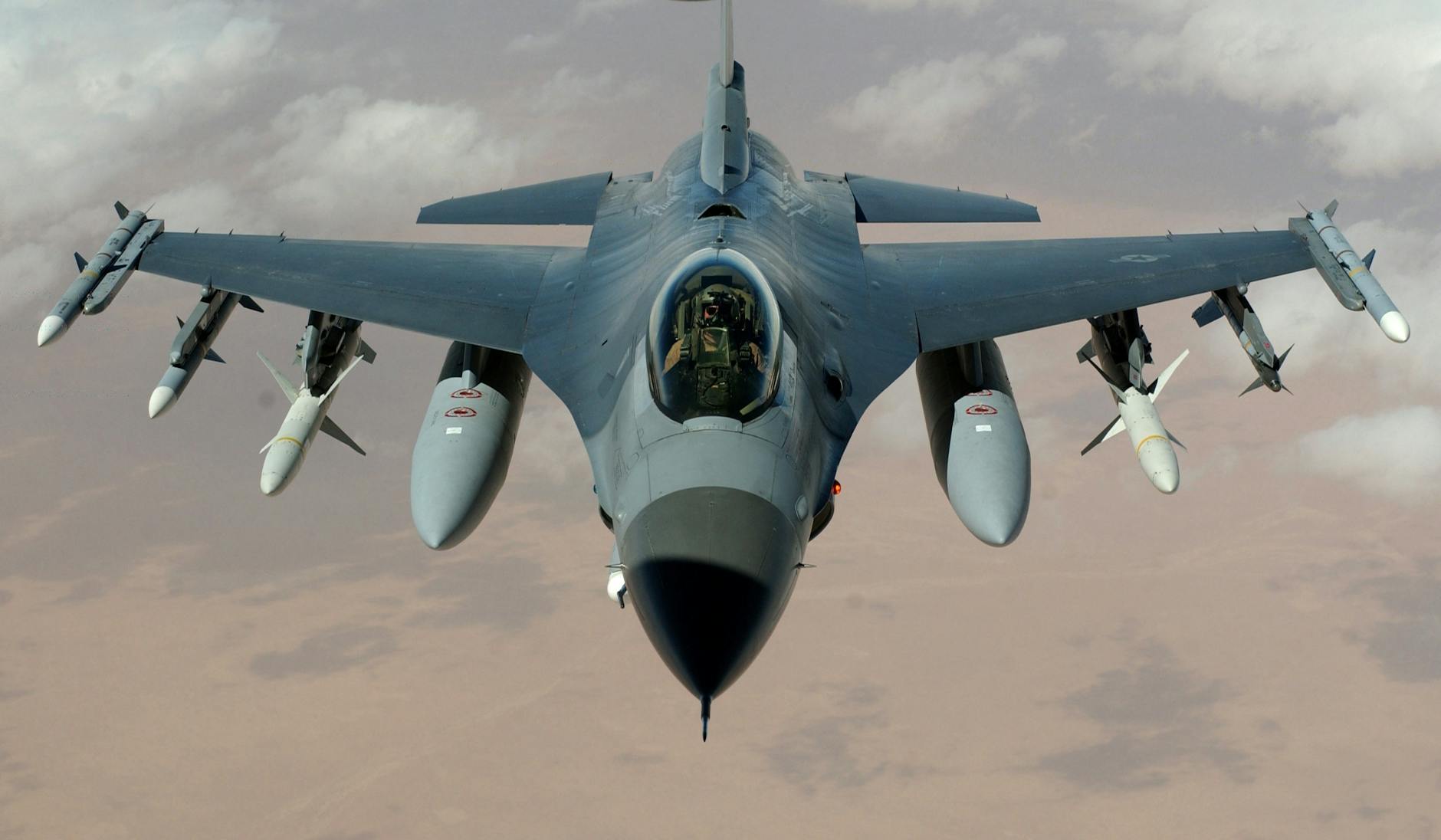
Iran’s 2026 air force includes 598 active military aircraft with 286 combat aircraft (fighters and multirole jets) and 160 military helicopters. These aircraft represent a mixture of domestically produced systems and aircraft acquired from Russia and other sources, providing Iran with the capability to conduct sustained air operations across a wide geographic area. Iraq’s 2003 air force was significantly degraded, with outdated equipment from the 1980s and 1991 Gulf War era, limited pilot training, and degraded command and control systems. The Iraqi air force had been reduced to approximately 20,000 personnel operating antiquated platforms that could not effectively counter more modern adversaries. The practical implications of this difference became evident within weeks of the 2003 invasion.
Iraq’s air force offered minimal resistance to coalition aircraft, and Iraqi pilots frequently chose not to engage rather than face nearly certain defeat. In contrast, Iran’s air force, while still not competitive with the most advanced Western air forces, has invested in developing indigenous fighter aircraft and upgrading older platforms. Iran operates the Kowsar fighter jet (a domestically developed platform), maintains F-4 Phantom aircraft upgraded with modern avionics, and has acquired Russian Su-30SM fighters. This represents an attempt at technological development and modernization that was simply impossible for Iraq under the sanctions regime of the 1990s and early 2000s. Pilot training has also improved dramatically in Iran, with regular exercises involving multi-country coalitions and complex tactical scenarios that provide experience beyond what Iraq’s isolated military could achieve.
What Is the Status of Ground Combat Equipment and Tank Capabilities?
Iran’s 2026 military operates approximately 1,500 main battle tanks, primarily consisting of T-72 variants and domestically produced Zulfiqar-type tanks. These systems represent moderate modernization efforts, with ongoing upgrades to firepower, armor, and fire control systems. While not equivalent to the latest Western main battle tanks in terms of overall capability, these vehicles provide Iran with the ability to conduct sustained armored operations across difficult terrain. Iraq’s 2003 military possessed an uncertain but significantly smaller tank inventory, with much of the equipment heavily worn from years of operation and deterioration. Many Iraqi tanks had been immobilized or damaged during previous conflicts and never properly repaired due to spare parts shortages caused by sanctions. The condition and maintenance of equipment reveals a critical vulnerability in Iraq’s pre-2003 military structure.
Military analysts estimated that Iraqi equipment had degraded to approximately 40 percent of its 1991 Gulf War capability levels by 2003. This meant that while Iraq maintained substantial numbers of weapons on paper, many systems were non-functional or operating at significantly reduced capability. Tank crews lacked proper training ammunition, maintenance expertise had been lost through brain drain and retirement, and replacement parts were unavailable. Iran has attempted to address these vulnerabilities through indigenous production and research programs. While not fully closing the gap with major military powers, Iran’s strategy of developing domestic production capacity has provided greater resilience than Iraq’s reliance on Cold War-era Soviet equipment without proper maintenance support. However, this domestic approach also means that many Iranian systems, while newer on average than Iraq’s 2003 equipment, still lag behind the most advanced international standards in factors like range, accuracy, and networking capabilities.
What About Missile Technology and Modern Drone Warfare Capabilities?
The drone and missile disparity represents perhaps the clearest measure of technological advancement between the two militaries. Iran operates approximately 3,894 drones including the Shahed series (used for reconnaissance and attack) and the Mohajer series. These unmanned systems provide persistent surveillance capabilities, can conduct precision strikes, and require minimal crew safety considerations compared to manned aircraft. Iraq in 2003 possessed no significant drone capability—the technology existed elsewhere in the world but was not available to Iraq due to sanctions and international restrictions. The absence of unmanned systems in 2003 meant that Iraq’s intelligence gathering relied entirely on manned aircraft, human intelligence, and signals intelligence, all of which were degraded by lack of resources. The strategic implications of drone technology cannot be overstated.
A single drone can conduct reconnaissance missions lasting many hours, loiter over a target area waiting for optimal strike conditions, and return to base for rapid redeployment. Multiple drones can be coordinated for sustained operations, and the low cost per unit means that attrition is sustainable. Iraq’s military in 2003 had no equivalent capability, and the introduction of drone warfare into regional conflicts over the past two decades has fundamentally changed how military operations are conducted. Iran’s investment in drone production and development demonstrates adaptation to modern warfare, even though many Iranian drones are less sophisticated than Western equivalents. The existence of 3,000-plus operational drones, even if individually less capable than premium Western systems, creates a substantial capability for sustained operations and presents strategic challenges to adversaries. However, the effectiveness of these drones depends critically on targeting information, command and control systems resilient to electronic warfare, and the ability to coordinate multiple platforms across contested airspace.

How Have Naval Capabilities Evolved Over These Two Decades?
Iran’s 2026 navy includes approximately 90 vessels, including 6 submarines and various frigates, corvettes, and fast attack craft. This force structure provides Iran with the capability to project power across the Persian Gulf and into the broader Indian Ocean, conducting anti-shipping operations, blockade enforcement, and forward defense of Iranian territory. The submarine capability, in particular, represents a significant advancement in Iran’s naval projection, as submarines provide stealth, extended endurance, and the ability to deliver anti-ship and cruise missile strikes from concealed positions. Iraq’s 2003 military possessed minimal naval capability—the Iraqi navy was essentially confined to coastal defense operations and lacked the resources, training, and equipment for sustained maritime operations. Iraq’s geography, with access only to the Persian Gulf and limited coastline, meant that naval power was less central to Iraqi military strategy than ground and air forces.
The practical significance of these naval forces reflects regional geography and strategic interests. Iran’s navy serves multiple purposes: maintaining control of vital shipping lanes through the Persian Gulf, supporting proxy forces in Yemen and Syria, conducting anti-piracy operations, and projecting power that deters regional adversaries from encroaching on Iranian interests. Iraq’s minimal naval capacity in 2003 reflected both the limited strategic importance of naval operations for Iraq’s immediate security and the resource constraints imposed by sanctions. A proper navy requires sustained funding for maintenance, replacement, and modernization—something Iraq’s sanctioned economy could not support. Iran’s investment in naval capacity, though still modest compared to major naval powers, represents a deliberate strategic choice to enhance regional influence and create military options across multiple domains.
What Does the Equipment Condition and Modernization Gap Tell Us About Future Capabilities?
Iraq’s military in 2003 operated in a state of technological and material decline that would have been difficult to reverse even without external military intervention. Military equipment degraded to 40 percent of 1991 capability levels, spare parts were unavailable, training opportunities were limited, and the scientific and technical expertise needed for modernization had been lost to brain drain and generational retirement. This degradation occurred over more than a decade and reflected the cumulative impact of international sanctions, blocked access to international capital markets, and restrictions on arms purchases. No amount of operational skill or military leadership could overcome the fundamental limitation of equipment that was non-functional or approaching the end of its service life without proper maintenance support. Iran has pursued a deliberately different path by investing heavily in indigenous weapons development and production capacity.
Rather than relying entirely on imported equipment, Iran has developed domestic production for ballistic missiles, drones, patrol boats, and various ground combat systems. This approach has limitations—domestic products typically cannot match the sophistication of cutting-edge Western systems, and Iran has sometimes resorted to developing evolutionary improvements to older Soviet-era technology rather than revolutionary new designs. However, this strategy provides greater independence from international suppliers, allows for sustained production without relying on willing partners, and creates redundancy in the industrial base. The consequence is that Iran’s 2026 military, while not matching the most advanced militaries in individual system performance, likely has greater sustainability and staying power than Iraq’s 2003 military could have mustered. Looking forward, this difference in industrial capacity and strategic independence will likely persist unless fundamental changes occur in the international political environment surrounding Iran.
Conclusion
Iran’s 2026 military represents a substantially more capable force than Iraq’s 2003 military across nearly every category of measurement: personnel numbers, equipment sophistication, advanced weapons systems, drone and missile capabilities, and combat readiness. The most striking differences appear in ballistic missiles (3,000+ for Iran versus zero for Iraq), unmanned aerial systems (3,894 for Iran versus none for Iraq), and the overall condition and modernization status of equipment. These differences reflect not just two decades of technological change, but fundamentally different strategic circumstances—Iraq in 2003 was an isolated, sanctioned state with an increasingly hollowed-out military, while Iran has invested deliberately in military modernization and indigenous weapons production.
Understanding these military differences provides context for regional security challenges and the strategic calculations of various actors across the Middle East. The gap between these two forces illustrates how sustained international pressure and sanctions can degrade military capabilities over time, while a nation with access to resources and technological development capacity can modernize and expand its forces. This comparison also demonstrates that raw military statistics must be interpreted within context—numbers alone do not capture training quality, command and control effectiveness, industrial capacity, or the willingness of personnel to fight. As regional dynamics continue to evolve, the continuing modernization efforts by Iran and the changing security environment will likely sustain these differences in the foreseeable future.
You Might Also Like
- What Is the Chain of Command in Iran’s Military Right Now
- How Did Switzerland Offer to Mediate Between the U.S. and Iran
- Why The Strait Of Hormuz Crisis Could Impact Gas Prices Worldwide
For more, see CDC — Alzheimer’s and Dementia.




