
Irgc considered sits at the center of this dementia and brain health question.
The Islamic Revolutionary Guard Corps (IRGC) has become the most powerful remaining institution in Iran because it operates outside civilian government oversight and controls vast economic resources that dwarf those of elected officials. Unlike the regular military, which answers to the president, the IRGC reports directly to Supreme Leader Ali Khamenei—a structural arrangement that gives it independence from democratic processes and makes it the regime’s primary enforcer and power broker. This direct line to the highest authority, combined with control of an estimated 10-50% of Iran’s entire economy, means the IRGC functions as what Reuters describes as a “state-within-a-state,” operating its own military, political, and economic empire parallel to the civilian government.
The real measure of the IRGC’s dominance isn’t just its armed forces or its direct access to Khamenei—it’s the way its fingers reach into every major sector of the Iranian economy. The organization oversees more than 100 companies with annual revenues exceeding $12 billion, controls strategic industries from oil and banking to telecommunications and construction, and has seen its share of oil export revenues jump to approximately 50% in 2025, worth roughly $13 billion annually. This financial empire gives the IRGC leverage that no elected president can match, and explains why former IRGC officers occupy key positions throughout the cabinet, judiciary, and provincial governorships—they’re not just civil servants, they’re members of an institution that answers only to the Supreme Leader. This article examines why the IRGC has become Iran’s most durable and powerful institution, exploring its direct access to supreme authority, its control of the economy, its military capabilities, and how recent international developments—including EU designation as a terrorist organization and Lebanon’s ban on IRGC operations—reflect growing international concern about the organization’s reach and influence.
Table of Contents
- How Does the IRGC Exercise Power Outside the Elected Government?
- What Is the Scope of the IRGC’s Economic Control?
- What Military Capabilities Back Up the IRGC’s Political and Economic Power?
- Why Have International Actors Recently Targeted the IRGC with Sanctions and Designations?
- How Did Leadership Changes in 2025-2026 Affect the IRGC’s Direction?
- Why Does the IRGC’s Control of Multiple Economic Sectors Matter?
- What Does the Future Hold for the IRGC’s Dominance?
- Conclusion
How Does the IRGC Exercise Power Outside the Elected Government?
The IRGC’s most critical advantage is structural: it reports directly to Supreme Leader Ali Khamenei rather than to Iran’s elected president or parliament. This arrangement creates a parallel power structure that operates independently of civilian democratic oversight. When Iran’s president and cabinet make policy decisions, they do so knowing that the IRGC answers to a higher authority and can refuse cooperation or pursue its own agenda with impunity.
This is fundamentally different from how militaries typically function in other countries, where the armed forces operate within civilian government hierarchies and are subject to elected leadership. This structural independence translates into concrete political power through personnel infiltration. Former IRGC officers occupy key positions as cabinet ministers, judges, and provincial governors, effectively embedding the organization throughout the government. However, the arrangement doesn’t work as a simple “IRGC members within the government”—it’s more accurately described as a state-within-a-state, where the IRGC maintains its own parallel institutions while also staffing the civilian government with loyal personnel. The elected president’s actual authority is constrained not just by the Supreme Leader, but by the knowledge that the IRGC, which answers only to the Supreme Leader, can mobilize resources and personnel that the president cannot fully control.

What Is the Scope of the IRGC’s Economic Control?
The IRGC’s economic dominance rivals its military and political power. The organization controls an estimated 10-50% of Iran’s entire economy—some research suggests the figure is closer to one-third—through direct ownership of companies and controlling stakes in subsidiaries operating across construction, energy, oil, banking, shipping, telecommunications, and consumer goods. With over 100 companies under its umbrella generating annual revenues exceeding $12 billion, the IRGC has built a corporate empire that generates more wealth than many national governments. This economic reach means the IRGC can fund its military operations, pay loyalists, and expand its influence without depending on budget allocations from the elected government. The 2025 budget figures illustrate the IRGC’s financial trajectory and priorities.
The organization received an allocation of 311 trillion tomans—approximately $6 billion—representing a 24% year-over-year increase. For context, Iran’s regular military received 177 trillion tomans ($3.4 billion), meaning the IRGC’s budget was approximately 1.8 times larger than the conventional armed forces. Beyond direct government allocation, the IRGC has access to oil revenues; its share of Iran’s oil export revenues rose to approximately 50% in 2025, translating to roughly $13 billion annually. Combined, the IRGC’s direct financial resources and influence over oil revenues suggest it controls something in the range of $30-50 billion in effective annual economic turnover, making it one of the largest economic actors in the middle East. However, if the iranian economy contracts further due to sanctions or regional instability, the IRGC’s ability to sustain this financial empire becomes more dependent on oil revenues, which are themselves vulnerable to international pressure.
What Military Capabilities Back Up the IRGC’s Political and Economic Power?
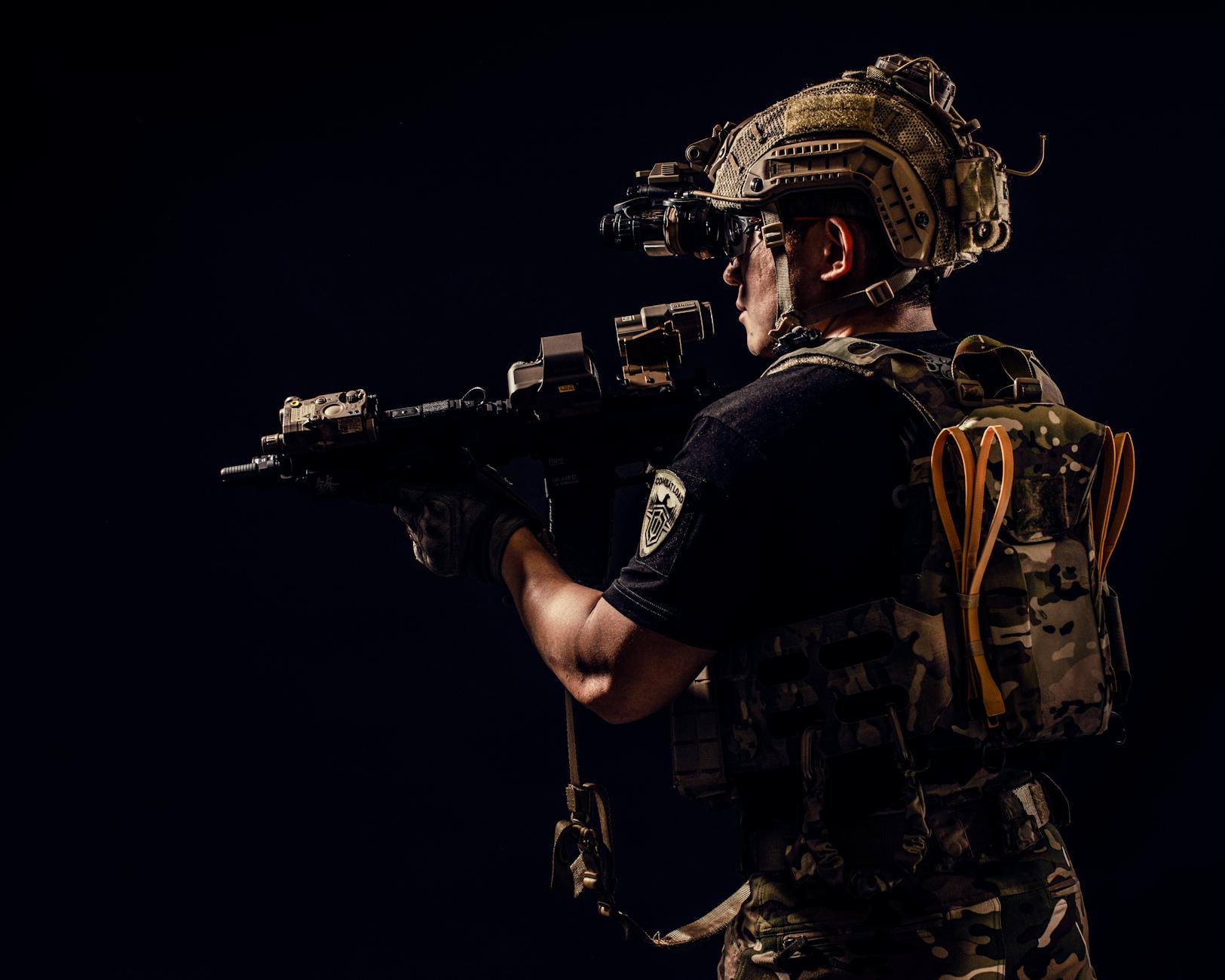
Behind the IRGC’s political and economic dominance stands a substantial military force. The organization commands at least 150,000 personnel organized across multiple branches: ground forces, a navy, an aerospace division, and the elite Quds Force, which operates Iran’s foreign military missions. These forces receive approximately 37% of Iran’s total military budget (roughly $3.8 billion out of $10.3 billion in 2023 figures), ensuring they remain well-equipped relative to the regular military. The IRGC’s military reach extends beyond Iran’s borders through the Quds Force, which has been instrumental in Iran’s interventions in Iraq, Syria, Yemen, and Lebanon—projecting power far beyond what the official military typically undertakes.
The IRGC’s military strength is particularly notable in emerging warfare domains. The organization operates Iran’s aerospace division, giving it responsibility for drone development and missile programs. During 2025-2026, multiple senior IRGC commanders were killed during regional conflicts, yet the organization has maintained operational capability and continued expanding its influence. This resilience despite casualties suggests the IRGC has deep institutional resources and command structures that allow it to absorb losses without collapsing effectiveness.
Why Have International Actors Recently Targeted the IRGC with Sanctions and Designations?
Recent international actions reveal growing consensus that the IRGC represents a serious threat requiring direct intervention. On January 29, 2026, the European Union designated the IRGC as a terrorist organization, a significant step that exposes the organization to additional sanctions and asset freezes. This EU designation reflects a shift in international approach—rather than sanctioning Iran’s government generally, the EU targeted the institution that actually wields power. The practical effect is that European financial institutions now face stricter regulations around any business tied to the IRGC, companies operating in Europe must divest from IRGC-linked enterprises, and European governments can impose additional penalties on IRGC operations.
Even more striking was Lebanon’s action on March 5, 2026, when the country banned the IRGC from operating within Lebanese territory and ordered the deportation of its members. This represents a direct confrontation with an institution that had long operated freely through Hezbollah and other proxy forces in Lebanon. Meanwhile, U.S. intelligence assessments indicate Iran’s regime will remain in place while “the IRGC exerts greater control,” suggesting American policymakers view the organization as becoming more dominant, not less. These international pressures haven’t weakened the IRGC’s domestic power, but they do constrain its ability to operate internationally and access global financial systems.
How Did Leadership Changes in 2025-2026 Affect the IRGC’s Direction?
Hossein Salami served as IRGC commander-in-chief from 2019 to 2025, providing seven years of continuity during a period of increasing international pressure and regional conflict. In March 2026, Ahmad Vahidi became the new commander, marking a significant transition for the organization. Leadership transitions matter for understanding the IRGC’s trajectory because they can signal shifts in strategy—whether toward de-escalation, expansion, or consolidation of existing power.
However, the transition from Salami to Vahidi doesn’t represent a fundamental change in the IRGC’s role or authority; the new commander inherits an institution already deeply embedded in politics, the economy, and military operations. The period from 2025 to 2026 saw multiple senior IRGC commanders killed during regional conflicts, creating tactical challenges for operational continuity. Despite these casualties, the organization has maintained momentum in expanding its economic portfolios and political influence domestically. The commander’s primary function is managing military operations and representing the IRGC to the Supreme Leader, but the organization’s real power lies in its institutional structure—a state-within-a-state that survives leadership transitions because it has become embedded across Iran’s government, military, and economy.

Why Does the IRGC’s Control of Multiple Economic Sectors Matter?
The IRGC’s diversification across construction, energy, oil, banking, shipping, telecommunications, and consumer goods creates multiple reinforcing advantages. Consider construction: IRGC-controlled firms win government contracts to rebuild damaged infrastructure, which keeps construction companies profitable and creates jobs for IRGC loyalists. These same construction firms then employ thousands of people whose livelihoods depend on the IRGC’s continued political dominance. This creates a constituency of workers, contractors, and suppliers who benefit from IRGC control and therefore support the organization’s continued authority.
Banks affiliated with the IRGC handle large portions of Iran’s financial transactions, giving the organization insight into economic activity and the ability to fund operations through banking sector margins. The telecommunications sector provides another example of how the IRGC’s economic reach reinforces its power. Control of telecommunications infrastructure means the IRGC can influence communications technology, access information flows, and capture revenue from one of the most profitable sectors in a modern economy. For ordinary Iranians using mobile phones or internet services, using networks linked to IRGC-controlled companies means their communication activities and financial transactions indirectly support the organization’s broader political agenda.
What Does the Future Hold for the IRGC’s Dominance?
The IRGC’s power appears to be consolidating rather than declining. Despite EU sanctions, the Lebanon ban, and ongoing regional conflicts that have killed senior commanders, the organization’s share of government budgets has increased, its control of oil revenues has expanded, and its political influence has become more visible through cabinet infiltration. The appointment of Ahmad Vahidi as the new commander suggests continuity rather than reform.
U.S. intelligence assessments predicting increased IRGC control indicate that international observers expect the organization to emerge from current regional tensions and sanctions pressures with its power intact, possibly enhanced. The trajectory suggests the IRGC will likely become even more entrenched as Iran faces economic pressures from sanctions—state budgets that shrink due to international pressure often mean governments depend more heavily on organizations like the IRGC that can fund themselves through economic enterprises and don’t require traditional budget allocations. This creates a perverse incentive where international sanctions, intended to weaken Iran’s regime, may actually accelerate the concentration of power within the IRGC.
Conclusion
The IRGC is Iran’s most powerful remaining institution because it combines direct access to the Supreme Leader with control of 10-50% of the economy, a military force of 150,000+ personnel, and institutional independence from civilian government oversight. Its 1.8-times-larger budget compared to the regular military, control of over 100 companies generating $12+ billion in annual revenue, and access to roughly 50% of oil export revenues ($13 billion annually) make it a state-within-a-state that operates according to the Supreme Leader’s will rather than democratic processes. Recent designations by the EU and actions by Lebanon reflect growing international concern about the IRGC’s reach, yet these pressures have not diminished its domestic dominance—instead, the organization appears to be consolidating control as Iran navigates economic and military challenges.
Understanding the IRGC’s role is essential for anyone trying to make sense of Iran’s politics, economics, and international behavior. The organization’s decisions about military operations, resource allocation, and political priorities often matter more than decisions made by Iran’s elected government. This reality reflects a regime structure where the highest authority, the Supreme Leader, has chosen to vest ultimate military and economic power in the IRGC rather than in democratic institutions or the regular military. As of March 2026, with Ahmad Vahidi leading the organization and the IRGC’s resource share continuing to expand, the institution’s position as Iran’s most powerful remains unchallenged.
You Might Also Like
- Why Is the Question of Who Leads Iran After the War the Most Important Issue
- Why Is a Negotiated Peace With Iran More Difficult Than Most People Realize
- Why Is There No Ceasefire in the Iran War Despite Growing International Pressure
For more, see NIH MedlinePlus — cognitive testing.




