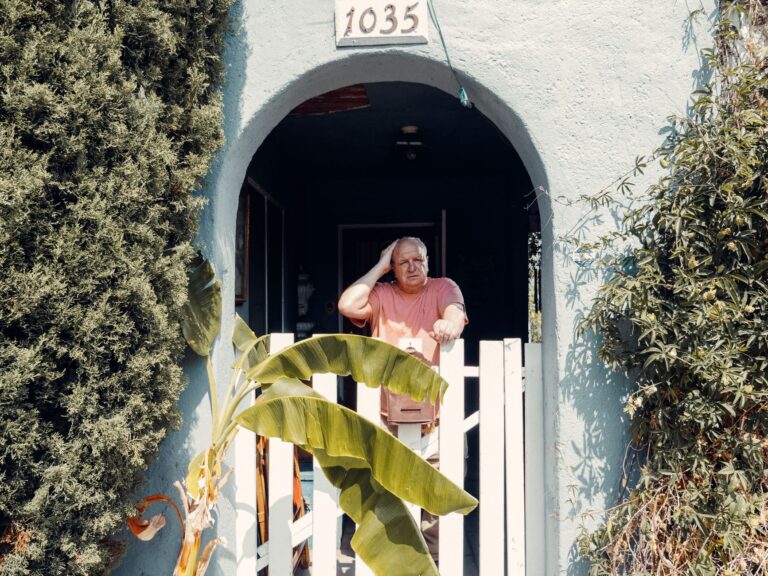
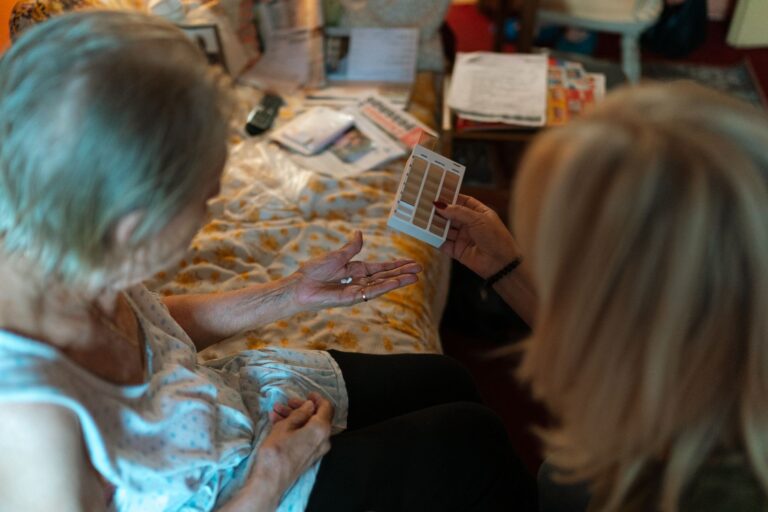
Face blindness in dementia is the loss of the ability to recognize familiar faces, a condition clinicians call prosopagnosia. In dementia, it is not a problem with eyesight and not simply “forgetting” a person. The brain regions that process and match faces to stored memories — particularly the fusiform gyrus and temporal lobes — become damaged, so a face that should feel instantly familiar registers as a stranger’s. A person with dementia-related face blindness may look directly at their spouse of forty years and ask, politely, who they are.
Consider a common scenario: an adult daughter visits her mother, who has moderate Alzheimer’s disease. Her mother greets her warmly as “the nice nurse” but lights up with recognition the moment the daughter speaks, because her voice is still a working cue. This is the hallmark of face blindness in dementia — recognition through the face fails, while other channels, like voice, gait, or a familiar perfume, may still succeed for a time. Understanding this distinction helps families take the experience less personally and adapt how they connect.
Medical information disclaimer: This article is for general educational purposes only and does not provide medical advice, diagnosis, or treatment. Always consult a physician or other qualified health professional about symptoms, medications, tests, or treatment decisions.
Table of Contents
- What Causes Face Blindness in People With Dementia?
- How Face Blindness Differs From Ordinary Memory Loss
- What Face Blindness Looks Like Day to Day
- How Caregivers Can Help Someone Who No Longer Recognizes Faces
- When Face Blindness Creates Safety and Emotional Risks
- How Doctors Assess Face Recognition Problems
- Why Emotional Recognition Can Outlast Face Recognition
- Frequently Asked Questions
What Causes Face Blindness in People With Dementia?
Face recognition is a specialized skill handled by a network of brain areas, most notably the fusiform face area on the underside of the temporal lobe, along with regions that attach emotional familiarity and names to faces. Dementia damages brain tissue progressively, and when this network is affected, face recognition degrades even though the eyes and optic nerves are healthy. This is why a person can describe a face accurately — “a woman with gray hair and glasses” — yet feel no spark of recognition. Different dementias affect this system differently.
In Alzheimer’s disease, face blindness usually emerges gradually in the middle and later stages, often blended with general memory loss: the person may recognize a face as familiar but be unable to place it, or may match a loved one to an outdated memory, mistaking a daughter for a sister because the daughter now resembles the sister as she looked decades ago. In posterior cortical atrophy, a visual variant often caused by Alzheimer’s pathology, and in some forms of frontotemporal dementia — particularly right temporal variants — face recognition can fail strikingly early, sometimes before everyday memory seems badly impaired. It also helps to compare this with developmental prosopagnosia, a lifelong condition in otherwise healthy people. someone born with prosopagnosia builds coping strategies from childhood — recognizing people by hairstyle, voice, or context. In dementia, the loss arrives late, is progressive, and the person often lacks the insight or learning capacity to compensate, which makes it far more disorienting.
How Face Blindness Differs From Ordinary Memory Loss
families often assume that failing to recognize them means “she’s forgotten me,” but face blindness and memory loss are distinct problems that can occur separately or together. In pure face blindness, the perceptual matching of a face to a stored identity fails, yet the underlying relationship memory may be intact: the person still knows they have a son named David and may speak about him lovingly — while not realizing David is the man sitting across the table. In broader memory loss, the identity itself becomes hazy. In advanced dementia, both usually overlap.
There is a related and important phenomenon to distinguish: Capgras syndrome, a delusional misidentification in which the person recognizes the face but insists the loved one is an impostor — “You look like my husband, but you’re not him.” This is thought to involve a disconnection between visual recognition and the emotional feeling of familiarity, and it appears more often in lewy body dementia. Capgras can be distressing and even lead to fear or accusations, and it calls for a different response than simple non-recognition. A warning for caregivers: never test the person. Quizzing — “Do you know who I am? Come on, look harder” — almost never restores recognition and reliably produces anxiety, shame, or agitation. The recognition machinery is damaged; effort cannot repair it, and repeated failure erodes the person’s sense of safety around you.
What Face Blindness Looks Like Day to Day
In daily life, face blindness rarely announces itself clearly. It shows up as small, confusing behaviors: a husband who becomes formal and guarded around his wife, treating her like a courteous stranger; a mother who is warm with staff she sees daily but wary of a son who visits monthly; a resident who follows a particular aide everywhere because her bright red glasses are recognizable when her face is not. People with dementia often become skilled at masking, offering a generic friendly greeting — “Well, hello there!” — to avoid revealing they don’t know who has walked in. A frequently reported and unsettling example is self-recognition failure.
In later stages, some people no longer recognize their own reflection and may become frightened by “the stranger in the bathroom,” sometimes accusing the mirror-person of watching them or refusing to enter the room. Families are often advised to cover or remove mirrors when this happens, and many report immediate relief in the person’s distress. Photographs behave oddly, too. A person may fail to identify recent photos of their children yet readily name people in pictures from the 1960s, because older memories, laid down decades before the disease, tend to survive longer than recent ones. This is why a grandmother might recognize her son only in his childhood photos while calling the middle-aged man in front of her a “nice visitor.”.
How Caregivers Can Help Someone Who No Longer Recognizes Faces
The most effective adjustment is to stop relying on the face and start feeding the person other cues. Announce yourself by name and relationship as you enter — “Hi Mom, it’s Sarah, your daughter” — in a natural, cheerful tone, as if it were an ordinary greeting rather than a correction. Use a consistent voice, approach from the front, and keep recognizable anchors stable: the same hairstyle, a signature scarf, a familiar perfume. Voice is often the last cue to fail, so phone calls sometimes go better than silent appearances at the door. There is a genuine tradeoff in how to respond when the person misidentifies you.
Correcting them — “No, I’m your daughter, not your sister” — preserves accuracy but often triggers confusion, embarrassment, or an argument the person cannot win. Going along with the mistaken identity keeps the moment calm but can feel dishonest and painful for the family member. Most dementia care educators recommend a middle path: respond to the emotional content rather than the factual error. If she thinks you are her sister, you can enjoy the warmth of that moment, gently weave in cues (“Remember when I was little and you taught me to bake?”), and let recognition come or not come without forcing it. Labeling can help in earlier stages: large, clearly captioned photos (“Your son, Michael”) near the phone or on a memory board, and name badges for rotating home-care staff. In later stages, labels lose usefulness because reading comprehension and the link between name and person also weaken — a limitation worth anticipating so families don’t over-invest in strategies the disease will outgrow.
When Face Blindness Creates Safety and Emotional Risks
Non-recognition is not just sad; it can be hazardous. A person who does not recognize their live-in spouse may perceive “a strange man in my house” and react with fear, attempts to flee, or physical aggression in what they experience as self-defense. This is a common trigger for evening agitation and for wandering — the person leaves to “go home” or to find the “real” family members they no longer see in the people around them. Caregivers should treat sudden fear of a household member as a signal to change approach — more verbal announcing, softer lighting, less startling movement — rather than as a personality change to argue with. Face blindness also opens a door to exploitation.
Someone who cannot distinguish familiar people from strangers may let anyone in the door, hand financial information to a caller claiming to be a grandchild, or trust a scammer who simply acts familiar. Families often need to add practical safeguards — supervised door answering, call screening, financial controls — well before the person seems “bad enough” to need them. A limitation to acknowledge honestly: no medication, training program, or exercise has been shown to restore face recognition once dementia has damaged the underlying network. Cognitive stimulation and photo reminiscence can support connection and mood, but they do not rebuild the fusiform recognition system. Any product promising to “retrain” face recognition in dementia deserves deep skepticism.
How Doctors Assess Face Recognition Problems
When face blindness is suspected, clinicians first rule out ordinary visual problems — cataracts, macular degeneration, uncorrected prescriptions — since poor eyesight can mimic recognition failure and is often fixable. Neuropsychological testing can then probe face processing specifically, using tasks such as matching unfamiliar faces, identifying famous faces, or the Cambridge Face Memory Test, alongside broader memory and language assessment.
The pattern matters: trouble matching faces suggests a perceptual problem, while accurately describing a face but failing to identify it points to a memory-linkage problem. A practical example: a man in his early 60s who repeatedly fails to recognize colleagues, while his day-to-day memory seems adequate, might be evaluated for a right temporal variant of frontotemporal dementia or posterior cortical atrophy rather than typical Alzheimer’s — a distinction that changes counseling, prognosis discussions, and eligibility for research studies.
Why Emotional Recognition Can Outlast Face Recognition
One of the most consistent observations in dementia care is that emotional memory persists after identity recognition fails. A mother may not know her daughter’s name or face, yet visibly relax when the daughter takes her hand, because the feeling of safety attached to that person survives in brain systems, including the amygdala, that decline more slowly than the face-identity network. Care staff often notice that residents remain calmer for hours after a visit they cannot later recall.
This is why experienced dementia educators tell families that visits still matter even when they are no longer recognized. The person may not know who sat with them, but their nervous system registers that someone kind did — reflected in eased agitation, better eating, and more settled sleep on visit days. Holding hands, singing familiar songs from the person’s teens and twenties, and sitting quietly together all reach channels of familiarity that do not depend on the face at all.
Frequently Asked Questions
Is face blindness the same as forgetting someone?
No. Face blindness is a breakdown in the brain’s face-recognition system. The person may still remember the relationship — they just can’t match your face to it. Ordinary memory loss erodes the identity itself; in later dementia, both often occur together.
Does everyone with dementia develop face blindness?
No. It is common in middle-to-late Alzheimer’s and can appear early in posterior cortical atrophy and some frontotemporal dementias, but the timing and severity vary widely from person to person.
Should I correct my parent when they call me by the wrong name?
Gentle cueing is fine, but avoid insisting or quizzing. Respond to the warmth of the interaction, state your name naturally (“It’s Sarah, your daughter”), and let it go if recognition doesn’t come.
My mother thinks my father is an impostor. Is that face blindness?
That sounds more like Capgras syndrome, a misidentification delusion where the face is recognized but the feeling of familiarity is missing. It is more common in Lewy body dementia and should be discussed with her doctor, especially if it causes fear.
Can face recognition be retrained or treated?
No treatment restores face recognition lost to dementia. The practical approach is compensation — announcing yourself, consistent voices and appearance cues, labeled photos early on — plus treating any correctable vision problems.
Why does she recognize old photos but not me now?
Older memories are more durable in dementia. Her stored image of you may be from decades ago, so your younger face in photographs matches her intact memory while your current face does not.