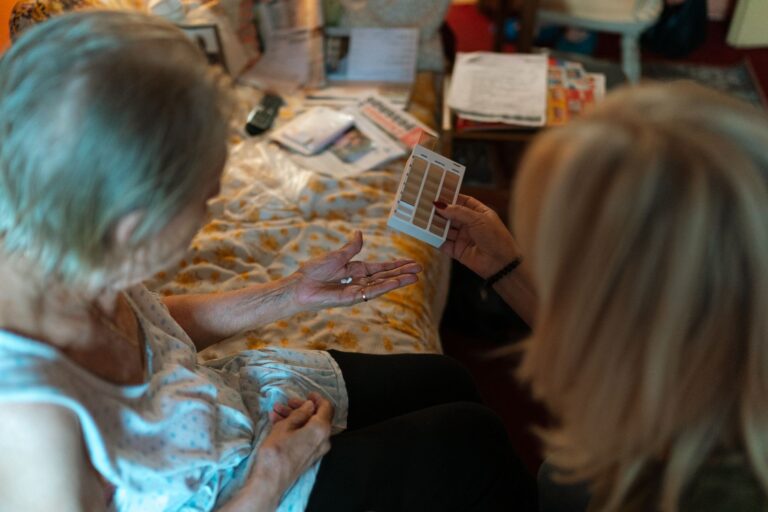
Paranoia in dementia is caused primarily by physical damage to the brain regions that handle memory, reasoning, and interpretation of events. As dementia destroys neurons in areas like the hippocampus and frontal lobes, the person loses the ability to store recent memories and to reason through gaps in their knowledge. The brain fills those gaps with explanations that feel logical from the inside: if my wallet is missing and I cannot remember moving it, someone must have stolen it. Paranoia, in other words, is usually not a personality change or an emotional problem — it is the mind’s attempt to make sense of a world that no longer holds together.
Consider a common scenario: a woman with mid-stage Alzheimer’s disease hides her purse in the oven to keep it safe, forgets doing so within minutes, and then accuses her daughter of stealing it. From her perspective, the accusation is reasonable. She has no memory of hiding the purse, so theft is the only explanation her brain can construct. Layered on top of this memory-driven suspicion are other contributing causes — sensory decline, certain medications, infections, unfamiliar environments, and the specific type of dementia involved — each of which can trigger or worsen paranoid thinking. Understanding these causes matters because paranoia is one of the most distressing symptoms families face, and because some of its triggers are treatable or preventable even when the underlying dementia is not.
Medical information disclaimer: This article is for general educational purposes only and does not provide medical advice, diagnosis, or treatment. Always consult a physician or other qualified health professional about symptoms, medications, tests, or treatment decisions.
Table of Contents
- How Does Brain Damage in Dementia Actually Cause Paranoid Thinking?
- Memory Loss and Confabulation: The Engine Behind Most Accusations
- The Type of Dementia Matters: Why Lewy Body Dementia Stands Out
- Reversible and Treatable Triggers: What to Rule Out First
- When Medications Cause or Worsen Paranoia — and When Treatment Itself Is Risky
- How Environment and Routine Shape Paranoid Symptoms
- Distinguishing Dementia Paranoia From Late-Life Psychiatric Illness
- Frequently Asked Questions
How Does Brain Damage in Dementia Actually Cause Paranoid Thinking?
dementia is not a single disease but a set of symptoms caused by progressive brain damage, and the location of that damage shapes the symptoms. Memory loss from hippocampal damage creates the raw material for suspicion: missing objects, forgotten conversations, unrecognized visitors. Damage to the frontal lobes — the brain’s center for judgment, impulse control, and reality-testing — removes the person‘s ability to step back and ask, “Is my suspicion actually plausible?” A healthy brain that misplaces keys considers several explanations and picks the likeliest. A brain with dementia often lands on the first explanation and cannot revise it, even when shown contrary evidence. A useful comparison is the difference between a false belief and a lie. When a person with dementia insists a caregiver is poisoning their food, they are not being manipulative or stubborn; they are reporting what their damaged brain has concluded is true.
This is why arguing rarely works. The reasoning machinery needed to weigh evidence and update a belief is precisely the machinery the disease has impaired. Families who understand this tend to respond with reassurance and redirection rather than confrontation, which usually produces better outcomes for everyone. There is also a perceptual component. Dementia can impair the brain’s ability to recognize faces and interpret visual scenes, so a spouse may genuinely look like a stranger, or a coat on a chair may look like an intruder. When perception itself is unreliable, suspicion of one’s surroundings is an almost inevitable result.
Memory Loss and Confabulation: The Engine Behind Most Accusations
The single most common pathway to paranoia in dementia runs through memory loss combined with confabulation — the brain’s unconscious habit of inventing explanations to fill memory gaps. A man who forgets that he already spent his cash may conclude his son is taking money from his account. A woman who forgets that her husband died years ago may believe he is missing or being hidden from her. These are not deliberate fabrications; the person genuinely experiences the invented explanation as memory. Accusations of theft are the classic example, and they follow a predictable pattern: the person hides valuables to protect them, forgets both the hiding and the hiding place, discovers the item “missing,” and accuses the nearest person — usually the primary caregiver, precisely because that caregiver is present most often.
It is one of the painful ironies of dementia care that the most devoted family member frequently becomes the prime suspect. A warning is important here: not every accusation from a person with dementia is false. Financial exploitation and elder abuse are real and disturbingly common, and people with cognitive impairment are prime targets precisely because their reports are easily dismissed as symptoms. families and professionals should take a moment to rule out genuine wrongdoing — checking bank statements, reviewing who has access to the home — before attributing every claim to the disease. Assuming paranoia when abuse is occurring is a serious and avoidable failure.
The Type of Dementia Matters: Why Lewy Body Dementia Stands Out
Different dementias produce paranoia at different rates and in different forms. In Alzheimer’s disease, delusions of theft and infidelity are the most typical, generally emerging in the middle stages as memory failure deepens. In Lewy body dementia, the picture is different and often more dramatic: vivid visual hallucinations frequently appear early in the disease, and the paranoid beliefs tend to be built around them. A person may see strangers in the house and, quite reasonably from their perspective, become fearful and suspicious of intruders.
A related and especially painful delusion is capgras syndrome, in which the person believes a familiar figure — usually a spouse — has been replaced by an identical impostor. A husband with Lewy body dementia may tell his wife of fifty years, “You look like my wife, but you’re not her,” and demand that the “real” wife be brought back. This occurs because the brain’s face-recognition system and its emotional-familiarity system become disconnected: the face is recognized, but the accompanying feeling of familiarity is absent, and the brain resolves the mismatch by concluding the person is a fake. Vascular dementia can produce paranoia that appears suddenly after a stroke affecting regions involved in judgment, and frontotemporal dementia more often produces disinhibition and apathy than classic paranoia, though suspiciousness can occur. Knowing which dementia is involved helps clinicians anticipate symptoms and, critically, avoid dangerous treatments — a point that becomes essential in medication decisions.
Reversible and Treatable Triggers: What to Rule Out First
Not all paranoia in dementia comes from the dementia itself, and the treatable triggers deserve first attention. Delirium — an acute confusional state caused by infection, dehydration, constipation, pain, or medication changes — can produce sudden paranoia in a person whose behavior was stable the week before. Urinary tract infections are a notorious culprit in older adults, sometimes causing agitation and suspiciousness with few of the urinary symptoms younger people would notice. The practical rule many geriatricians follow: any abrupt behavioral change in dementia warrants a medical check before it is attributed to disease progression. Sensory loss is another major and correctable contributor.
A person who cannot hear well may see relatives whispering across the room and conclude they are conspiring; a person with poor vision may misinterpret shadows and movement as threats. Untreated hearing loss in particular has a long-recognized association with paranoid thinking even in people without dementia. Updated glasses, hearing aids, cataract surgery, and simply improving lighting can reduce suspiciousness in ways no medication can. There is a tradeoff worth naming when comparing responses: environmental and medical fixes are slower and less dramatic than medication, but they carry essentially no risk, while antipsychotic drugs act faster on severe symptoms but carry serious dangers in this population. The conservative sequence — treat infections, correct the senses, adjust the environment, review the medication list — resolves a meaningful share of paranoia cases without ever reaching for a prescription.
When Medications Cause or Worsen Paranoia — and When Treatment Itself Is Risky
Medications are a double-edged factor. Several drug classes commonly prescribed to older adults can trigger or intensify paranoid thinking: anticholinergic medications (found in some bladder drugs, older antihistamines, and certain antidepressants), corticosteroids, benzodiazepines, opioid painkillers, and some Parkinson’s medications that boost dopamine. In a person whose brain is already vulnerable, adding one of these — or combining several — can tip stable cognition into suspicion and delusion. A thorough medication review, ideally with a pharmacist or geriatrician, is one of the highest-yield steps a family can request.
The treatment side carries its own hazards. Antipsychotic medications, the drugs most often used for severe paranoia, carry regulatory warnings about increased risk of stroke and death when used in elderly people with dementia. They are sometimes necessary — when a person’s delusions cause dangerous behavior or unbearable distress — but they should be used at the lowest effective dose, for the shortest time, with a clear plan to reassess. The limitation is starkest in Lewy body dementia: many people with this disease have severe, sometimes life-threatening reactions to typical antipsychotics, including profound rigidity and worsened confusion. This is one of the strongest reasons to pursue an accurate dementia diagnosis rather than a generic label, because the wrong drug for the wrong dementia can cause lasting harm within days.
How Environment and Routine Shape Paranoid Symptoms
Unfamiliar or chaotic environments reliably worsen paranoia. A move to a new home, a hospital stay, a rotating cast of unfamiliar aides, or even rearranged furniture can strip away the environmental cues a person with dementia depends on to feel oriented, and suspicion rushes into the vacuum. Late afternoon and evening often bring “sundowning,” a worsening of confusion and agitation as light fades and fatigue accumulates, and paranoid episodes frequently cluster in these hours.
A concrete example: a man who managed reasonably well at home is hospitalized for a hip fracture and, within two days, believes the nurses are holding him prisoner and stealing his belongings. Nothing about his dementia changed that week — but the unfamiliar room, disrupted sleep, pain medication, and strange faces combined to overwhelm his remaining ability to interpret his situation. Families who bring familiar photographs, maintain consistent visitors, and keep routines steady often see these episodes soften.
Distinguishing Dementia Paranoia From Late-Life Psychiatric Illness
Paranoia in an older adult is not automatically dementia. Late-onset psychotic disorders, severe depression with psychotic features, and long-standing personality traits that intensify with age can all produce suspiciousness in people whose memory is largely intact. The distinguishing pattern in dementia is that paranoia travels with cognitive decline: the accusations are anchored in memory failures (stolen objects, forgotten events), they fluctuate with confusion levels, and testing shows impairment in memory and executive function.
In a primary psychiatric illness, by contrast, the delusions are often more elaborate and systematized while day-to-day memory remains serviceable. This distinction has practical stakes. A person with psychotic depression may respond well to antidepressant treatment and recover fully, while the same symptoms misattributed to dementia might lead to years of inappropriate care. A geriatric psychiatry or memory clinic evaluation — including cognitive testing, a medication review, and basic labs — is the standard route to sorting one from the other, and it is worth insisting on when paranoia appears without clear memory decline.
Frequently Asked Questions
Is paranoia a normal part of dementia?
It is common, particularly in the middle stages of Alzheimer’s disease and early in Lewy body dementia, but not everyone with dementia develops it. When it appears suddenly, a medical cause like infection or medication side effects should be ruled out first.
Why does my parent with dementia accuse me of stealing?
People with dementia often hide items to protect them, forget doing so, and conclude theft is the only explanation. The primary caregiver is accused most often simply because they are present most often — it reflects the disease, not your relationship.
Should I argue with a person with dementia about their paranoid beliefs?
No. The brain regions needed to weigh evidence and revise beliefs are damaged, so arguing usually increases distress. Acknowledge the feeling (“That sounds frightening”), offer reassurance, help search for the “missing” item, and redirect attention.
Can paranoia in dementia be treated?
Often, yes — at least partially. Treating infections, correcting hearing and vision, reviewing medications, and stabilizing the environment resolve many cases. Antipsychotic drugs are reserved for severe, dangerous, or deeply distressing symptoms because of their risks in elderly people with dementia.
Does paranoia mean the dementia is getting worse?
Gradual emergence of paranoia often accompanies middle-stage disease, but a sudden onset more likely signals a treatable problem such as a urinary tract infection, dehydration, pain, or a new medication rather than disease progression.