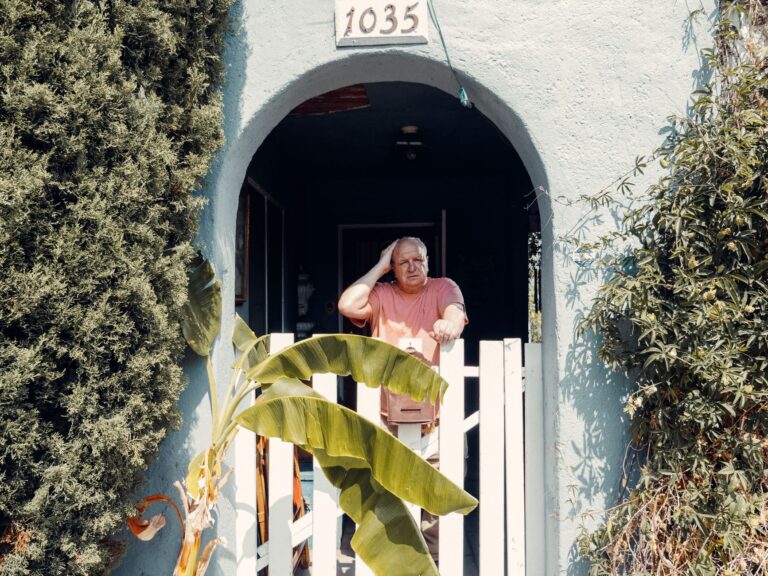
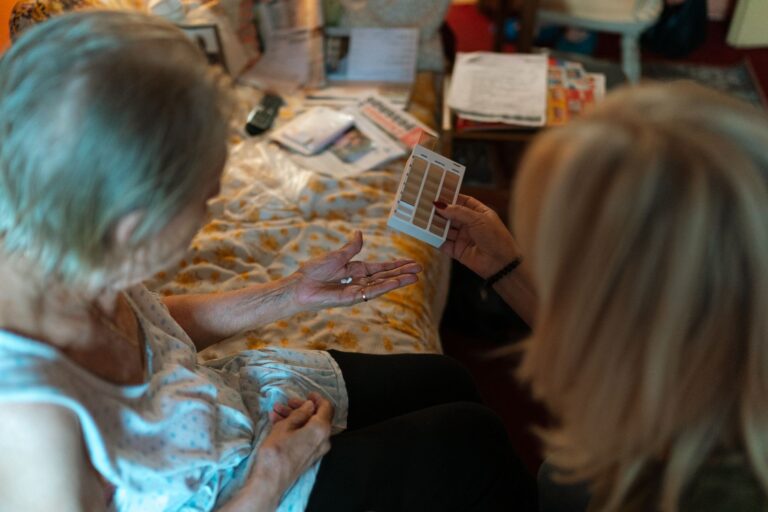
A person with dementia forgets their spouse because the disease physically destroys the brain structures that store and retrieve memory, and long-term relationship memories are not exempt from that damage. In Alzheimer’s disease, the most common form of dementia, deterioration typically begins in the hippocampus, the region that forms new memories, and then spreads outward into areas that hold older autobiographical memories, facial recognition, and emotional associations. A spouse is usually one of the last people to be forgotten precisely because decades of repetition have woven them deeply into the brain’s memory networks — but as the disease advances into the temporal and parietal lobes, even those deeply embedded memories become unreachable. Consider a common scenario: a woman in her eighties with late-stage Alzheimer’s looks at her husband of fifty-five years and asks him when her husband will be arriving. She has not lost her sense that a husband exists.
What she has often lost is the ability to connect the older man in front of her with the young man she married, because her most durable memories date from decades earlier. This is not indifference, and it is not a choice. It is the visible result of physical damage to specific brain regions. It is also worth knowing that forgetting a spouse is rarely absolute or constant. Recognition often flickers — present in the morning, gone by evening, restored briefly by a familiar song or scent. Understanding why this happens can make one of the most painful experiences in dementia caregiving slightly more bearable.
Medical information disclaimer: This article is for general educational purposes only and does not provide medical advice, diagnosis, or treatment. Always consult a physician or other qualified health professional about symptoms, medications, tests, or treatment decisions.
Table of Contents
- Why Does Dementia Erase the Memory of a Husband or Wife?
- The Brain Regions Involved in Recognizing a Loved One
- Why Emotional Memory Often Outlasts Recognition
- How to Respond When Your Spouse No Longer Knows You
- Misidentification, Capgras Syndrome, and Other Complications
- The Grief of Being Forgotten
- What Recognition Looks Like in the Final Stages
- Frequently Asked Questions
Why Does Dementia Erase the Memory of a Husband or Wife?
Dementia erases spousal recognition through a process neurologists sometimes describe with Ribot’s law: newer memories tend to be lost before older ones. As damage accumulates, a person‘s accessible autobiography effectively rolls backward in time. A man who married at twenty-five and is now eighty-two may mentally be living somewhere in his thirties or forties. His wife, as she looks today, does not match the internal image of the woman he remembers marrying. He may recognize her name, her voice, or old photographs of her while failing to recognize her face across the breakfast table. Recognition itself is also not a single skill.
Knowing a face, retrieving a name, recalling shared history, and feeling emotional attachment are handled by different, partially separate brain systems. Dementia can damage these unevenly. Some people lose the name but keep the warmth; others recognize the face but believe the person is their mother or sister rather than their spouse. This is why a wife may be misidentified as “that nice lady who helps me” — the familiarity survives while the specific relationship label does not. A useful comparison is a library where the newest books are shelved near the entrance and the oldest in the back. Dementia is like a slow flood coming through the front door: recent volumes are ruined first, and the oldest survive longest. The wedding album in the back room may remain readable long after last week’s events have washed away — which is exactly why a person can describe their wedding day in detail while failing to recognize the spouse who was there.
The Brain Regions Involved in Recognizing a Loved One
Recognizing a spouse depends on a chain of brain regions working together. The fusiform gyrus, on the underside of the temporal lobe, specializes in processing faces. The hippocampus and surrounding medial temporal structures link that face to stored knowledge — a name, a shared history, a relationship. The amygdala and related limbic circuits attach emotional significance, producing the felt sense of “this person matters to me.” Frontal regions help resolve confusion when something does not quite match, such as an aged face on a remembered person.
Alzheimer’s disease, vascular dementia, lewy body dementia, and frontotemporal dementia each attack this chain at different points, which is why forgetting a spouse looks different across diagnoses. In Lewy body dementia, for example, misidentification and visual hallucinations can appear relatively early, while in typical Alzheimer’s, failure to recognize close family members usually signals an advanced stage of disease. An important limitation applies here: no one can predict from a diagnosis alone whether or when a particular person will stop recognizing their spouse. Some individuals in very late-stage dementia still light up at their partner’s arrival; others lose recognition earlier than families expect. Caregivers who are promised a fixed timeline by anyone — including well-meaning clinicians — should treat such predictions with caution, because the disease’s path through the brain varies from person to person.
Why Emotional Memory Often Outlasts Recognition
One of the most consistent and consoling findings in dementia care is that emotional memory frequently survives after factual memory is gone. The brain systems that store feelings about a person are partly separate from those that store facts about them. A person may not know who the visitor is, yet feel calmer, safer, and happier during and after the visit. Researchers have observed that people with significant amnesia can retain an emotional state — comfort or distress — long after forgetting the event that caused it. A daughter once described visiting her father, who no longer knew her name or her relationship to him.
When she arrived, he reached for her hand and said, “I don’t know who you are, but I know I love you.” That sentence captures the neurological reality: the attachment circuit was still firing even though the identification circuit had failed. For spouses, this means visits are not pointless after recognition fades. The person may not be able to say who just sat with them for an hour, but the warmth of that hour can linger in their mood for the rest of the day. This is also why tone of voice, gentle touch, and unhurried presence matter more in late-stage dementia than explanations do. The person may no longer process the sentence “I’m your husband, Margaret, we’ve been married fifty years,” but they can still read affection or tension in a voice and a face.
How to Respond When Your Spouse No Longer Knows You
The most widely recommended approach is to join the person’s reality rather than correct it. Repeatedly insisting “I’m your wife — don’t you remember me?” tends to produce anxiety, agitation, or shame, because the person is being confronted with a failure they cannot fix. A gentler alternative is to introduce yourself casually without demanding recognition: “Hi, it’s Tom. I thought I’d sit with you a while.” If the person believes their spouse is someone from decades ago, arguing rarely restores the truth and often destroys the moment. There is a real tradeoff here that caregivers should weigh honestly.
Correcting preserves factual accuracy but frequently causes distress and accomplishes nothing lasting, since the correction is forgotten within minutes while the negative emotion may persist. Going along with the person’s reality — sometimes called validation — sacrifices literal truth but preserves calm and connection. Most dementia care specialists come down on the side of validation for identity confusion, reserving gentle correction for situations involving safety. Practical tools can also help. Old photographs from the era the person mentally inhabits, familiar music from their early adulthood, a favorite perfume or aftershave, and consistent daily routines all provide alternative routes to familiarity that do not depend on facial recognition. Some spouses find that recognition returns briefly when they sing a song from their courtship years, because musical memory is served by brain networks that often remain relatively intact late into the disease.
Misidentification, Capgras Syndrome, and Other Complications
Forgetting a spouse sometimes takes stranger and more distressing forms than simple non-recognition. In Capgras syndrome, a delusional misidentification that can occur in dementia — particularly Lewy body dementia — the person recognizes the spouse’s face but insists this person is an impostor, a duplicate who looks identical to their “real” husband or wife. One proposed explanation is a disconnect between intact facial recognition and damaged emotional response: the face matches, but the expected feeling of familiarity is absent, so the brain concludes the person must be a fake. This can be devastating for a spouse who is accused of being a stranger wearing their own face.
A related and painful complication is when the person with dementia, believing their actual spouse is a stranger, becomes fearful of them — resisting help with bathing or dressing from someone they perceive as an unknown adult in their home. This can escalate into agitation or accusations, and caregivers should know it is a recognized feature of the disease, not evidence of hidden feelings. A warning is warranted here: sudden, dramatic worsening of confusion or recognition over hours or days is not typical of dementia’s gradual course and can signal delirium from an infection (urinary tract infections are a frequent culprit), a medication effect, dehydration, or a stroke. Abrupt changes deserve prompt medical evaluation rather than being attributed to disease progression. Similarly, if misidentification leads to fear-driven aggression or the caregiver’s safety is at risk, this should be raised with the care team rather than endured privately.
The Grief of Being Forgotten
Spouses of people with dementia often describe a form of loss sometimes called ambiguous grief: mourning a person who is still physically present. A husband who visits his wife daily in memory care may find that friends assume the hard part ended at diagnosis, when in fact the day she first called him “sir” was, in his words, worse than any funeral he had attended.
This grief is real, chronic, and frequently invisible to others, and it carries measurable health costs — spousal dementia caregivers show elevated rates of depression and stress-related illness. Support groups specifically for dementia spouses, whether in person or online, exist precisely because this experience is hard to explain to anyone who has not lived it. Organizations such as the Alzheimer’s Association operate helplines and local chapters, and many memory care communities host family support meetings where being forgotten by a living partner is a shared, understood experience rather than a private shame.
What Recognition Looks Like in the Final Stages
In late-stage dementia, explicit recognition — naming the spouse and stating the relationship — is usually gone, but subtler forms of knowing often remain. Care staff commonly report that residents settle when a particular voice enters the room, hold one visitor’s hand differently than others’, or track a specific person with their eyes.
Hearing is generally among the last senses to diminish, which is why hospice teams encourage spouses to keep talking, reading aloud, and playing familiar music even when there is no verbal response. A man who had not spoken his wife’s name in over a year was observed to squeeze her hand rhythmically whenever she hummed the song from their first dance — a response he gave to no one else.
Frequently Asked Questions
At what stage of dementia does a person forget their spouse?
In typical Alzheimer’s disease, failure to recognize close family members usually occurs in the late stages, though timing varies widely by individual and by type of dementia. Some people retain recognition until the end; others lose it earlier.
Does my spouse with dementia still love me if they don’t recognize me?
Emotional attachment is stored separately from factual memory and often survives longer. Many people with dementia show comfort and affection toward a spouse they can no longer name or identify.
Should I correct my husband or wife when they don’t know who I am?
Generally no. Repeated correction tends to cause distress without restoring memory. Introduce yourself gently, stay calm, and connect through familiar music, photos, and touch instead.
Why does my wife with dementia think I’m her father or a stranger?
As memory rolls backward in time, she may be mentally living in an earlier decade where you don’t yet exist as her husband. Your older face may match her memory of another older man from that era, such as her father.
Can recognition come back once it’s lost?
Recognition often fluctuates rather than disappearing all at once. Moments of clarity can return, especially with familiar music, quiet settings, or times of day when the person is most alert. Sudden dramatic loss of recognition, by contrast, may indicate a treatable problem like infection and warrants medical review.
Is forgetting a spouse a sign of a specific type of dementia?
No single type. It occurs across Alzheimer’s, vascular, Lewy body, and frontotemporal dementia, though misidentification delusions such as Capgras syndrome are more associated with Lewy body dementia.