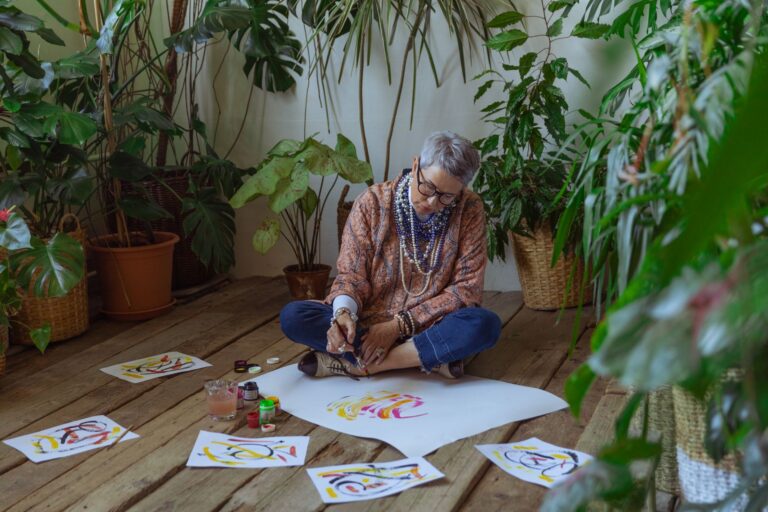
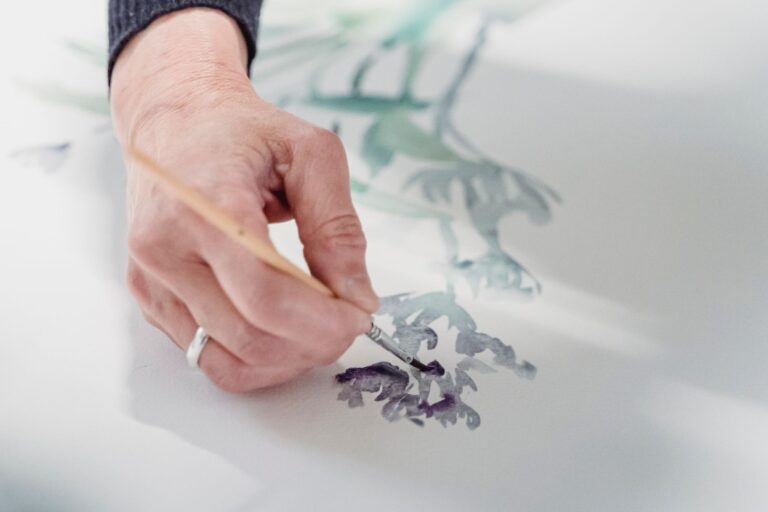
Watercolor painting for middle-stage dementia means a short, guided session with non-toxic washable supplies and a stable, low-mess setup. A caregiver sets out a few choices, starts the brush movement, then gives only basic help.
Middle-stage dementia means the person can still take part but needs hands-on help to begin and continue. The Alzheimer's Association says art projects can create a sense of accomplishment and purpose. It says art gives both person and caregiver self-expression, as explained in its art and music guidance.
Medical information disclaimer: This article is for general educational purposes only and does not provide medical advice, diagnosis, or treatment. Always consult a physician or other qualified health professional about symptoms, medications, tests, or treatment decisions.
Table of Contents
- What supplies keep watercolor simple?
- How should you set up the table?
- How do you guide without taking over?
- What keeps the session safe?
- What if brushes and water feel too hard?
What supplies keep watercolor simple?
Discover 1st describes a senior watercolor setup built around pan paints and heavy paper, detailed in its senior watercolor guide. Pan paints stay contained.
They mix with water on a shallow tray. Lay out only what the person will use: Heavy paper around 300 gsm/140 lb reduces buckling. Paint stays on the surface instead of pooling in wrinkles.
- pan paints, watercolor paper around 300 gsm/140 lb, pencil and paper towel
- two or three brushes and table covering
- one or two stable broad-base water containers
How should you set up the table?
Accessibility guides recommend a non-slip mat under the paper and tools placed near the dominant hand. They recommend good lighting with reduced glare. Clear away extra cups, paper and clutter.
They recommend large comfortable thick handles and soft springy bristles. They recommend a shallow tip-resistant cup. Check that the chair, table height and light allow a relaxed arm position.
How do you guide without taking over?
The Alzheimer's Association advises helping the person begin the activity in middle- to late-stage Alzheimer's. For painting, that means starting the brush movement for them. Stay nearby and watch how they respond.
Give only basic instruction and assistance thereafter. Let color choice, stroke direction and pace stay with the person. Step in briefly when paint, water or paper needs adjusting.
What keeps the session safe?
Caregiver guides advise non-toxic washable supplies for dementia activities. They advise avoiding sharp tools and small choking hazards such as beads, sequins and buttons. They advise supervising according to mouthing or swallowing risk. The Art and Creative Materials Institute says the AP seal means board-certified toxicologist review found no material at toxic or injurious levels.
That labeling follows ASTM D4236 and LHAMA, including for mentally disabled adults who may not understand labeling, per its materials safety page. The National Institute on Aging advises room-by-room hazard checks and adequate lighting with nightlights. It advises locking or removing medicines, alcohol, cleaning products and other poisons. It advises supervising former hobbies such as painting.
What if brushes and water feel too hard?
HelpDementia.com says water-reveal painting books need only a brush and water to reveal color. The format reduces mess and frustration for people with dexterity, vision or memory limitations. The person brushes plain water across the page and color appears.
Keep one water-reveal book ready for low-energy days. Use it when pouring, rinsing or color mixing causes spills or fatigue. Keep one regular brush and one stable water container on the tray.