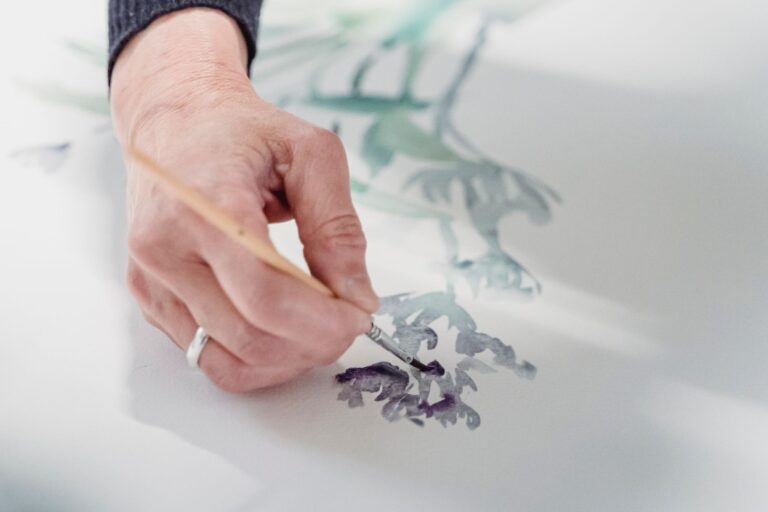
Step-by-step watercolor painting for early-stage dementia is a short, guided wet-on-wet activity that keeps choices small and success easy. Early-stage dementia means memory and thinking changes are mild, and the person can still take part, make choices, and handle a brush with support. Sessions work best as process art with no fixed endpoint. The goal is enjoyment, calm engagement, and connection, not a finished picture.
Medical information disclaimer: This article is for general educational purposes only and does not provide medical advice, diagnosis, or treatment. Always consult a physician or other qualified health professional about symptoms, medications, tests, or treatment decisions.
Table of Contents
- Why watercolor fits now
- How do you set up for calm success?
- What are the painting steps?
- How should a caregiver help?
- What can painting realistically do?
Why watercolor fits now
Early-stage dementia often preserves enough hand control and decision-making for expressive art without overload. HelpDementia reports that watercolors, acrylics, charcoal drawing, and structured coloring can feel expressive without being overwhelming in this stage HelpDementia guide.
Watercolor suits this balance because soft blends look good without precise lines. The paint does much of the visual work, so small movements still make pleasing color.
How do you set up for calm success?
Choose a quiet table with good light and all supplies within reach. Tape the paper down so it does not slide while the person paints.
Jae Johns recommends taping thick 140-lb/300-gsm cold-press paper to a board, setting out two water jars with a limited palette, and choosing a large round or flat brush to lower control demands watercolor setup ideas. Use only non-toxic, adult-quality materials and avoid sharp tools. The Alzheimer's Association advises keeping projects adult-level while using safe materials.
What are the painting steps?
Jae Johns describes wet-on-wet as the most forgiving start: wet the paper area first, then let diluted color spread softly. A flat wash in even horizontal strokes is another simple opening move.
Keep each action separate and demonstrate it first. The Kensington Falls Church guide, summarizing the Alzheimer's Association and National Institute on Aging, recommends adapting to current abilities, breaking tasks into small steps, helping the person start, and prizing enjoyment over achievement.
- Tape paper to a board and place water, paint, and brush close by.
- Brush clean water over one small area.
- Touch diluted pigment into the wet area and watch it bloom.
- Add one more color beside it and let edges meet.
- Stop while the painting still feels pleasant, then dry flat.
How should a caregiver help?
Sit beside the person, talk, and offer steady encouragement. The Alzheimer's Association advises building in conversation and physically helping begin brush movement when needed.
Follow the person's marks rather than correcting them. Board-certified art therapists describe this dementia work as process art, encouraging caregivers to discuss memories the colors evoke and accept watching or very short sessions.
What can painting realistically do?
In a 2011 controlled trial of 39 outpatients with mild Alzheimer's, weekly 45-minute coloring and drawing with pastel crayons or water-based paint for 12 weeks significantly improved apathy and quality of life compared with calculation training, according to the MODEM summary of Hattori and colleagues MODEM trial summary. Painting should still be framed around mood, vitality, and engagement.
An 8-week randomized visual-art training trial in dementia found no group difference in overall cognition or working memory, according to the authors in Frontiers in Psychology Frontiers trial report. Plan two or three colors, one small area, and ten to twenty minutes at first.