Adapt watercolor painting for early-stage dementia with large brushes, large paper, fluid washes, and one clear step at a time. Choose a calm, bright table, non-toxic paints, and simple prompts that reward expression over accuracy. Early-stage dementia means mild memory loss and slower planning, while response to color and enjoyment often remain strong. Small setup changes lower frustration and keep choice with the painter.
Medical information disclaimer: This article is for general educational purposes only and does not provide medical advice, diagnosis, or treatment. Always consult a physician or other qualified health professional about symptoms, medications, tests, or treatment decisions.
Table of Contents
- Why watercolor suits early-stage changes
- How should you set up the table?
- Which projects lower pressure?
- What should you expect from group programs?
Why watercolor suits early-stage changes
Watercolor glides with little pressure, so broad strokes can still make rich color. Art Therapists at Home notes in its watercolor guide that the fluid paint suits gross-motor movement and can adjust across Alzheimer's stages.
That fit matters when fine control fades first. Favor wet washes, big shapes, and color mixing over thin lines or detail. Success looks like participation, choice, and pleasure, not a realistic picture.
How should you set up the table?
Keep the space calm, well-lit, and free of extra items. The Government of Newfoundland and Labrador recommends in its Dementia-Inclusive Community Recreation Guide a clutter-free table, non-toxic washable paints, white paper on a contrasting cloth, and one instruction at a time.
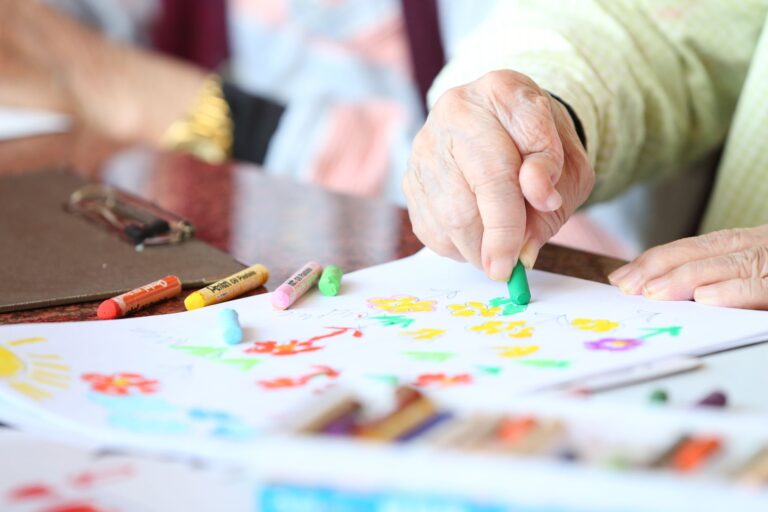
For limited grip or shaky hands, use larger tools and simpler paint. Alzheimer's Society UK suggests in its ideas for enjoying painting large brushes with grips, large paper, and water-only Aquapaints that reveal color with water.
- Lay a dark cloth, then tape down large white paper.
- Offer two or three colors, a wide brush, and clean water.
- Sit beside the person, show one stroke, then hand over the brush.
- Keep sessions short and stop while it still feels good.
Which projects lower pressure?
Pick open prompts such as sky, garden, sea, family, or a favorite memory. Encourage feeling and color choice, with abstract results accepted as finished work. Try watercolor-resist for quick delight: draw with white wax crayon or tea-light wax, then brush watercolor wash over it to reveal the design.
It gives structure without demanding drawing skill. Wet-on-wet is another easy start: dampen the paper, then touch in color and watch it spread. No prior art experience is needed, and many community programs supply all materials.
What should you expect from group programs?
Look for facilitated, social painting rather than lessons. Community models pair gentle activity with painting, such as a half-hour garden walk followed by wet-on-wet watercolor with no skill required.
Expect engagement, conversation, choice, and mood lift, not memory repair. Evidently Cochrane reports in its summary of arts therapies for dementia that a 2018 Cochrane review found only two eligible group-art-therapy trials with 60 participants analyzed and very low certainty. Treat watercolor as self-expression and time together, and ask the facilitator how they support pacing, choice, and cleanup.