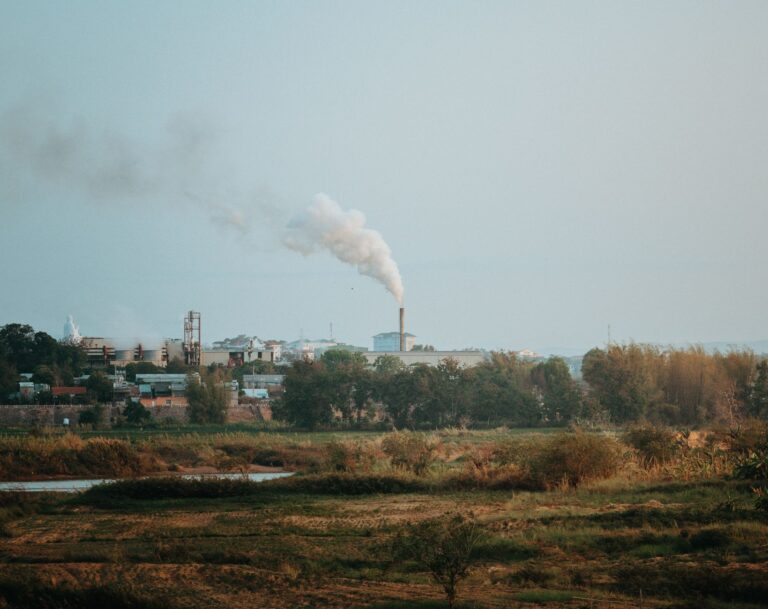
Air pollution enters your bloodstream with every breath, triggering a cascade of damage that narrows blood vessels supplying the brain and increases stroke risk by as much as 13% for every 10 micrograms of fine particulate matter (PM2.5) you’re exposed to long-term. In 2021 alone, air pollution caused 1.99 million stroke deaths globally—including 905,600 deaths from ischemic strokes, where clots starve brain tissue of oxygen. The mechanism is direct: inhaled pollution particles penetrate deep into the lungs, cross into the bloodstream, and travel to cerebral arteries, where they trigger inflammation, blood clots, and the buildup of atherosclerotic plaques that progressively choke off blood flow to neurons.
A 65-year-old living in an urban area with average PM2.5 levels of 25 µg/m³ faces a measurably higher lifetime stroke risk than someone in a region with levels below 10 µg/m³. The effect isn’t theoretical—researchers tracking Medicare beneficiaries found a 2.79% increased stroke risk per 1 μg/m³ increase in long-term air pollution exposure, even after accounting for smoking history and other cardiovascular risk factors. For people with dementia or cognitive decline, a stroke triggered by pollution-related vessel damage accelerates cognitive loss and functional decline, sometimes catastrophically.
Table of Contents
- How Does Air Pollution Damage Cerebral Blood Vessels?
- The Biological Mechanisms Behind Air Pollution-Induced Strokes
- Who Faces the Highest Risk from Pollution-Related Strokes?
- Practical Strategies to Reduce Stroke Risk in Polluted Environments
- Hypertension, Inflammation, and Accelerated Neurodegeneration from Chronic Pollution Exposure
- May 2026 Research on Climate Change and Pollution-Accelerated Stroke Risk
- Warning Signs of Stroke and When to Seek Emergency Care
How Does Air Pollution Damage Cerebral Blood Vessels?
When you inhale fine particulate matter (PM2.5, ultrafine particles, and gases like nitrogen dioxide), these pollutants bypass your upper airway defenses and lodge deep in the alveoli—the tiny air sacs where gas exchange occurs. From there, a fraction enters the bloodstream directly, while others trigger systemic inflammation that spreads throughout your cardiovascular system. Once in circulation, these particles accumulate in the cerebral arterial walls, where they activate immune cells, promote oxidative stress, and set off a chain reaction of endothelial dysfunction—the first step toward atherosclerosis and thrombosis. The blood-brain barrier (BBB), a highly selective membrane that normally protects brain tissue from harmful substances, becomes compromised under chronic pollution exposure.
Inflammatory molecules released in response to particulate matter weaken the tight junctions that hold this barrier together, allowing additional pollutants and blood clots to penetrate deeper into brain tissue. This is particularly dangerous because it means pollution doesn’t just increase stroke risk through vessel narrowing—it also makes the brain more vulnerable to damage once a stroke occurs. Unlike a single risk factor such as high blood pressure, pollution-related vessel damage is ongoing and cumulative. A person breathing polluted air for 20 years experiences progressive atherosclerotic buildup in cerebral arteries, similar to someone with untreated hypertension. The difference is that pollution exposure is often invisible and involuntary, making it a population-level stroke risk factor that goes unrecognized by most people and many clinicians.
The Biological Mechanisms Behind Air Pollution-Induced Strokes
air pollution triggers stroke through at least four distinct but overlapping pathways: direct vessel thrombosis (clot formation), atherosclerosis (plaque buildup), hypertension (elevated blood pressure), and blood-brain barrier compromise. When inhaled pollutants reach the bloodstream, they activate coagulation cascades—the same biological processes that form protective clots after an injury, but in this case leading to dangerous clot formation within cerebral arteries. Simultaneously, particles lodge in arterial walls and promote the accumulation of lipid-laden macrophages, the hallmark of atherosclerotic plaque that progressively narrows vessel lumens. Pollution also raises blood pressure through multiple mechanisms: by triggering sympathetic nervous system activation, increasing sodium retention in the kidneys, and promoting arterial stiffness.
A person living with chronic air pollution exposure may develop a baseline elevation of 2–5 mm Hg in systolic blood pressure—a seemingly small number that translates to a 10–15% increase in overall stroke risk at the population level. For someone already taking antihypertensive medication, living in a highly polluted area may partially negate the medication’s protective effects, requiring dose adjustments or additional pharmacotherapy. A critical limitation of current research is that most studies measure PM2.5 at the community level using fixed air-quality monitors, which may not accurately reflect a person’s actual personal exposure. Someone who spends most time indoors, uses air filtration, or avoids traffic-heavy routes experiences lower real exposure than pollution maps suggest, while a delivery driver or outdoor worker may face two to three times the monitored community average. This exposure heterogeneity means that population-level risk estimates underestimate risk for high-exposure individuals and overestimate it for others.
Who Faces the Highest Risk from Pollution-Related Strokes?
People over 80 years old, those with prior cardiovascular disease, and individuals living in communities with systemic racial and economic health disparities bear disproportionate burden from air pollution-induced strokes. The elderly are vulnerable because their endothelial function is already compromised by decades of age-related vascular changes, and their brains are more susceptible to ischemic injury once a stroke begins. Someone with a prior heart attack or previous stroke has brain tissue and coronary arteries already primed for further damage, making them approximately three times more likely to suffer a second stroke if exposed to chronic air pollution. Racial disparities in stroke risk from air pollution are stark and driven by systemic factors: segregated housing patterns have historically concentrated Black and Latino communities near highways, industrial facilities, and ports, exposing them to 50–100% higher PM2.5 levels than nearby white neighborhoods. Research across 40 major U.S.
cities found that the most polluted census tracts were predominantly home to people of color, regardless of city region. A 60-year-old Black American living in a highly polluted neighborhood faces a cumulative stroke risk that cannot be explained by individual health behaviors alone—it is shaped by decades of unequal environmental exposure. People with diabetes, chronic kidney disease, or cognitive impairment face compounded risk because these conditions amplify inflammatory responses to pollution and impair blood pressure regulation. A 70-year-old woman with type 2 diabetes living in an area with moderate air pollution faces nearly double the stroke risk of a person without diabetes in the same location. For individuals with early dementia or mild cognitive impairment, a pollution-triggered stroke can accelerate cognitive decline and reduce remaining years of independence.
Practical Strategies to Reduce Stroke Risk in Polluted Environments
Air filtration, route modification, and timing of outdoor activity are evidence-based approaches to reduce personal pollution exposure. HEPA filters in the home can reduce indoor PM2.5 by 50–80%, particularly if placed in bedrooms where people spend 8 hours per night—high-quality portable units cost $200–600 and operate continuously with minimal maintenance. Studies of older adults using home air filtration showed measurable reductions in blood pressure and inflammatory markers within weeks. However, a filter is only effective if doors and windows remain mostly closed; a person who opens windows to cool a home on a warm day negates much of the filtration benefit. Timing outdoor exercise to avoid peak traffic hours and pollution events is practical but requires discipline and knowledge. Peak traffic pollution typically occurs during morning and evening commutes (7–9 a.m.
and 4–6 p.m.), while air quality is often better in early morning or late evening. Weather conditions matter enormously: still, cool mornings with temperature inversions trap pollution near ground level, while windy or warm days disperse it. A person with prior stroke or uncontrolled hypertension should check real-time air quality indexes (AQI) before exercising outdoors; an AQI above 150 (“unhealthy”) correlates with increased acute cardiovascular events and warrants indoor exercise as the safer choice. The tradeoff is that avoiding outdoor activity entirely increases sedentary behavior, which independently raises stroke risk by 20–30%. A practical compromise is to exercise indoors on high-pollution days and outdoors on low-pollution days, rather than abandoning physical activity altogether. For people who cannot avoid pollution (outdoor workers, delivery drivers), high-quality N95 masks worn during high-traffic periods reduce inhaled PM2.5 by 75–95%, though the evidence on long-term stroke risk reduction specific to occupational mask use remains limited.
Hypertension, Inflammation, and Accelerated Neurodegeneration from Chronic Pollution Exposure
Chronic air pollution exposure does not merely increase acute stroke risk—it also accelerates background neurodegeneration and increases baseline dementia risk by 10–25%, even without a clinically obvious stroke. Long-term inflammation from pollution exposure promotes arterial stiffness, endothelial dysfunction, and white matter damage in the brain (the brain tissue connecting different regions). This subclinical damage accumulates silently, weakening cognitive reserve and making the brain more vulnerable to dementia when additional insults occur (infection, head injury, medication side effects). A significant limitation is that most dementia-pollution studies are observational, not randomized interventions, so causality cannot be definitively proven.
It is biologically plausible that pollution causes dementia through vascular damage, but a person with early dementia who also lives in a polluted area may have that combination due to confounding factors: lower socioeconomic status (which correlates with both pollution exposure and dementia risk), less access to cognitive stimulation or healthcare, or unmeasured genetic predisposition. Teasing apart pollution-specific risk from these correlated factors remains a major research gap. A warning: people on blood pressure medications should not interpret air quality warnings as permission to skip medication. If air pollution triggers a temporary rise in blood pressure, the correct response is not to reduce antihypertensive medication, but rather to reduce pollution exposure (stay indoors, use air filtration) and monitor blood pressure readings to ensure medication remains effective. Stopping or reducing blood pressure medication due to perceived pollution-related swings is a serious mistake that increases stroke risk far more than temporary pollution exposure does.
May 2026 Research on Climate Change and Pollution-Accelerated Stroke Risk
Recent research published in 2026 confirms that climate change is accelerating air pollution’s impact on stroke risk through multiple pathways. Extreme heat waves increase ground-level ozone formation, a toxic gas created when nitrogen oxides and volatile organic compounds react in sunlight, worsening respiratory and cardiovascular injury. Extreme rainfall and flooding mobilize particulate matter and industrial pollutants from soil and surfaces, creating spikes in PM2.5 and heavy metal exposure.
Conversely, drought creates dust storms that increase desert-derived PM2.5 in downwind communities. These climate-pollution interactions are not additive—they are synergistic. A person exposed to both extreme heat and elevated PM2.5 during a summer heat wave experiences greater blood pressure elevation and inflammatory response than the combined effect of each stressor alone. In regions already prone to heat waves (Phoenix, Las Vegas, inland California), this interaction is creating a new baseline of elevated stroke risk during summer months, similar to how heat stress alone increases stroke deaths by 10–20% during extreme heat events.
Warning Signs of Stroke and When to Seek Emergency Care
Sudden onset of weakness, numbness, or paralysis on one side of the body, sudden difficulty speaking or understanding speech, sudden vision loss in one or both eyes, sudden severe headache with no known cause, or sudden loss of balance and coordination are hallmark signs of acute stroke. The acronym FAST—Face drooping, Arm weakness, Speech difficulty, Time to call 911—is the standard teaching tool, but people should know that not all strokes present with all four signs. A person who notices sudden numbness in the arm or leg without weakness, or slurred speech without facial drooping, is still experiencing a stroke-level neurological event and should call emergency services immediately. Time is critical: every minute a cerebral artery remains blocked, approximately 1.9 million neurons die.
Clot-busting medications (thrombolytic therapy) and clot retrieval procedures are only effective if administered within 4.5 hours (and up to 24 hours for some mechanical thrombectomy cases) after symptom onset. A person who has been exposed to chronic air pollution and experiences sudden neurological symptoms should report that exposure history to paramedics and emergency physicians, as it may influence how aggressively they pursue clot removal and may affect prognosis and recovery expectations. For people with dementia or cognitive impairment who live alone, the risk of a delayed stroke diagnosis is substantial—they may not recognize symptoms as emergencies or may forget to call for help. Family members, caregivers, or home health aides should maintain emergency contact protocols, know the person’s baseline cognitive and physical function, and be alert to sudden changes that might signal a stroke. Post-stroke cognitive decline can be severe and permanent, particularly in someone whose cognitive reserve is already limited by dementia, making stroke prevention through pollution reduction even more critical for this vulnerable population.
- —